
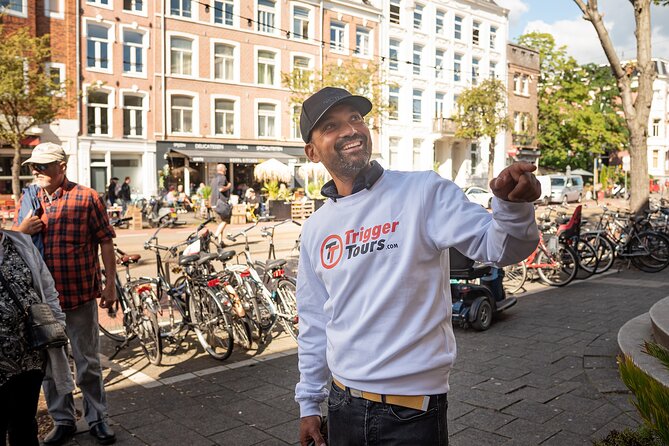
REVIEW · AMSTERDAM
Amsterdam: Anne Frank and World War II Walking Tour (TOP RATED)
Two hours can feel like a whole chapter. This Anne Frank and World War II walking tour uses the streets of Amsterdam’s Jewish Quarter to explain what happened, where people lived, and how memory is marked in the city today.
I especially like the guide-led pace, with lots of short stops that make room for questions and photos. I also appreciate the small group setup (max 15), which keeps the tone personal without feeling cramped.
One consideration: the tour is not an Anne Frank House ticket. If your top goal is going inside the Anne Frank House, you’ll need separate tickets, and the title can make some people expect otherwise.
In This Review
- Key highlights worth your time
- A Jewish Quarter walk that turns city streets into memory
- Price and what $29.45 buys you (and what it doesn’t)
- Where you meet at Amstel 51C, and why that location helps
- Stop 1: Portugese Synagoge and Amsterdam’s Jewish community in plain sight
- Stop 2: Auschwitz Monument and the reality of deportation
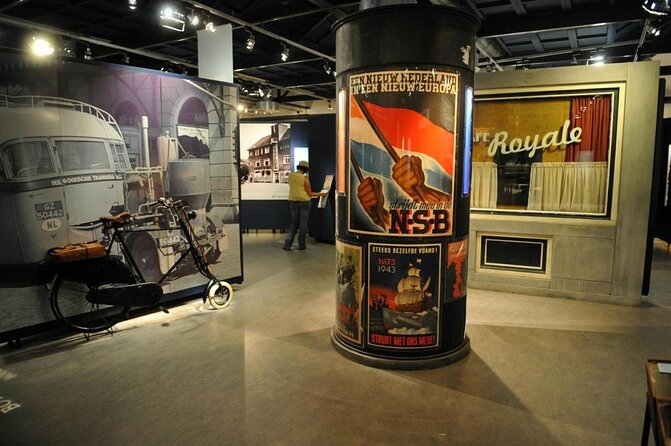
- Stop 3: Verzetsmuseum Amsterdam, and why resistance matters
- Stop 4: Hollandsche Schouwburg, where deportation is remembered
- Stop 5: De Plantage, a beautiful area with historical weight
- Stop 6: Spinoza Monument, ideas and identity in the city
- Walking toward Dam Square and Royal Palace: turning corners, seeing context
- Stop 7: Dam Square and its monuments
- Stop 8: De Schaduwkade monument and the walk’s final memory beat
- The guides make or break this kind of tour
- Private upgrade and small groups: when you want more back-and-forth
- Walking length: great for adults, take care with kids
- Should you book this Anne Frank and WWII walking tour?
- FAQ
- FAQ
- How long is the Amsterdam Anne Frank and World War II walking tour?
- What does the tour cost?
- Is the tour in English?
- Is the Anne Frank House entrance ticket included?
- Are there admission tickets required at the stops?
- How many people are in the group?
- Where do I meet the guide?
- Can I get a refund if I cancel?
Key highlights worth your time
- Anne Frank context in the neighborhoods where the story unfolded
- Focused stops like the Portugese Synagoge and Auschwitz Monument, each built for a quick, meaningful stop
- WWII resistance and deportation context through sites tied to the Jewish community
- Small group experience (up to 15), plus an option to upgrade to private
- Guides praised for energy and answering questions, with examples including Aaron, James, Keese, Misha, Peter, and Stan
Other walks through Amsterdam Jewish history
- Anne Frank’s Story – Guided Walking Tour through Amsterdam★ 5.0 · 11,619 reviews
- Amsterdam: Life of Anne Frank and World War II Walking Tour★ 4.8 · 10,467 reviews
- Amsterdam: Anne Frank Guided Small Group Walking Tour★ 4.8 · 2,722 reviews
- Amsterdam: Anne Frank Walking Tour – Guided in EN/DE/IT/ES★ 4.9 · 2,676 reviews
A Jewish Quarter walk that turns city streets into memory
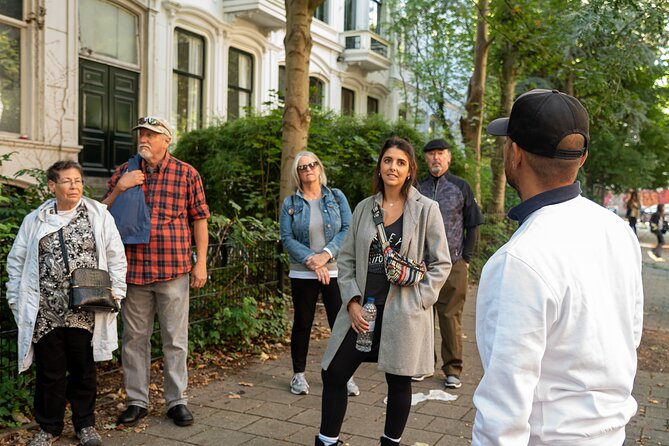
Amsterdam is famous for canals and bikes. This tour is about what those sidewalks and landmarks remember. In about two hours, you move through the Jewish Quarter with a local guide who connects Anne Frank, her diary, and the broader World War II story to specific places around you.
Expect a walk. Not a sprint. The format is built from a sequence of short segments, so you don’t just hear facts, you also get the atmosphere of being in the neighborhood itself. And because each stop is brief, you’ll still have energy to look around and take photos when the guide gives you a visual moment to remember.
One more practical win: the tour ends back at the meeting point, so you can keep your day simple after you finish. That matters when you’re trying to stack a few Amsterdam highlights in a limited time window.
Price and what $29.45 buys you (and what it doesn’t)
At $29.45 per person for about two hours, the value here comes from two things: a local guide and your time saved from figuring out what you’re looking at. The listed stops have admission marked as free for these sites, so you’re not paying entry fees one by one along the way.
What you do not get is entrance to the Anne Frank House. The tour provides historical context around Anne Frank, but the Anne Frank House ticket is explicitly not included. If you’re planning to visit inside, check that separately and do it early.
Also note the tour is offered in English and uses a mobile ticket. That’s useful if you like to travel light and avoid paper confirmations. It’s also a good option if you want to learn without locking yourself into a museum schedule.
Finally, this one is capped at 15 travelers. In a city that can feel crowded fast, that size helps you actually hear the guide, not just hope you can.
Where you meet at Amstel 51C, and why that location helps
Your tour starts at Amstel 51C, 1018 EJ Amsterdam. It ends back at the meeting point, which keeps the whole plan tidy.
Being near public transportation is listed as a feature, so you’re not forced into a long commute to get there. I like meeting points that are easy to reach because WWII history tours can be emotionally heavy, and you want to arrive without extra stress.
If you’re the type who likes a quick plan before you show up, arrive a few minutes early and take a look at the area around the meeting point. That little buffer can save you from the rare hiccup one reviewer described, where the guide did not show up and the group waited 30 minutes after the scheduled start. It’s not the norm from the overall ratings, but it’s still smart to be punctual and attentive.
Stop 1: Portugese Synagoge and Amsterdam’s Jewish community in plain sight
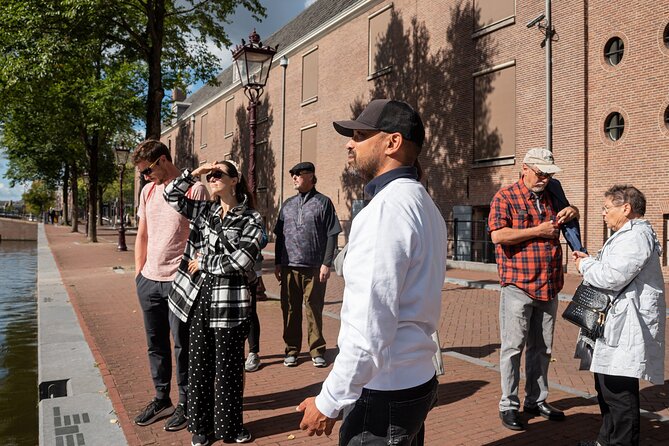
You start with the Portugese Synagoge. The guide focuses on the history of the Jewish community in Amsterdam, specifically the Sephardic community and its role during the Dutch Golden Age. The synagogue is described as reflecting how large and prosperous that community was, and it remains an active place of worship.
This is a strong first stop because it sets the tone correctly. You’re not starting with tragedy. You’re starting with community, culture, and the fact that Jewish life in Amsterdam was not marginal or invisible. You also get a real sense of place, since the synagogue is not only a memorial site, it’s functioning worship space.
Admission is listed as free here. So you can focus on listening and looking rather than budgeting time and money for an entry process.
What to do here: slow down. Look at what’s around the building and then listen to the guide’s framing. In this tour, that first historical lens helps the later stops hit harder.
More wartime ground to cover in Amsterdam
Stop 2: Auschwitz Monument and the reality of deportation
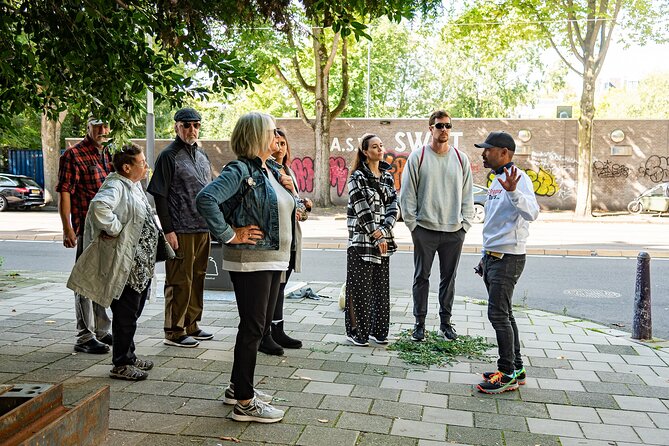
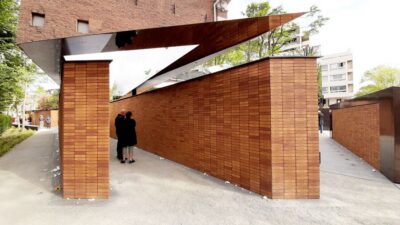
Next is the Auschwitz Monument. The tour notes focus on the monument and the Jewish deportation.
This stop is short, around 10 minutes, but it’s designed as a turning point. You move from neighborhood history and community context into the specific mechanisms of Nazi persecution and deportation. Even without going into a museum, the location anchors the conversation in Amsterdam geography.
Because the theme is heavy, I suggest you treat this as your emotional checkpoint. Take your time. Put your phone away for a few moments if you can, so you actually absorb what the guide is pointing out.
Admission is listed as free. That means you can stay focused on meaning rather than logistics.
Stop 3: Verzetsmuseum Amsterdam, and why resistance matters
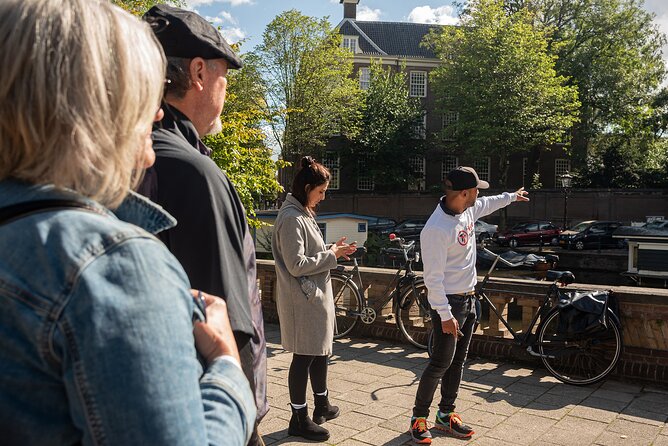
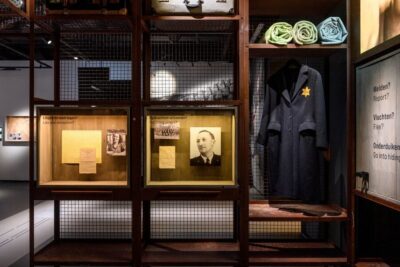
After the Auschwitz Monument, you head to Verzetsmuseum Amsterdam, centered on Jewish resistance.
This is another reason the tour works well as a “whole story” walk. If all you did was learn about loss and deportation, you’d miss how people fought back, protected each other, and tried to keep Jewish life and dignity alive as long as possible.
The stop is brief, about 10 minutes. So don’t expect every detail of WWII resistance. Instead, expect the guide to give you a guided context shot that makes the larger story easier to understand when you later read, watch, or visit other WWII sites.
Admission is listed as free. So your job is simple: follow the guide’s cues and ask questions while you have them.
Stop 4: Hollandsche Schouwburg, where deportation is remembered
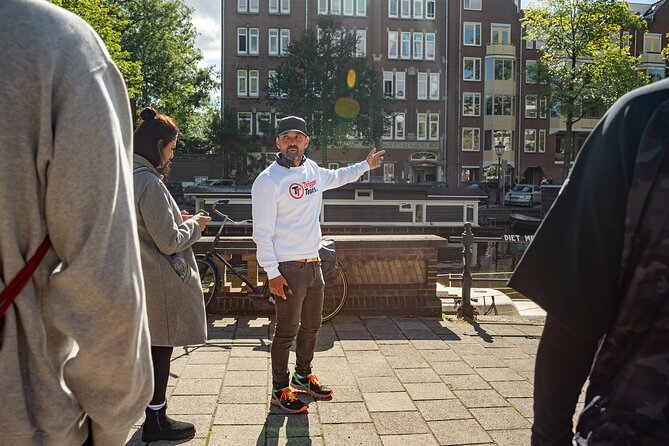
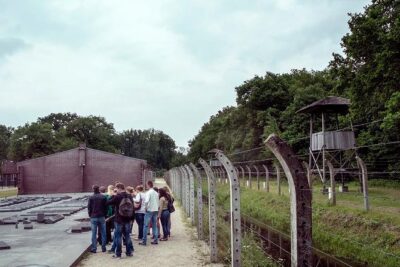
Hollandsche Schouwburg is the next stop, with a focus on the deportation camps.
This segment is somber by design. The name itself signals a place used in the deportation process, and the guide’s explanation gives you the local meaning behind the site. Since the tour is walking-paced and structured in short stops, you get enough time to understand the context without being overloaded.
Admission is listed as free here as well. That helps you move efficiently through the neighborhood while still treating each site as its own moment.
My advice: listen closely during this stop, then look around. Even if the area doesn’t feel dramatic at first glance, the guide helps you see how memory is built into everyday spaces.
Stop 5: De Plantage, a beautiful area with historical weight

Then comes De Plantage. The tour notes describe showing you the area and its history.
This is a smart placement. After several stops focused on persecution and deportation, you get a chance to see the neighborhood as it is now, while your guide ties it back to the past. It helps the story stop feeling like it lives only in the abstract.
Also, De Plantage is an area where you’ll likely want to linger after the tour. The walking format gives you a quick overview, then your eyes can do the rest. If you later want to come back for a longer stroll, this stop plants the idea.
Admission is listed as free. So again, the cost is your attention.
Stop 6: Spinoza Monument, ideas and identity in the city
You’ll also stop at the Spinoza Monument, where your guide talks about it.
This part is different from the deportation and resistance sites. It shifts attention to Jewish presence in Dutch intellectual life and public memory. Even if you don’t know every detail about Spinoza before you arrive, the guide’s explanation helps you connect the monument to why such names and symbols appear in public spaces.
The stop is short, about 10 minutes. That’s enough time to understand what the monument is and what your guide wants you to notice.
Admission is listed as free, so you can focus on the story being told rather than entry procedures.
Walking toward Dam Square and Royal Palace: turning corners, seeing context
After Spinoza, the route includes walking toward Dam Square and the Royal Palace area. This is your transition moment, where the tour takes you from the neighborhood of Jewish historical markers to one of Amsterdam’s central public squares.
This matters because it shows you how history can sit in plain view in the middle of tourist-friendly spaces. Dam Square is where most first-time visitors end up anyway, so adding this historical framing helps you see the city with sharper eyes.
If you like photos, this is also where you’ll likely capture images of monuments and major landmarks that give the walk a sense of geographic completion.
Stop 7: Dam Square and its monuments
At Dam Square, you explore the Dam Square monument. The tour notes list about 10 minutes here, and the guide keeps it pointed and practical.
Dam Square can easily turn into a blur of pigeons and selfies. With a guide framing the meaning of the monuments and the surrounding memorial markers, you’re more likely to actually process what you’re looking at.
Admission is listed as free. So again, this is a listening and noticing stop, not a ticket stop.
Stop 8: De Schaduwkade monument and the walk’s final memory beat
The final named stop is De Schaduwkade monument. Your guide provides context as you arrive and wraps the walking route up from there back toward the meeting point.
This is a good closer because it keeps the emotional thread intact. You’re not suddenly snapped back into casual sightseeing. The walk finishes in a way that makes it easier to reflect, and it naturally encourages you to think about how Amsterdam remembers and marks painful parts of its past in public spaces.
Admission is listed as free.
The guides make or break this kind of tour
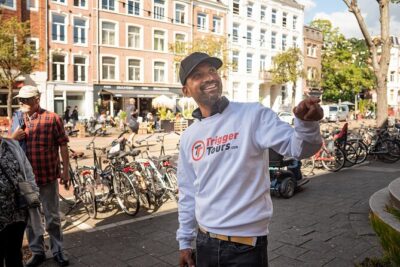
The strongest praise across the experience is about the guides themselves. You’ll see names like Aaron and James praised for deep context that goes beyond Anne Frank and World War II facts. People also mention guides like Keese and Misha for making history personal, including family stories, and for keeping the group engaged with energy and a pace that feels just right.
That matches what you need for a tour like this. It’s not enough to list sites. You need someone who can connect them into a coherent story you can remember later.
If you’re choosing between similar tours, I’d treat guide quality as the deciding factor. The overall rating of 4.7 and a recommendation rate around 90 percent are strong signs that the guides, not just the itinerary, are delivering.
Private upgrade and small groups: when you want more back-and-forth
The tour includes an upgrade option to a private tour. The small maximum group size is already a plus because it makes questions easier, but private can help if you:
- want slower pacing for your learning style
- prefer more time at fewer stops
- want extra Q and A about Anne Frank and the broader WWII story
Because the walking segments are short, private can also help you focus on the places that matter most to you, instead of trying to absorb everything equally fast.
Walking length: great for adults, take care with kids
This is explicitly a walk tour, and one reviewer noted that for young children it can be a long walk. Their 8 and 10-year-olds were exhausted by the time they reached the Anne Frank museum later that day.
You don’t have exact distance in the provided details, but you do have duration: about 2 hours. So use your judgment based on your group. If you’re traveling with children, plan breaks and keep expectations realistic. If you need a lighter sightseeing option, you might prefer a shorter or more transit-heavy alternative.
For most adults, the pace seems to work well because the guide keeps the stops structured and the group moving.
Should you book this Anne Frank and WWII walking tour?
Book it if you want a clear, guided path through Amsterdam’s Jewish Quarter and WWII memory sites, without spending your day chained to museum ticket lines. The best part is how the tour ties Anne Frank and the Holocaust story to real Amsterdam landmarks, so the city feels less like a postcard and more like a place where history happened.
Don’t book it as your only Anne Frank plan if your dream is to go inside the Anne Frank House. That entrance ticket is not included, so you’ll need to buy that separately. The tour can still be worth it, but don’t wait for this booking to solve that specific ticket need.
I’d also book it if you enjoy asking questions. The format leaves room for interaction, and many guides are praised for answering well and keeping the tone thoughtful but not heavy-handed.
FAQ
FAQ
How long is the Amsterdam Anne Frank and World War II walking tour?
The tour is about 2 hours.
What does the tour cost?
It costs $29.45 per person.
Is the tour in English?
Yes, it is offered in English.
Is the Anne Frank House entrance ticket included?
No. The entrance ticket to the Anne Frank House is not included.
Are there admission tickets required at the stops?
The listed stops are marked with admission ticket free in the tour details.
How many people are in the group?
The tour has a maximum of 15 travelers.
Where do I meet the guide?
Meet at Amstel 51C, 1018 EJ Amsterdam, Netherlands.
Can I get a refund if I cancel?
Yes, there is free cancellation. You can cancel up to 24 hours in advance for a full refund. If you cancel less than 24 hours before the start time, the amount paid will not be refunded.
Also Reviewed Around Amsterdam





Wartime Amsterdam



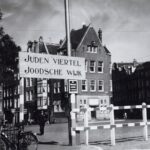
Jewish Amsterdam: Sites and Memory




Fresh off the review pile in Amsterdam
- Full-Day Trip From Amsterdam to Keukenhof, Zaanse Schans + Cruise
★ 5.0 · 3 reviews - Boutique Dutch Food & History Tour with up to 8 guests only
★ 5.0 · 3 reviews - Private Tour to Windmills Zaanse Schans +Keukenhof – 7 Hours
★ 5.0 · 3 reviews - Full-Day Private Guided Countryside Tour from Amsterdam by Bike
★ 5.0 · 3 reviews - Amsterdam Red Light District and Old Town Walking Tour
★ 5.0 · 3 reviews
Anne Frank & Jewish Heritage, compared.
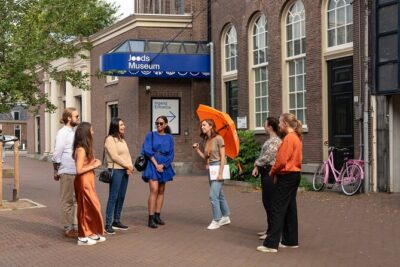 ★ 5.0Anne Frank’s Story – Guided Walking Tour through AmsterdamFrom $3911,619 reviews
 ★ 4.8Amsterdam: Life of Anne Frank and World War II Walking TourFrom $3710,467 reviews
 ★ 4.8Amsterdam: Anne Frank Guided Small Group Walking TourFrom $282,722 reviews
 ★ 4.9Amsterdam: Anne Frank Walking Tour – Guided in EN/DE/IT/ESFrom $282,676 reviews
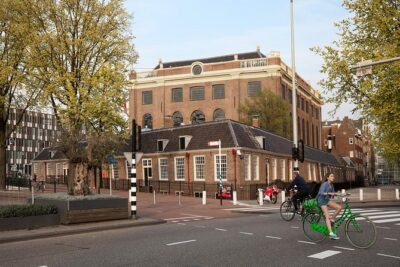 ★ 5.0Anne Frank Walking Tour Amsterdam Including Jewish Cultural QuarterFrom $751,879 reviews
 ★ 5.0Anne Frank’s Last Walk & See Anne Frank House in Virtual RealityFrom $42957 reviews
 ★ 5.0Anne Frank and Jewish Quarter Amsterdam Private Walking TourFrom $157684 reviews
 ★ 4.3Amsterdam: Canal Cruise from Anne Frank MuseumFrom $18563 reviews
Browse the lists this tour appears in