
REVIEW · AMSTERDAM
Amsterdam in World War II Tour
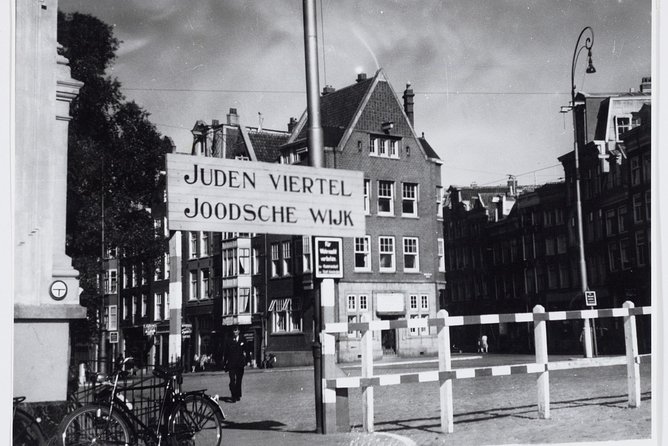
Amsterdam turns darker on this WWII walk. This 3 to 3.5 hour history stroll through the city’s 1940-45 German occupation focuses on Amsterdam’s Jewish heritage and key moments around places like Dam Square and Anne Frank House. It is led by retired historians who bring real context to what you see on the street, not just names on plaques.
I especially like two things: the small group size (max 8), which keeps the walk calm and lets you ask questions, and the guide style, often described as bringing period photos, maps, and notes so the stories land in your mind. A guide you may meet, such as Peter or Ben, comes across as the real teacher type, patient and focused on making sure everyone can hear and follow along.
One drawback to consider: you do not go inside Anne Frank House. You start outside, get the relevant story in a short window, then move on. So if you’re hoping for museum time, you’ll need to plan that separately.
In This Review
- Key things to know before you go
- Why a WWII walk makes Amsterdam make sense
- Price and what your $46.44 covers in real terms
- Meeting point on Prinsengracht, ending at the Holocaust Names Monument
- Stop 1: The opening 2.5 hours of occupation sites and context
- Stop 2: Anne Frank House outside only, with the refugee story
- Stop 3: Statue of Multatuli and how Amsterdam changed after WWII
- Stop 4: Magna Plaza, the former post office, and the execution story
- Stop 5: Nieuwe Kerk and the Mozes en Aäronstraat link
- Stop 6: Dam Square, May 4 and May 7, and the WWII monument story
- Stop 7: Sofitel Legend The Grand Amsterdam, once the City Hall
- The guide experience: small groups, photos, and a pace that fits
- What to do with your time before and after the tour
- Who this tour is best for
- Should you book Amsterdam in World War II?
- FAQ
- How long is the Amsterdam in World War II tour?
- What’s the group size limit?
- Do you enter Anne Frank House during this tour?
- Where do you meet and where does the tour end?
- What’s included in the tour price?
- What if the weather is bad or the tour can’t run?
- Can I get a full refund if I cancel?
Key things to know before you go
- Max 8 people means more attention and a pace that works for slower walkers
- Retired historians lead the walk, with period photos and maps used during the route
- Anne Frank House is outside only, so don’t plan on museum entry here
- Most stops are ticket-free, so you pay mainly for the tour itself
- You’ll cover both Jewish heritage and military/political WWII events, not just one theme
- A long opening segment gives you the big picture before the named landmarks
More wartime ground to cover in Amsterdam
- Amsterdam: Life of Anne Frank and World War II Walking Tour★ 4.8 · 10,467 reviews
- Amsterdam: Dutch WWII Resistance Museum Entry Ticket★ 4.7 · 951 reviews
- Small Group Tour to Nazi WWII concentration camp from Amsterdam★ 5.0 · 112 reviews
- Amsterdam: Anna Frank and World War II History Walking Tour★ 4.8 · 86 reviews
Why a WWII walk makes Amsterdam make sense
Amsterdam can feel like a postcard, until you track how the city functioned under occupation. This tour is built around that shift. You walk through central areas where WWII left visible marks in street life, buildings, and public squares, then you connect those places to specific stories about persecution and survival.
I like how the experience is structured to help you build a mental map. You start with a broader occupation overview, then you move to anchor sites you probably recognize from films, books, or school curricula. That order matters because it keeps the later details from feeling random.
And since it’s a walking tour with a limited group, you get time to process the weight of what’s discussed. It’s not a rush-job history lesson.
Price and what your $46.44 covers in real terms
At about $46.44 per person, this isn’t a budget “grab-and-go” attraction. It’s paying for expert interpretation and time in the field, not for a pile of included entries. The value comes from the structure:
- The guide-led portion is the main product, and you’ll be with the historian for roughly 3 to 3.5 hours.
- Most of the featured stops are free to stand at and view, so you’re not stacking extra costs on top right away.
- The group limit to 8 people helps you feel like you’re learning, not just following.
You should still budget mentally for the fact that Anne Frank House museum time is not included. If you want to see the museum, treat this tour as the context-builder, then add museum entry on a different visit.
Meeting point on Prinsengracht, ending at the Holocaust Names Monument
This walk starts at Prinsengracht 263 (9:30 am) and finishes at the National Holocaust Names Monument. The final monument sits close to the Portuguese Synagogue and not far from the city hall area, so it works well if you plan to keep exploring afterward.
You’ll be walking slowly, and the tour is designed for most travelers. That said, you are still on your feet for the full duration, so comfortable shoes matter.
It’s also a good note that the start is near public transport. If you’re arriving from another part of town, you won’t need a private car or complicated transfers to make the morning slot.
Stop 1: The opening 2.5 hours of occupation sites and context
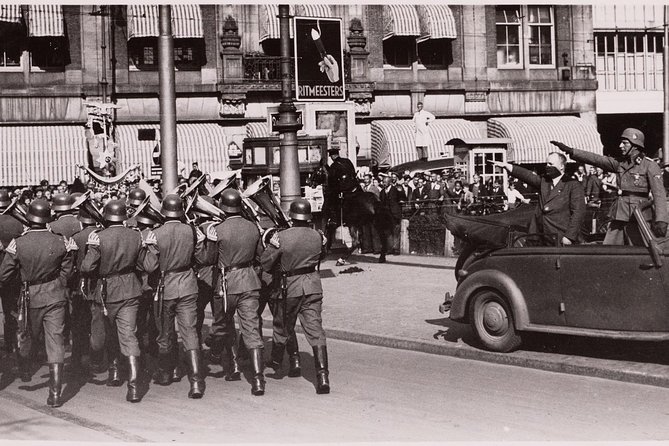
The longest part of the tour is the first segment: about 2 hours 30 minutes focusing on important sites and monuments tied to the Nazi occupation of Amsterdam (1940 to 45). Even though the stop label is simply Amsterdam, the purpose is clear.
This is where the guide sets the framework:
- What occupation changed, beyond just battles
- How the city’s Jewish community was affected
- How the occupation shaped everyday spaces, including public institutions and neighborhoods
This opening is a big reason the tour feels coherent. You’re not learning in isolated chunks. You’re getting the big picture first, then the later landmarks start to click.
Practical tip: use this time to ask questions early. If something feels unclear, bring it up while the guide is still in the “overview” mode.


Stop 2: Anne Frank House outside only, with the refugee story
You spend around 10 minutes outside Anne Frank House. The tour does not visit the museum. Instead, you start at the outside location and hear the story tied to the German attack and Jewish refugees.
That means this stop is about interpretation and context, not about lineups or exhibits. If you want museum artifacts and displays, you’ll need to add that separately. But for many people, getting the historical framing first makes a later museum visit much more meaningful.
Emotional reality check: this is a heavy topic. Keep water handy, and if you need a breath, step aside at the edge of the group and take a moment. The pace is meant to be slow, but it’s still a serious theme.
Stop 3: Statue of Multatuli and how Amsterdam changed after WWII
Next up is the Statue of Multatuli, seen in the Raadhuisstraat and on the bridge over the Singel. The quick stop is only about 10 minutes, but it does an important job.
It pulls you from wartime tragedy into the idea of change. You’re looking at a physical landmark that shows how the city continued evolving after the occupation ended. It’s a reminder that history is not just dates, it’s also what replaced those years in the streets you walk today.
This is also a good moment to take a photo, or just look around. Don’t let the contrast distract you, though. The guide’s point is usually to help you see the continuity between then and now.
Stop 4: Magna Plaza, the former post office, and the execution story
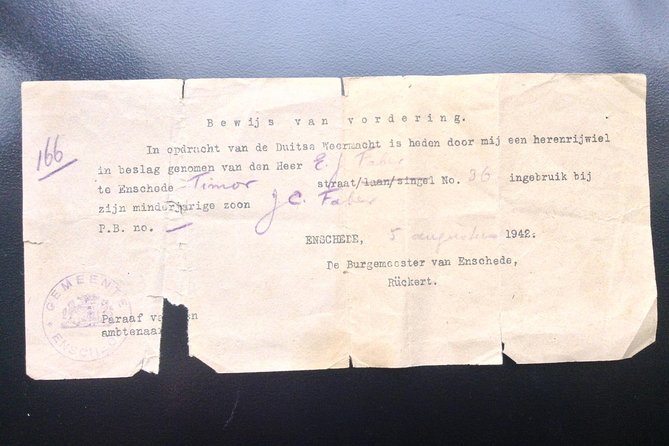
At Magna Plaza (a mall today), you’re standing at a former post office that played a role during the occupation. You get about 5 minutes here, and the key detail is stark: Dutch postmen were executed by the Germans.
This is one of those stops where the building’s modern use can make you forget the building’s past. That’s exactly why I like it. It trains your eye to notice historical layers instead of walking past without thinking.
If you visit Amsterdam often, you’ll recognize how quickly you can become numb to older buildings. A stop like this forces you to slow down, read the story, and then look again.
Stop 5: Nieuwe Kerk and the Mozes en Aäronstraat link
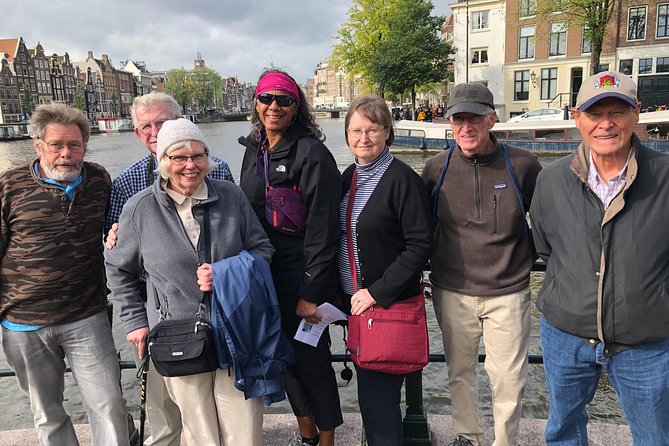
The tour continues with a short look at the Nieuwe Kerk area. You get about 5 minutes, and the discussion connects the story to the street Mozes en Aäronstraat, positioned between the Royal Palace and the New Church.
Even with limited time, this stop matters because it ties history to geography in a practical way. You start understanding the city as a set of routes and corridors, not just monuments.
This is also a helpful moment to keep track of where you are. Knowing that this street sits between major civic landmarks makes it easier to orient yourself during your later independent exploring.
Stop 6: Dam Square, May 4 and May 7, and the WWII monument story
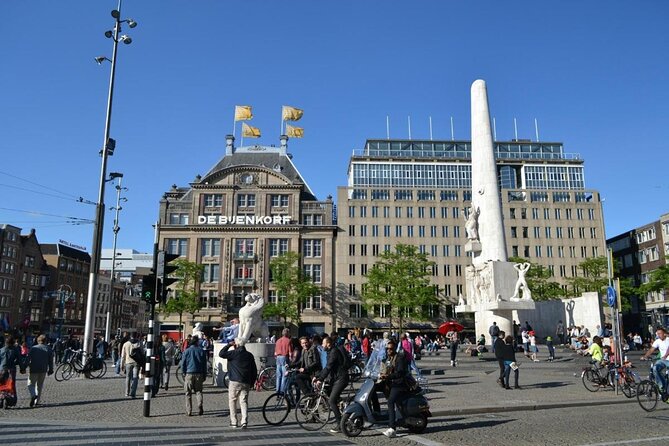
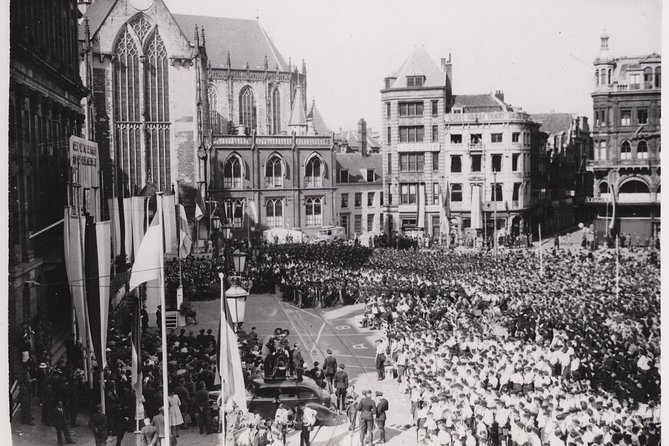
Dam Square is the heart of central Amsterdam, and this tour treats it like a stage where many WWII-related stories played out. You spend about 25 minutes here, which is a meaningful chunk.
You’ll hear about:
- The shooting incident on May 7, 1945, two days after the German surrender
- Dutch volunteers recruited there for the “crusade against Bolshevism”
- Remembrance day May 4, and the story behind the WWII monument
This is the stop where the tour can feel most like “public history.” The guide isn’t just showing you what happened, but how people used the square afterward for memory and meaning.
If you’re sensitive to intense content, Dam Square is likely to be the hardest part. Go easy. Don’t feel obligated to keep staring. Take in the square, listen to the story, then give yourself a minute to reset before moving on.
Stop 7: Sofitel Legend The Grand Amsterdam, once the City Hall
You finish the walk with a look at Sofitel Legend The Grand Amsterdam. The guide frames it as the former City Hall during WWII, and tells you that German troops were welcomed by Dutch civil servants on May 15, 1940.
This stop is short, about 5 minutes, but it’s powerful because it highlights how authority and bureaucracy played into the occupation period. It’s not only about street violence or deportations, it’s also about who was present, and what roles different people held.
Standing at a place that still functions as a grand hotel can feel disorienting. That disorientation is part of the point. It shows how quickly a building can outlive the system that once used it.
The guide experience: small groups, photos, and a pace that fits
The single most praised aspect is how the guide teaches. Many accounts describe historians who show period photos of Amsterdam during the German occupation, and who carry notebooks or printed materials like maps. There’s also a clear emphasis on making sure everyone can hear.
You’ll likely experience this as a conversational walk. It stays structured, but you’re not locked into a lecture mode. If you pause to take a photo, the guide adapts. If you’re slow, the pace accommodates you.
I’d call this the “learning for real” factor. Instead of just walking past places you already know by name, you leave understanding why those exact locations matter.
Also, the reviews note strong communication in advance, which matters for a morning meeting at a specific address.
What to do with your time before and after the tour
Because Anne Frank House is outside-only here, you can use the rest of your schedule in a smart way.
Before the tour:
- Arrive a little early so you can settle in without stress.
- Dress for a walk and expect cool weather at street level. The tour depends on good weather.
After the tour:
- Use the endpoint area around the Holocaust Names Monument as a springboard.
- If you want more context, consider planning a separate visit to the Anne Frank House museum on a different day so the two experiences do not compete.
A small tip that helps a lot: write down a few street names and dates as you go. Dam Square dates like May 4 and May 7 are unforgettable, but they’re also the kinds of things people mix up later. A quick note keeps the history straight.
Who this tour is best for
This fits history-minded travelers who want the WWII story grounded in places they can actually see. If you care about Amsterdam’s Jewish heritage and the way public spaces shaped events during and after the occupation, you’ll probably feel like the tour “connects the dots.”
It also suits:
- Anyone traveling solo or as a couple who wants a small group instead of a large bus crowd
- People who prefer guided interpretation over reading only on-site plaques
- Travelers who like a structured route with free stops and clear time limits
If you want a light, casual city stroll, this likely won’t be the best match. This is serious material, and the tone reflects that.
Should you book Amsterdam in World War II?
Yes, if you want a focused WWII walk with real historical explanation and a small-group feel. The rating is extremely high, and the standout ingredient is the historian-led approach, often with period photos and teaching materials that make the past feel less abstract.
Book it if:
- You want Amsterdam’s WWII story tied to specific landmarks
- You’re okay with heavy topics and prefer a thoughtful pace
- You’re fine with Anne Frank House being outside-only here
Consider skipping or planning differently if:
- You mainly want museum time at Anne Frank House right now
- You want something upbeat or strictly scenic
If you’re deciding between this and something more general, I’d lean toward this. It gives you a clear backbone for understanding the city during the occupation, then shows you how Amsterdam’s landmarks carry memory in plain sight.
FAQ
How long is the Amsterdam in World War II tour?
It runs about 3 hours to 3 hours 30 minutes, with a slow walking pace.
What’s the group size limit?
The tour has a maximum of 8 travelers, so it stays small-group style.
Do you enter Anne Frank House during this tour?
No. You start outside Anne Frank House and hear the story, but you do not visit the museum.
Where do you meet and where does the tour end?
You start at Prinsengracht 263, 1016 GV Amsterdam, and you end at the National Holocaust Names Monument.
What’s included in the tour price?
The guided tour is included. Coffee or tea and private transportation are not included.
What if the weather is bad or the tour can’t run?
This experience requires good weather. If it is canceled due to poor weather, you’ll be offered a different date or a full refund. If there is not a minimum number of travelers, you’ll also be offered a different date or a full refund.
Can I get a full refund if I cancel?
Yes. You can cancel for a full refund up to 24 hours in advance of the start time. If you cancel less than 24 hours before, the amount you paid is not refunded.
Everything Else From Our Amsterdam Notebook




Also Reviewed Around Amsterdam




Wartime Amsterdam

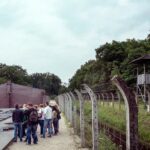


Fresh off the review pile in Amsterdam
- Full-Day Trip From Amsterdam to Keukenhof, Zaanse Schans + Cruise
★ 5.0 · 3 reviews - Boutique Dutch Food & History Tour with up to 8 guests only
★ 5.0 · 3 reviews - Private Tour to Windmills Zaanse Schans +Keukenhof – 7 Hours
★ 5.0 · 3 reviews - Full-Day Private Guided Countryside Tour from Amsterdam by Bike
★ 5.0 · 3 reviews - Amsterdam Red Light District and Old Town Walking Tour
★ 5.0 · 3 reviews
Dutch WWII History Tours, compared.
 ★ 4.8Amsterdam: Life of Anne Frank and World War II Walking TourFrom $3710,467 reviews
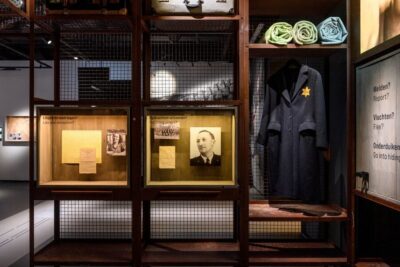 ★ 4.7Amsterdam: Dutch WWII Resistance Museum Entry TicketFrom $21951 reviews
 ★ 4.6Oranjehotel World War II Prison Entrance TicketFrom $15708 reviews
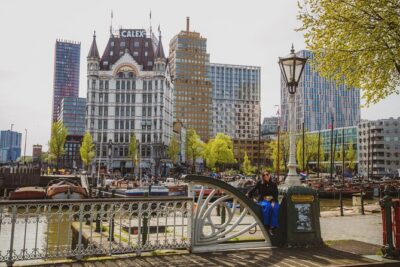 ★ 5.0Rotterdam Walk: Hilights, Gems, Architecture & WWII | 2 or 3hrsFrom $49149 reviews
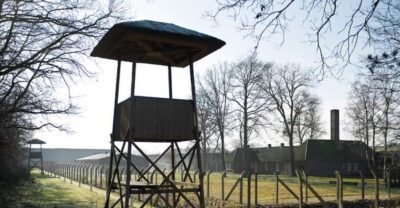 ★ 4.6Vught: National Monument Concentration Camp Entry TicketFrom $14137 reviews
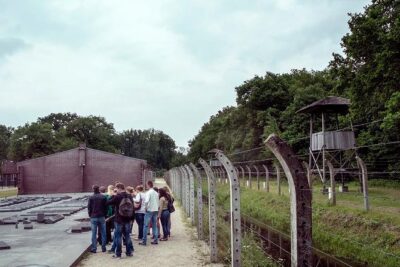 ★ 5.0Small Group Tour to Nazi WWII concentration camp from AmsterdamFrom $199112 reviews
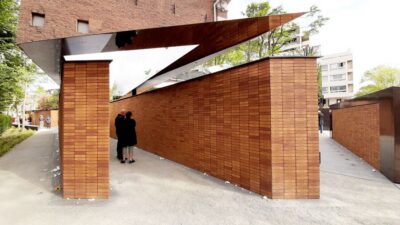 ★ 4.8Amsterdam: Anna Frank and World War II History Walking TourFrom $2886 reviews
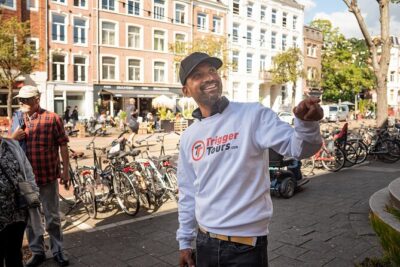 ★ 4.5Amsterdam: Anne Frank and World War II Walking Tour (TOP RATED)From $2972 reviews
Browse the lists this tour appears in