
REVIEW · AMSTERDAM
Amsterdam: Highlights & History Walking Tour
Amsterdam hits you fast.
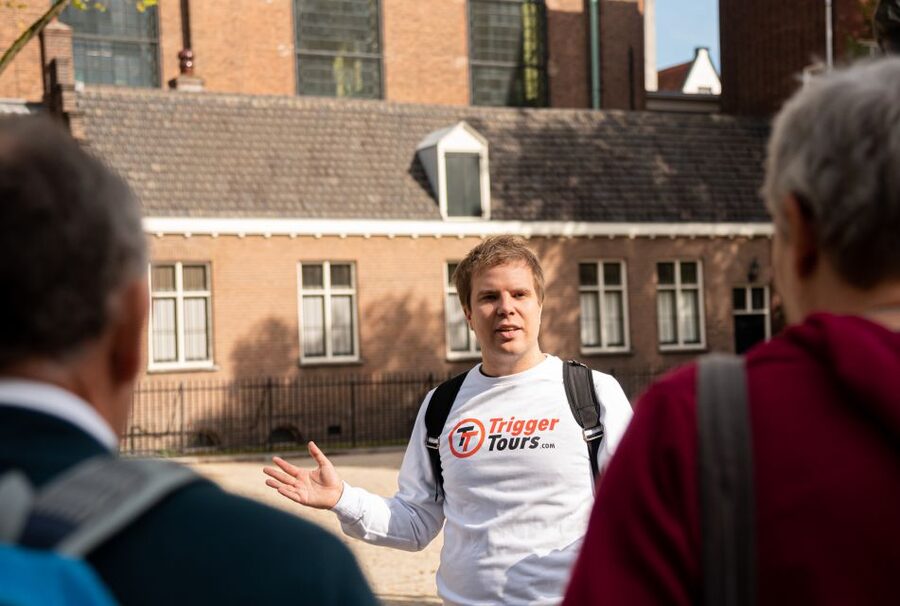
This 2-hour highlights walk turns famous landmarks into street-level history, with a local guide explaining how Amsterdam grew from a fishing village into a trading powerhouse. I like the small-group feel (up to 8) and how the route mixes big-name sights with offbeat details, from crooked-house streets to the narrowest street. One thing to plan for: the tour ends at Dam Square, not back at where you start.
I also like that you get context, not just photos. The guide ties together the inner-city layout, the stories behind places like the Royal Palace and Begijnhof, and even the social history around the red-light district, including the legalization of prostitution in the Netherlands. The other big win is how many stops you cover in a short time, without feeling like you are being rushed.
If you hate tight logistics, keep one consideration in mind. Meeting at a hotel can be fiddly in a busy city, so arrive a few minutes early and check you are at the right spot. When it is raining, you will still be walking, since this is a walking tour.
In This Review
- Quick hits
- Why Amsterdam makes sense on a 2-hour highlights walk
- Park Plaza Victoria Hotel meeting point, and how to avoid confusion
- Old Town streets, canal edges, and the details that make it feel real
- Dam Square, the Royal Palace, and Begijnhof: big landmarks with human scale
- Anne Frank House area and the power of guided context
- The red-light district topic, handled with real-world history
- Canal strolls, crooked houses, and the Flower Market finale
- Price, value, and what you get for $32
- Guides, group size, and languages that keep the walk fun
- Who should book this Amsterdam Highlights & History walk
- Should you book this tour?
- FAQ
- How long is the Amsterdam Highlights & History Walking Tour?
- What does the tour cost?
- What is included in the tour price?
- Where do I meet the guide?
- Where does the tour end?
- How large is the group?
- Are food and drinks included?
- What languages are the tours offered in?
- Is the tour wheelchair accessible?
- Is it possible to cancel or pay later?
Quick hits
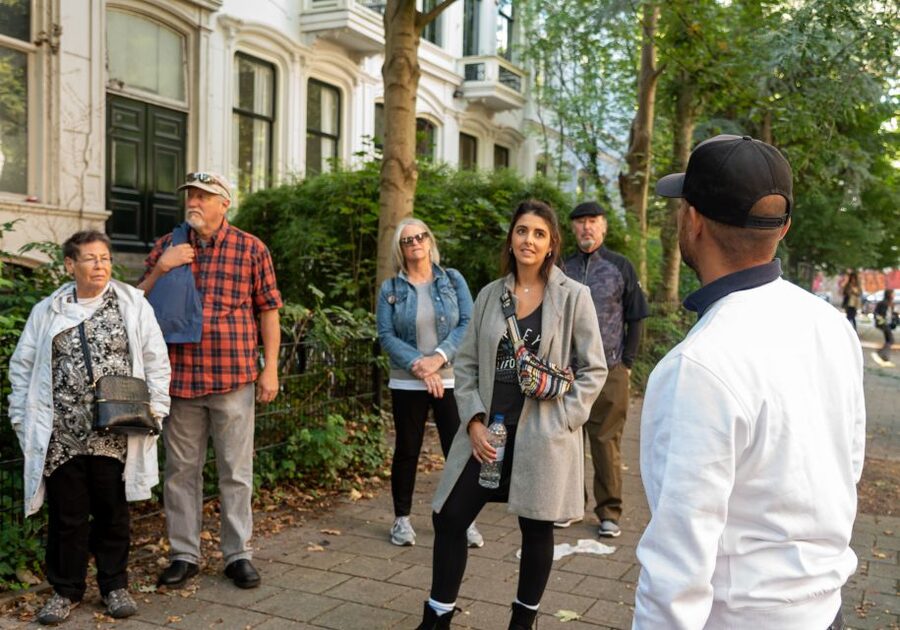
- Up to 8 people keeps the pace conversational, with time for questions
- Old Town to Dam Square covers the core sights plus a few clever detours
- Canals and the Flower Market add a colorful, local finish
- Social history included: prostitution legalization and how it shaped the red-light district
- Crooked houses, Chinatown, and the narrowest street make the city feel physical, not postcard-printed
Prefer to see it on foot? More Amsterdam walks
- Anne Frank’s Story – Guided Walking Tour through Amsterdam★ 5.0 · 11,619 reviews
- Amsterdam: Life of Anne Frank and World War II Walking Tour★ 4.8 · 10,467 reviews
- Absolutely Amsterdam – the Essential Introductory Walking Tour★ 5.0 · 3,629 reviews
- Amsterdam: Anne Frank Guided Small Group Walking Tour★ 4.8 · 2,722 reviews
Why Amsterdam makes sense on a 2-hour highlights walk
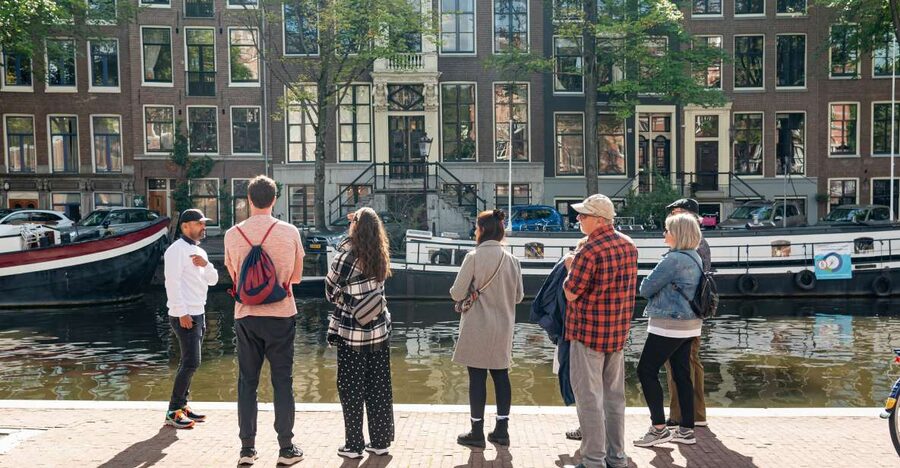
Amsterdam is one of those cities where you can spend days sightseeing and still feel like you only saw the surface. This tour is designed for the first-time visitor who wants instant orientation, plus enough history to make the streets start clicking in your head.
You cover the Old Town area, then move through key sights like Dam Square, the Royal Palace, and Begijnhof. Along the way, you get street-level details that make the city less abstract. Instead of only admiring buildings, you learn why people built things the way they did and how the canal-lined neighborhoods grew.
What makes it especially useful is the guide’s storytelling style. Guides I have seen praised in this program, like Robin and Aaron, tend to keep the facts understandable and add cultural oddities so you remember them later. One guide even gets singled out for hidden churches you might not spot on your own, which is a nice reminder that Amsterdam rewards slow curiosity, not just checklists.
If you like history, great. If you do not, you still get a fun walking route with enough variety to keep your attention. This is not a museum schedule. It is city navigation with a narrative thread.
Park Plaza Victoria Hotel meeting point, and how to avoid confusion
The meeting point is straightforward on paper: the guide meets you in front of the main entrance of the Park Plaza Victoria Hotel. In real life, hotels can be confusing because there are multiple doors, and Amsterdam sidewalks are busy.
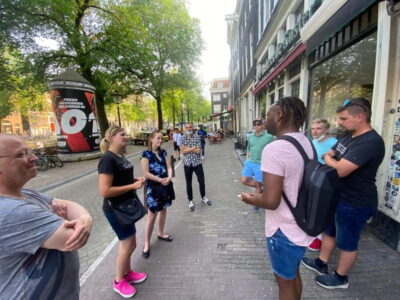
My advice is simple. Show up a little early, stand near the main entrance, and watch for the guide and your group branding. One recurring complaint in this kind of tour is not the tour itself, but people arriving at the wrong hotel door. Fixing that takes zero money and saves a lot of stress.
Also note the tour timing. It runs for 2 hours, so think of it as an efficient block in your day, not a wandering stroll. Wear shoes you can walk in for two hours. Amsterdam streets can be uneven, and you will be moving through narrow lanes and small squares.
Finally, plan for the end point. The tour concludes at Dam Square. That is a great central location, but it means you might need to rethink dinner plans or your next activity. If you have tickets later in the day, it is smart to choose something near the center.
Old Town streets, canal edges, and the details that make it feel real
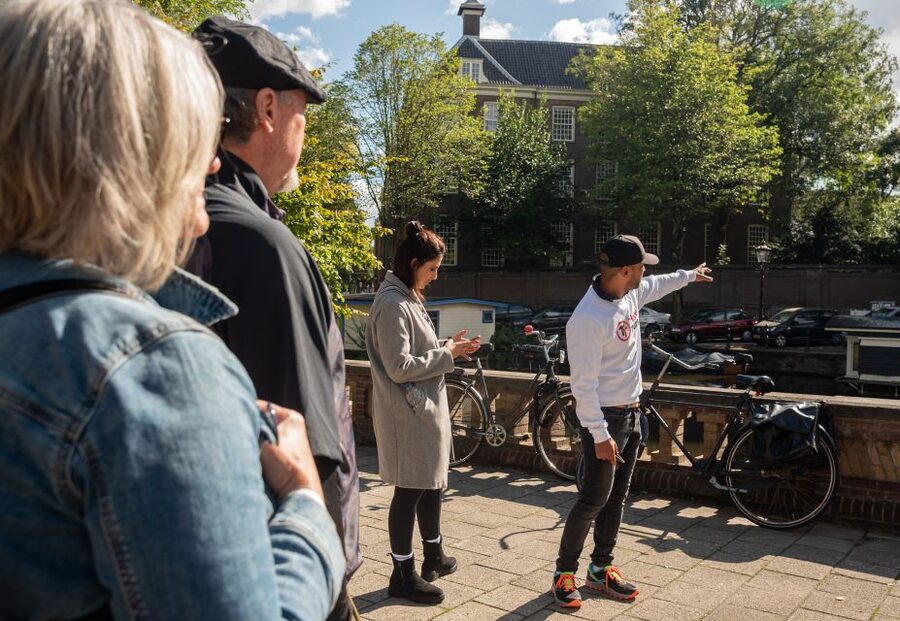
The heart of the experience is the Old Town walking portion. You will move through streets and alleyways where Amsterdam’s history is visible in the city form itself. This is where the tour earns its keep: you do not just stop at landmarks, you learn to read the streets.
Expect stops tied to the classic Amsterdam vibe plus some purposeful surprises. The route includes the Old Church and areas like China Town. It also hits visual curiosities like crooked houses and the narrowest street in Amsterdam. Those sound like trivia until you stand there and realize how much city design shapes everyday life.
This is also where a good guide matters. In praised guides from this program, people often mention how questions get answered and how each stop connects to a bigger story. That is what turns random streets into a walk you can remember.
If you are the kind of traveler who enjoys “why is this here?” moments, you will like the way the guide explains Amsterdam’s growth. You learn how the city started small and fishing-focused and then expanded as trade and commerce took over. Once you hear that logic, the canal network and neighborhood layout feel less random.
A practical note: this part of the walk is compact, so it is not the best choice if you want a lot of free time at each stop. But if you want to see a lot and get a coherent overview fast, this is exactly the right length.
Dam Square, the Royal Palace, and Begijnhof: big landmarks with human scale
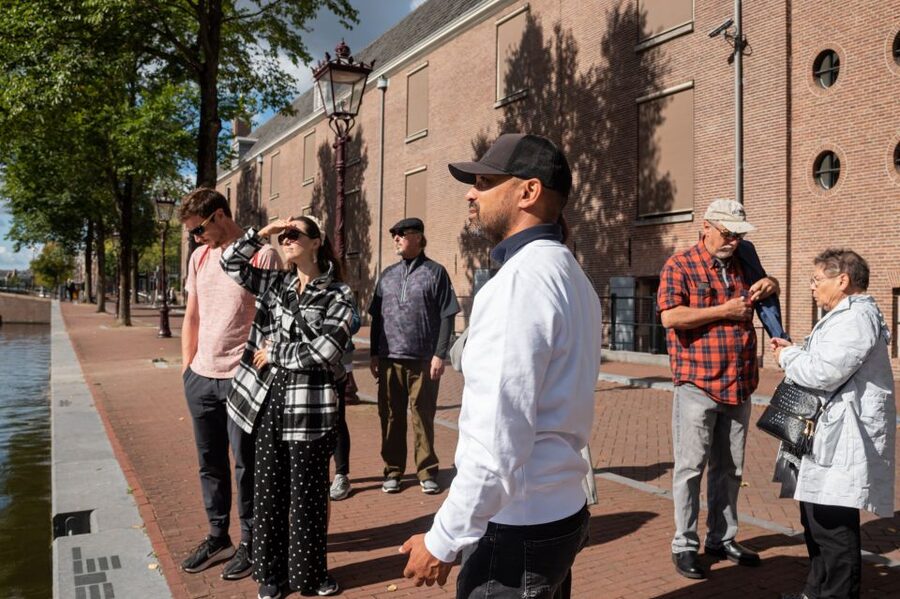
After the Old Town section, you shift into the sights that most visitors recognize immediately. You will reach Dam Square, then continue to major nearby highlights including the Royal Palace and Begijnhof.
Dam Square is more than a pretty plaza. It is a kind of geographic anchor where Amsterdam’s civic and social life converges. When your guide frames it with history, you stop seeing it as one stop on a photo route and start treating it as a public stage where power and everyday life have always overlapped.
The Royal Palace stop gives you a sense of continuity. You are looking at a building that sits in the middle of the city’s political identity. Even if you are not a palace person, you will likely appreciate hearing how those institutions fit into Amsterdam’s bigger story.
Then you get Begijnhof, which is one of those places that feels like the city quietly changes tone. It is a break from the broad square energy, and that contrast is worth the inclusion. This is the kind of place where the guide’s explanations help you notice details you would otherwise miss.
If you are traveling with kids, this is also a good stretch. It is recognizable, visually dramatic, and easy to explain, with a natural rhythm: square energy, palace scale, then a calmer enclosed setting.
More of the older layers of Amsterdam


Anne Frank House area and the power of guided context
The tour includes a stop area around the Anne Frank House. You are not going inside based on the provided info, but you still get something valuable: context that helps you understand why this location has such emotional weight and why it matters in Amsterdam history.
For many people, the Anne Frank House area is the first moment the trip stops being just sightseeing and starts being about human stories. A careful guide can make that feel respectful and clear, not like a quick history bullet.
The key is how the tour uses these stops to build the bigger picture. You learn about the city’s origins and growth, then you see how later chapters of Amsterdam history shaped what you see today in the inner city. That makes the Holocaust-linked history in the neighborhood feel connected to the city itself, not floating in isolation.
If this is a sensitive topic for you, you are still in good hands with a guide who can pace the explanation. It is a walking tour, so the atmosphere is different from a timed museum visit. You get information without being locked into an indoor schedule.
The red-light district topic, handled with real-world history
This walk includes a frank but historical lesson: how the legalization of prostitution in the Netherlands shaped Amsterdam’s red-light district over time.
This is a detail that many “highlights” tours skip, either because it is awkward or because it turns into sensational talk. Here, the focus is on historical context, and that is what makes it useful. You come away understanding that the red-light district did not appear out of nowhere. It developed alongside changing laws and social structures.
If you worry about discomfort, you will probably be okay. The tour content is described as an educational journey through the city’s inner past, including culture and social history, not a street-by-street spectacle.
And the reason this matters is simple. Amsterdam’s identity is shaped by how it confronts difficult subjects. When you know that history, the city reads differently. Even if you never plan to visit the red-light district on your own, you will understand why it is there and why it is part of Amsterdam’s modern story.
Canal strolls, crooked houses, and the Flower Market finale
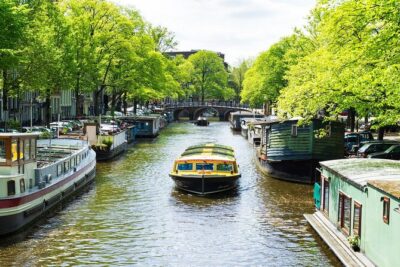
After the core historic sights, you get the fun Amsterdam stuff that makes the city feel instantly memorable. You stroll around the famous canals and visit the Flower Market.
The Flower Market stop is especially good for travelers who want something colorful without needing extra reservations. Your guide leads you to the floating street market, where you could buy anything flower-related. Even if you do not shop, this stop gives you a strong sensory payoff, and it makes a great end cap after the heavier history.
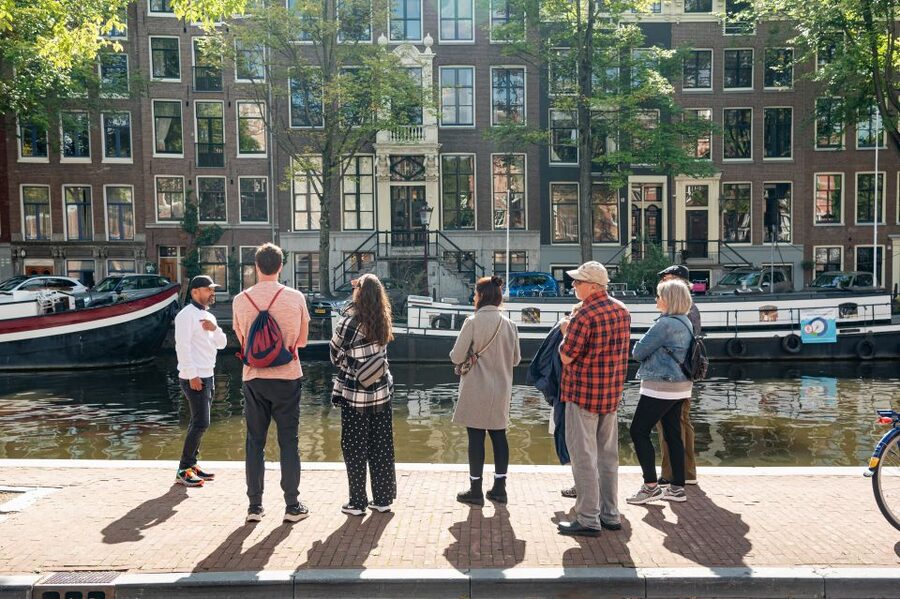
You will also pass by memorable street quirks during the walk, including the crooked houses and the narrowest street. These are the kinds of places that are hard to find on your own because you are usually busy looking at the most obvious landmark. A guide helps you spot them, then explains why the city looks the way it does.
Here is a practical tip: if you love photos, bring your camera ready for canal-side views and Flower Market colors. But do not plan on long stops to browse. This is a short tour, so you get the highlight without turning it into a shopping detour.
Since the tour ends at Dam Square, you can roll right into dinner, a tram ride, or a walk along the canal edges on your own. It is a convenient way to transition from guided learning to free exploring.
Price, value, and what you get for $32
The price is $32 per person for a 2-hour small-group walk. Included in the cost is a local city tax of 1.50€ per passenger. Food and drinks are not included.
So what is the value here? You are paying for three things that are hard to assemble alone on your first day:
First, a route that hits multiple major landmarks and a few clever side details. Second, a guide who can connect the physical city to the social and political context behind it. Third, the small-group size, up to 8 people, which usually means you get more attention than you would on a giant bus tour.
At $32, this is also a reasonable way to see Amsterdam highlights early, before you decide what to schedule later. If you are unsure whether you will enjoy museums or long walking days, this short tour gives you a clear sense of the city’s rhythm.
If you are on a tight budget, you will still likely feel it is worth it because you leave with a mental map. If you are short on time but want depth, you get both: landmark coverage plus stories that explain how Amsterdam became Amsterdam.
Guides, group size, and languages that keep the walk fun

One reason this tour gets such strong marks is the guide experience. People name specific guides, and the praise patterns are consistent: guides who are upbeat, easy to follow, and genuinely enthusiastic about Amsterdam.
Names that show up in praised experiences include Robin, Aaron, Arie, James Francis, Scarlett, Lukas, Kevin, David, Gio, Agapios, Kiran, Michael, and Andrea. Across those mentions, you see the same idea: the walk does not feel like memorizing facts. It feels like someone showing you the city they love.
Group size is another big deal. The tour is limited to 8 people, and in some cases it can be even smaller, which makes it easier to ask questions. If you like a back-and-forth style, this format fits.
Languages are English, German, and Spanish, and that matters if you want the explanations to land. You should not have to guess at what you are hearing.
Wheelchair accessibility is listed as available, and that is a practical benefit if mobility is limited. If you or someone in your group uses a wheelchair, I would still plan for real city surfaces, but at least the tour is designed to be accessible.
Who should book this Amsterdam Highlights & History walk
This is a great fit if you are visiting Amsterdam for the first time and want to build a foundation fast. It is also ideal if you like walking, but you do not want to spend hours mapping out a route yourself.
It is especially good for travelers who enjoy history with a human tone, because you learn both city origins and social history, including the prostitution legalization topic and how it shaped the red-light district.
You might skip it if you prefer long, slow stops with lots of free time at each landmark. This is a tight 2-hour run. It is also less ideal if you strongly dislike learning about sensitive social topics at all. The content is historical, but it is still part of the itinerary.
If you are a first-day planner, book this early. It helps you choose what to do next, because you come away understanding where the city’s main threads run.
Should you book this tour?
I think this is a smart booking for most first-timers, especially if you want big highlights plus story-driven context in a short time. The small-group size keeps it personal, and the route covers exactly what you need to get oriented, from the Old Town streets to Dam Square and the Flower Market finish.
Book it if you want an efficient city overview, you like guided storytelling, and you do not mind a walking pace. Reconsider if you want to end where you start, or if you are sensitive to the tour’s social history topic.
If you do book it, arrive a few minutes early at the Park Plaza Victoria Hotel meeting point, wear comfortable shoes, and plan your next stop around ending at Dam Square. That way, the whole day flows instead of feeling like you are trying to catch your bearings after.
FAQ
How long is the Amsterdam Highlights & History Walking Tour?
It lasts 2 hours.
What does the tour cost?
The price is $32 per person. The tour also includes a 1.50€ city tax per passenger.
What is included in the tour price?
You get a local guide, and the 1.50€ city tax is included. Food and drinks are not included.
Where do I meet the guide?
Meet your guide in front of the main entrance of the Park Plaza Victoria Hotel.
Where does the tour end?
The tour ends at Dam Square.
How large is the group?
It is a small-group tour limited to 8 people. A private group is also available.
Are food and drinks included?
No. Food and drinks are not included.
What languages are the tours offered in?
The guide offers the tour in English, German, and Spanish.
Is the tour wheelchair accessible?
Yes, the tour is listed as wheelchair accessible.
Is it possible to cancel or pay later?
There is free cancellation up to 24 hours in advance for a full refund, and there is a reserve now & pay later option.
Amsterdam at Walking Speed




Everything Else From Our Amsterdam Notebook


Also Reviewed Around Amsterdam





Fresh off the review pile in Amsterdam
- Full-Day Trip From Amsterdam to Keukenhof, Zaanse Schans + Cruise
★ 5.0 · 3 reviews - Boutique Dutch Food & History Tour with up to 8 guests only
★ 5.0 · 3 reviews - Private Tour to Windmills Zaanse Schans +Keukenhof – 7 Hours
★ 5.0 · 3 reviews - Full-Day Private Guided Countryside Tour from Amsterdam by Bike
★ 5.0 · 3 reviews - Amsterdam Red Light District and Old Town Walking Tour
★ 5.0 · 3 reviews
Walking Tours, compared.
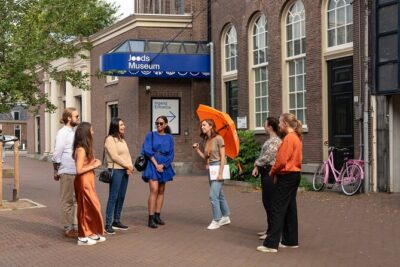 ★ 5.0Anne Frank’s Story – Guided Walking Tour through AmsterdamFrom $3911,619 reviews
 ★ 4.8Amsterdam: Life of Anne Frank and World War II Walking TourFrom $3710,467 reviews
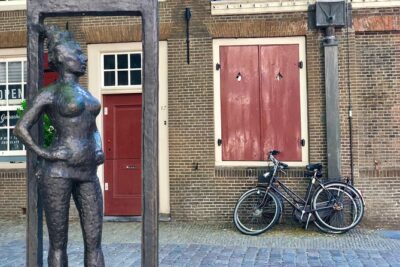 ★ 5.0Absolutely Amsterdam – the Essential Introductory Walking TourFrom $53,629 reviews
 ★ 4.8Amsterdam: Anne Frank Guided Small Group Walking TourFrom $282,722 reviews
 ★ 4.9Amsterdam: Anne Frank Walking Tour – Guided in EN/DE/IT/ESFrom $282,676 reviews
 ★ 4.9Amsterdam: Guided Cultural Walking TourFrom $292,384 reviews
 ★ 4.2Amsterdam: Guided Ganja Walking Tour of Coffee ShopsFrom $272,092 reviews
 ★ 5.0Anne Frank Walking Tour Amsterdam Including Jewish Cultural QuarterFrom $751,879 reviews
Browse the lists this tour appears in