
REVIEW · AMSTERDAM
Amsterdam: Historic Walking Tour
Canals turn Amsterdam into a storybook. This 2-hour walk through the historic center with a licensed local guide is built around seeing the big sights and also the smaller places locals actually mention, with canal and city story clues along the way from the Damrak area. Guides such as Arre are praised for tailoring the route to the group.
I especially love how the stops connect into one timeline, starting with Dam Square’s palace (originally the city hall) and then continuing to the Nieuwe Kerk and the former main post office. I also like the hidden courtyards and the way your guide explains why Amsterdam counts over 100 canals and over 1,000 bridges in a city that traces back about seven centuries. One drawback: it is a walking tour with no food included, so plan a drink or snack on your own if you get hungry.
In This Review
- Key highlights for this Amsterdam historic walk
- Entering Amsterdam’s historic center in just 2 hours
- Meeting point on Damrak: easy start, central location
- Dam Square and the palace that began as city hall
- Nieuwe Kerk: a standout landmark with story behind it
- The former main post office: how communication fueled growth
- Canal district origins and the royal thread
- Hidden courtyards and where locals actually hang out
- What the guides do right, from Arre to Maria to Scarlet
- Price and value: is $35 a good deal for 2 hours?
- Logistics that matter on a walking tour like this
- Should you book this Amsterdam Historic Walking Tour?
- FAQ
- How long is the Amsterdam Historic Walking Tour?
- What is the meeting point for the tour?
- What sights are included in the tour?
- How much does the tour cost?
- Are food and drinks included?
- What languages is the tour offered in?
- Is cancellation free?
- Can I book and pay later?
- Is the tour guided by a licensed professional?
- Is this tour suitable for someone visiting Amsterdam for the first time?
Key highlights for this Amsterdam historic walk
- Dam Square power story: the palace that began as the city hall, then the bigger context around how Amsterdam ruled itself
- Nieuwe Kerk stop: a key landmark that fits into the city’s royal and religious timeline
- Canal district origins: you’ll connect canals to trade, money, and how neighborhoods grew
- Former main post office: a distinctive stop that helps explain how communication supported commerce
- Hidden courtyards and local-feeling streets: you get glimpses most people skip, even in central Amsterdam
Still weighing this one up? Here is what else we have reviewed around Netherlands.
- Zeeland Zeehonden strand safari NL/DE★ 4.5 · 58 reviews
- e-Scavenger hunt Deventer: Explore the city at your own pace★ 4.0 · 34 reviews
- 1 Hour of Whisky Distillery Experience★ 4.5 · 33 reviews
- Discover Amerfoort’s city center in this Outside Escape game tour★ 4.5 · 32 reviews
Entering Amsterdam’s historic center in just 2 hours
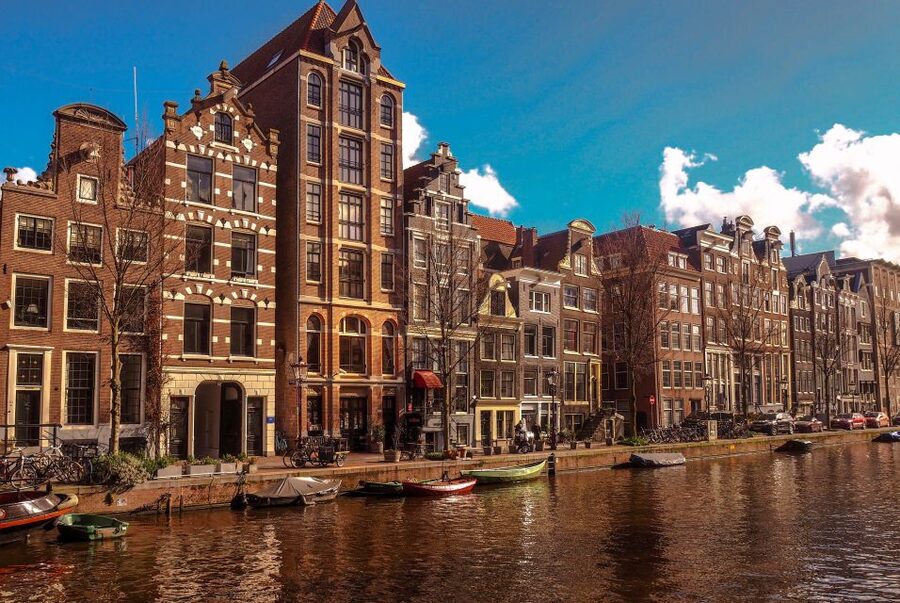
Amsterdam can feel like it has two speeds. There is the fast, photo-rush version, where you hop from one famous spot to the next. Then there is the version where the canals start making sense, where you understand why the city looks the way it does and how it ended up with so many bridges and waterways.
This tour is designed for that second speed. In two hours, you walk through Amsterdam’s historic center with a licensed local guide, moving between major sights and lesser-known corners. The goal is not to list facts like a textbook. It is to help you make connections, so the city feels understandable instead of random.
For you, the biggest win is orientation plus context. If it is your first time in Amsterdam, you will leave with a map in your head. If you have been once before, you might still find the route helpful because the guide’s perspective turns familiar landmarks into meaningful story stops.
Meeting point on Damrak: easy start, central location
You meet at the main entrance of the Park Plaza Victoria Hotel, Damrak 1 to 5, 1012LG, Amsterdam. That location is handy because it puts you right in the historic center zone without forcing a long transit before your tour begins.
A practical tip: arrive a few minutes early and take a quick look around. The Damrak area is busy, and your guide will likely want everyone grouped and ready to move. Once you start walking, the tour pace is meant to cover a lot, so being present and ready at the start helps.
Also, bring shoes you can walk in for two hours. Amsterdam is great on foot, but cobblestones and canal-side paths can be a little unforgiving if your footwear is more stylish than supportive.
Dam Square and the palace that began as city hall
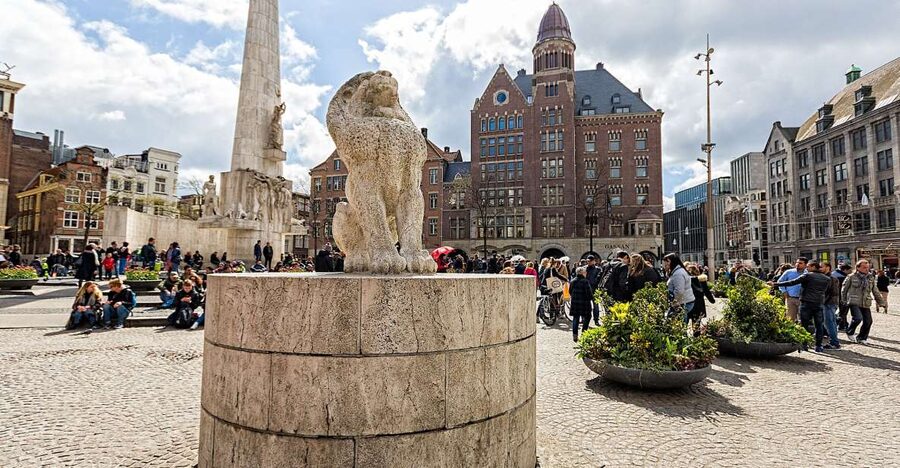
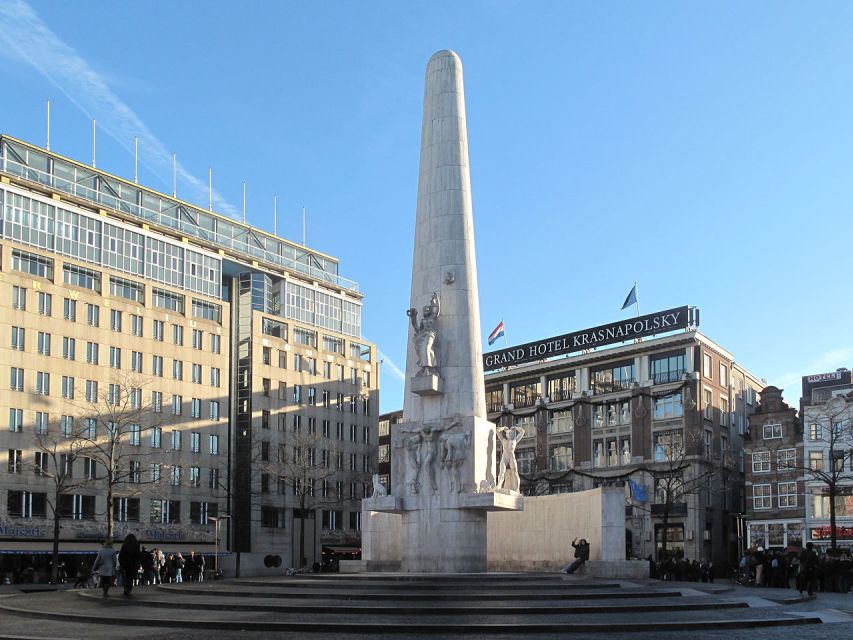
Dam Square is the obvious stop, but what makes this tour worthwhile is why it matters. You do not just point at buildings. You learn how this area fits into Amsterdam’s early structure and power.
The palace on Dam Square is highlighted because it was originally built as the city hall. That detail changes how you look at the square. You stop thinking of Dam Square as only a landmark and start seeing it as a stage where civic power played out for centuries.
From here, your guide builds the thread into the rest of the center. In a well-run two-hour walking tour, you want your first stop to act like an anchor. Dam Square does that. It gives you a clear starting point for the city’s story of governance, growth, and reputation.
If you like architecture with a reason attached, this part works well. The building is not the point alone. The point is what it represented, and how Amsterdam’s leaders and institutions shaped the city you see today.
Nieuwe Kerk: a standout landmark with story behind it
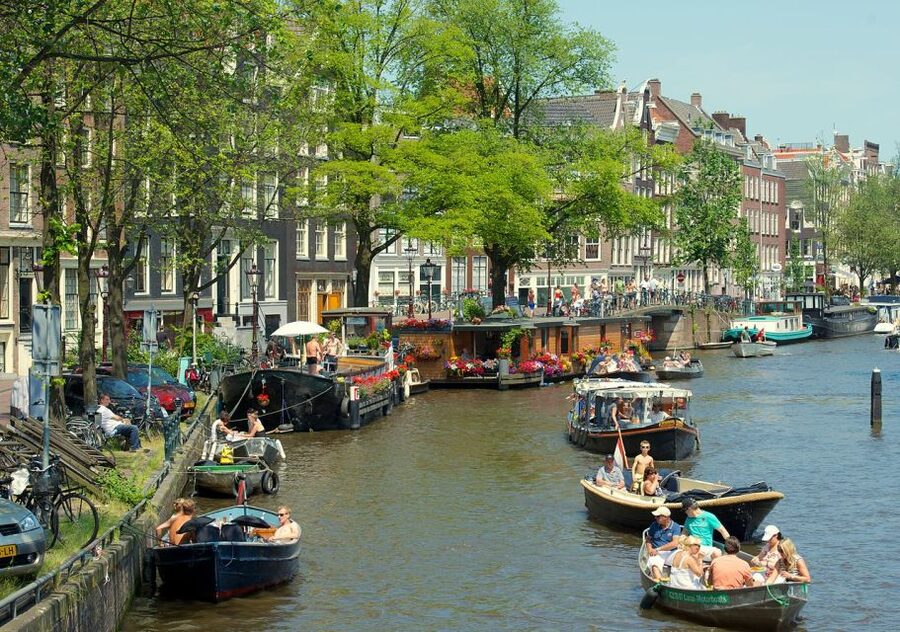
Next up is the Nieuwe Kerk. It is one of those Amsterdam sights that most people recognize by name, but not everyone connects it to the broader storyline.
Here, the guide ties it into the themes you came for: history, the city’s cultural development, and Amsterdam’s relationship with royal life. The tour description also points to learning about the Dutch Royal Family origins, and this is where that theme feels naturally placed as you move through the center.
What I like about including a church in a canal and commerce story is that it reminds you Amsterdam was not only about money. Civic life also included faith, ceremonies, and public identity. That mix is part of what makes Amsterdam’s center feel so layered.
This stop also tends to be a good reset for your legs. You are still walking, but you have a defined landmark moment. If you are the type who likes to pause, look up, and take a few minutes to absorb surroundings, the Nieuwe Kerk portion fits that rhythm.




The former main post office: how communication fueled growth
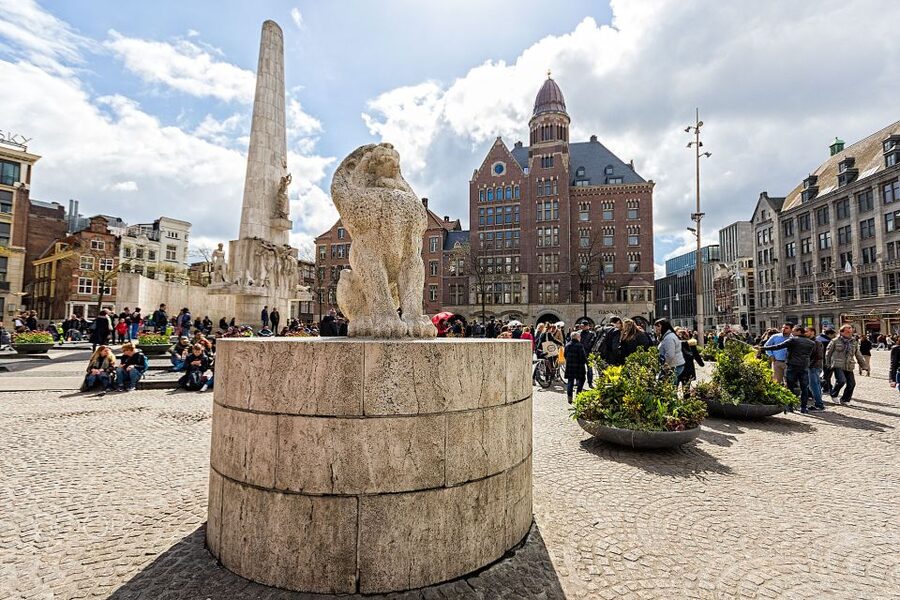
You also pass the former main post office. That might sound like a quirky detail until you realize how much trade depends on timely information. When merchants can coordinate shipping, contracts, and credit across distances, cities grow faster and smarter.
On this tour, the post office stop supports the larger themes of Amsterdam’s expansion through trade and international influence. You get a sense of how the city’s global connections were not accidental. They were built, organized, and strengthened over time.
In practical terms, this is a great stop for anyone who likes the behind-the-scenes angle. You learn how Amsterdam’s economic strength in the 16th, 17th, and 18th centuries connected to banking, arts, and architecture. The post office works like a piece of that puzzle you might not have noticed on your own.
If you enjoy learning how everyday systems like mail and coordination shaped city growth, you will probably find this part more interesting than you expect.
Canal district origins and the royal thread
Amsterdam’s canals are the star, but a tour that only focuses on the water misses the point. Here, you get an explanation of the origins of the canal district, which helps you see the canals as infrastructure, not just scenery.
Your guide connects the canal story to larger forces: international banking, trade, arts, and architecture. Those themes matter because they explain why the canal belt area became so valuable and so carefully designed. Wealth did not just arrive. It reorganized the city around itself.
The Dutch Royal Family theme also stays in the background as you move through the center. Even if you are not a monarchy buff, this adds a social layer. It helps you understand Amsterdam as a place where political influence, public identity, and culture all overlapped.
This is also where the tour’s pacing matters. In two hours, you cannot cover every canal history detail. What you can do is gain the right “why” behind what you see. That is what this tour aims for.
Hidden courtyards and where locals actually hang out
One of the best parts of this kind of walk is when it stops being only about big monuments. You get moments that feel more like wandering with a local friend.
The tour includes walking past hidden courtyards. Those are the spaces where Amsterdam’s center surprises you. You look at a facade on a street and then suddenly you are facing a calmer interior world, tucked away from the traffic and tourist noise. It is the kind of Amsterdam that makes you want to go back and explore more on your own.
The tour also brings in present-day Amsterdam. You will hear about how locals and visitors enjoy beers, wines, and food in the many bars, cafés, and restaurants around the city. Food and drinks are not included, but it is still useful. Your guide is pointing you toward how locals experience the city now, not just how it worked centuries ago.
This part is especially valuable if you are trying to balance sightseeing with actually enjoying Amsterdam. History can drain your energy. Courtyards and casual local life help you recharge, even without a formal break.
What the guides do right, from Arre to Maria to Scarlet
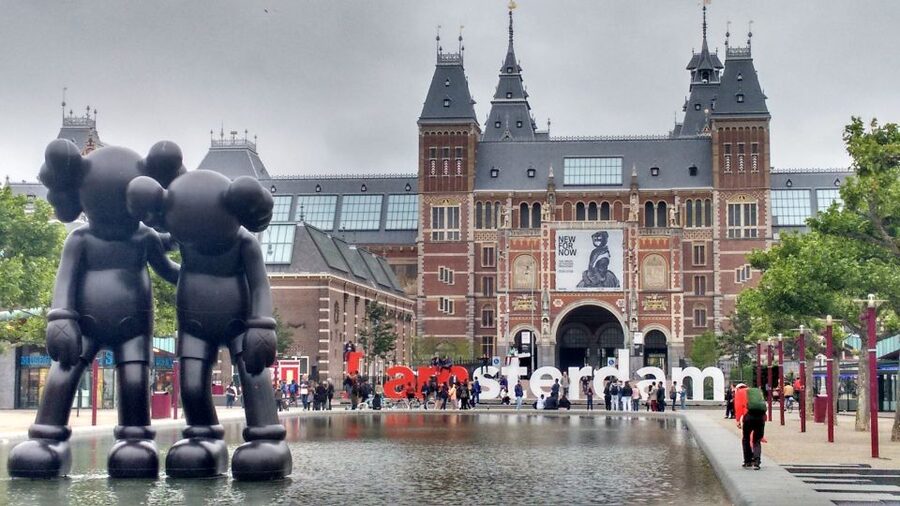
The quality of a walking tour lives or dies with the guide’s storytelling and flexibility. Here, the guides stand out in a consistent way.
Arre is praised for breadth of knowledge, humor, tact, and for tailoring the sites to the group. That matters because Amsterdam’s center is dense. A good guide does not just march forward. They choose the right angles for the people in front of them.
James is called out for answering questions and for showing things you would not have seen otherwise. That is what you want from an English or German live guide. You want to feel free to ask, not trapped in a one-way lecture.
Maria earns strong marks for being friendly, knowledgeable, explaining clearly, and answering questions. Scarlet is noted for adapting to group size and age, and Aaron is mentioned as a great first-trip experience.
One small note: names can get lost during quick starts. If you care about it, ask for the guide name right at the beginning.
Price and value: is $35 a good deal for 2 hours?
At $35 per person for a 2-hour licensed guide walk, this sits in the sensible range for central Amsterdam experiences. The key value point is that you are paying for someone to organize the city for you in real time.
You get:
- A local, professional, licensed guide
- A structured walk through the historic center’s main sights
- Explanations that connect canals, architecture, and cultural development
Food and drinks are not included, so you should treat this as the story part of your day, not the full experience package. That can actually be a plus. You stay in control of what and where you eat, instead of being pushed into a set menu.
The tour also works well if you want to get more out of the rest of your Amsterdam time. A good orientation walk can prevent wasted hours wandering in the wrong direction, or paying for guided access elsewhere when you still do not understand the layout.
If you like history that is explained in context and you are comfortable walking, $35 is a fair deal.
Logistics that matter on a walking tour like this
This is an English and German tour with a live guide. If you speak either of those languages, you should be able to follow the story and ask questions.
The walking format also means you should manage your expectations. You will cover a lot for two hours, which is exactly why you might want to keep your day flexible around it. If you have a packed schedule with museum tickets right after, give yourself a bit of buffer. Amsterdam is full of charming detours, and you may want time to continue those on foot later.
On comfort, plan for weather. Amsterdam weather can shift quickly, and since food stops are not included, you do not get built-in shelter time. Layer up, especially in cooler months.
Should you book this Amsterdam Historic Walking Tour?
Book this if:
- You want a guided way to understand why Amsterdam looks the way it does
- You plan to explore the historic center on your own later and want a mental map first
- You like local perspective, including hidden courtyards and where day-to-day life fits in
- You prefer short, focused tours, not half-day marathons
Skip or reconsider if:
- You need food included, or you get hungry easily during long walks
- You dislike history and would rather spend your time on museums or neighborhoods built for modern nightlife
- You have mobility limits that make cobblestone walking hard
Overall, this is a strong option when you want Amsterdam’s center in story form, with major landmarks like Dam Square and Nieuwe Kerk, plus the smaller moments that help you feel the city beyond the obvious photos.
FAQ
How long is the Amsterdam Historic Walking Tour?
The tour lasts 2 hours.
What is the meeting point for the tour?
Meet the guide in front of the main entrance of the Park Plaza Victoria Hotel at Damrak 1-5, 1012LG, Amsterdam.
What sights are included in the tour?
You will see the palace on Dam Square (originally built as the city hall), the Nieuwe Kerk, and the former main post office, along with other key areas in Amsterdam’s historic center.
How much does the tour cost?
The price is $35 per person.
Are food and drinks included?
No. Food and drinks are not included.
What languages is the tour offered in?
The live tour guide speaks English and German.
Is cancellation free?
Yes, you can cancel up to 24 hours in advance for a full refund.
Can I book and pay later?
Yes. You can reserve now and pay later.
Is the tour guided by a licensed professional?
Yes. It includes a local guide and a professional or licensed guide.
Is this tour suitable for someone visiting Amsterdam for the first time?
It can be a great fit because it is designed to help you understand the city’s culture and where it came from, while covering the major sights of the historic center.
Everything Else From Our Netherlands Notebook




Also Reviewed Around Netherlands




Fresh off the review pile in Netherlands
- Hattem’s Windmills, Bakeries and Ghosts: A Self-Guided Audio Tour
★ 3.5 · 3 reviews - Zeeland Beach safari with Fishnet NL/DE
★ 5.0 · 3 reviews - e-Scavenger hunt Terneuzen: Explore the city at your own pace
★ 4.5 · 4 reviews - Discover Zutphen with a self-guided Outside Escape city game tour
★ 4.5 · 4 reviews - e-Scavenger hunt Tiel: Explore the city at your own pace
★ 4.5 · 4 reviews
Walking Tours, compared.
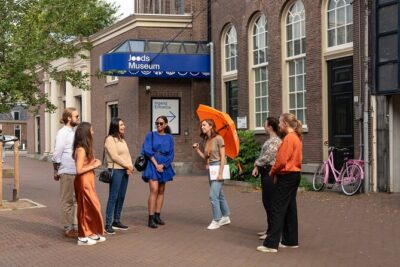 ★ 5.0Anne Frank’s Story – Guided Walking Tour through AmsterdamFrom $3911,619 reviews
 ★ 4.8Amsterdam: Life of Anne Frank and World War II Walking TourFrom $3710,467 reviews
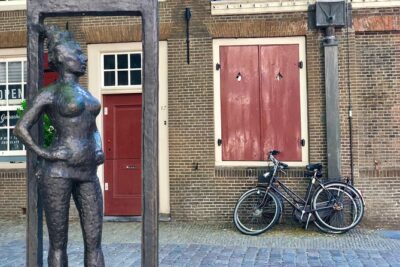 ★ 5.0Absolutely Amsterdam – the Essential Introductory Walking TourFrom $53,629 reviews
 ★ 4.8Amsterdam: Anne Frank Guided Small Group Walking TourFrom $282,722 reviews
 ★ 4.9Amsterdam: Anne Frank Walking Tour – Guided in EN/DE/IT/ESFrom $282,676 reviews
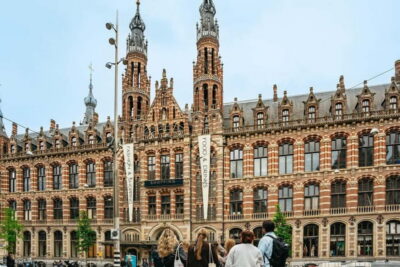 ★ 4.9Amsterdam: Guided Cultural Walking TourFrom $292,384 reviews
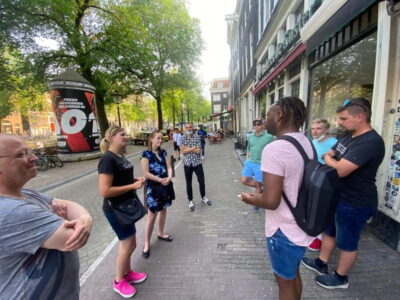 ★ 4.2Amsterdam: Guided Ganja Walking Tour of Coffee ShopsFrom $272,092 reviews
 ★ 5.0Anne Frank Walking Tour Amsterdam Including Jewish Cultural QuarterFrom $751,879 reviews
Browse the lists this tour appears in