
REVIEW · AMSTERDAM
Amsterdam Private Walking Tour of Famous Painters
Art history walks better than museum halls. This Amsterdam private walking tour tracks famous painters and the Dutch Golden Age through real streets, with stops that range from Amsterdam Centraal to the Jewish quarter. I also like that the guide can shift emphasis to match what you care about, like maritime trade routes or the development of women’s rights, using artists such as Rembrandt as your story spine.
Two big reasons I’d recommend it. First, I like the honest balance, you hear about the achievements and the failures, not just the polished “masterpiece only” version of Dutch art. Second, I like how personal and group-focused it is, since it is restricted to your own group and the experience is offered in English and Russian. One possible drawback to plan for: it is still a walking tour for about 3 hours, and one key stop, the Portuguese Synagogue, is marked as admission not included.
In This Review
- Key Takeaways Before You Go
- A Private Painter Walk Through Amsterdam’s Golden Age
- Starting at Amsterdam Centraal: Getting Oriented in the Golden Age
- St Nicholas Basilica and the Catholic-Protestant Story Behind the Art
- ’t Aepjen: Drinking Traditions, Games, and Painters Who Knew People
- Chinatown Stop: A Quick Change of Mood in the Middle of History
- Nieuwmarkt and De Waag: Myths, Anatomy, and the Dark Side of the Golden Age
- The Rembrandt House Focus: Talent, Risk, and What Lasted
- Portuguese Synagogue and the Jewish Quarter: Tradition, Diaspora, Rights
- Price and Value for a 3-Hour Private Tour
- Who This Tour Suits Best
- Should You Book This Private Painter Walking Tour?
- FAQ
- What languages is the tour offered in?
- How long is the Amsterdam Private Walking Tour of Famous Painters?
- Is this a private tour?
- What does the tour cost?
- What is included in the tour price?
- Are admission tickets included?
- Where do I meet and where does it end?
Key Takeaways Before You Go
Private group pace: You are not sharing the route with strangers, so the guide can slow down or speed up.
Golden Age themes, not just names: Religion, war, trade, and social change all connect back to painters.
Stops that explain context fast: Amsterdam Centraal, St Nicholas Basilica, and the old wooden-house bar help set the scene.
Art woven into daily life: Jan Steen and Frans Hals show up through drinking traditions and games.
A Rembrandt-focused moment: The Rembrandt House stop gets extra attention and centers on his life and fate.
Jewish neighborhood at the end: You finish in a quieter area where heritage sites and the flea market shape the atmosphere.
Prefer to see it on foot? More Amsterdam walks
- Anne Frank’s Story – Guided Walking Tour through Amsterdam★ 5.0 · 11,619 reviews
- Amsterdam: Life of Anne Frank and World War II Walking Tour★ 4.8 · 10,467 reviews
- Absolutely Amsterdam – the Essential Introductory Walking Tour★ 5.0 · 3,629 reviews
- Amsterdam: Anne Frank Guided Small Group Walking Tour★ 4.8 · 2,722 reviews
A Private Painter Walk Through Amsterdam’s Golden Age
Amsterdam has a way of rewarding slow travel. Even if you have been here before, a well-planned walking route can make the city feel new, because you are seeing how neighborhoods connect to ideas. This tour does that with Dutch painters as your guide to history, including the ups and downs of artistic life during the Golden Age.
What makes this one work for many people is the balance between art and real-world forces. You are not only looking at names. You are learning why people wanted certain images, why patrons mattered, and how war and politics shaped culture. I also like that the guide can tailor the angle to what you personally want, whether that means maritime trade routes or broader social topics like women’s rights.
It is a private tour, so you can ask follow-up questions without feeling rushed. And with both English and Russian offered, it is easier for mixed-language groups to enjoy the same storyline.
Starting at Amsterdam Centraal: Getting Oriented in the Golden Age
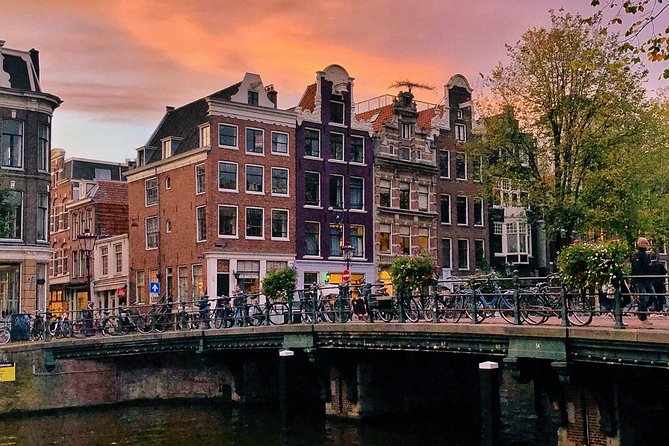
Your tour starts at Amsterdam Centraal Railway Station, at Stationsplein 13a. This is a smart first move. Centraal is one of those places that feels modern and busy, yet it is also a hinge point for understanding Amsterdam’s growth. You will meet here and get a quick historical framing around the Netherlands in the Golden Age.
Even if you are not a transit person, this opening helps you read the rest of the day. You start with the big picture, then later the guide can connect it to specific places you walk past. It also keeps the timing simple, since Centraal is easy to reach by public transportation.
Practical tip: this is the kind of start where a little preparation pays off. Bring comfortable shoes, and if you use a phone for directions, charge it before you go. You will be walking between multiple stops across different neighborhoods.
St Nicholas Basilica and the Catholic-Protestant Story Behind the Art
Next comes St Nicholas Basilica. The key detail here is that the church was built after the Golden Age, but it is still presented as a powerful setting to understand the era. The focus is on Catholics and Protestants, and on the Eighty Years’ War plus its consequences.
That matters for painting because the Dutch Golden Age did not happen in a vacuum. Religious conflict and political change shaped what communities valued and how they expressed belief. You can often spot those influences in subject matter, patron choices, and the tone of artworks from the period.
This stop is short, about 15 minutes. So think of it as a story anchor rather than a full architectural walkthrough. If your group loves church interiors or long art history lectures, you may want to add extra time after the tour, but for most people, this is a clean “set the stage” stop.
’t Aepjen: Drinking Traditions, Games, and Painters Who Knew People

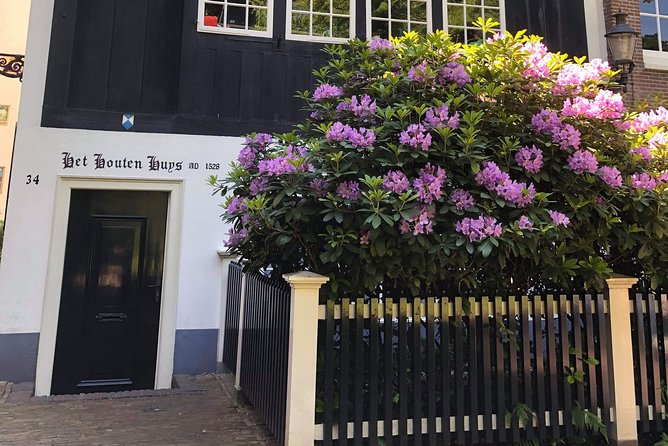
Then you head to ’t Aepjen, described as an authentic bar in the oldest wooden house in Amsterdam. This is the kind of stop I love on city tours, because it is not just about what artists painted. It is about how everyday life created the world artists observed.
The guide uses Dutch drinking traditions as a lens for national mentality, favorite games, and big celebrations. And the art connection is direct. You will look at how paintings by Jan Steen and Frans Hals, plus other artists, illustrate social habits and characters rather than only grand portraits or moral lessons.
One note of realism: there is no coffee or snacks included, and this is a bar stop. The tour details do not state tastings are included. So if you want a drink, plan on buying it yourself.
Also, because this is a short stop (about 15 minutes), the goal is conversation and context, not lingering. If you enjoy quick, vivid storytelling tied to places you can photograph from the street, this works well.
More Amsterdam trips with just your group

Chinatown Stop: A Quick Change of Mood in the Middle of History
A short visit to Chinatown follows. It is listed as admission ticket free and lasts about 15 minutes. This stop can feel like a palate cleanser, because you go from Golden Age themes into a modern neighborhood with its own atmosphere.
I like this kind of intermission on walking tours. Amsterdam is layers on layers, and if the whole day stayed locked to one time period, you would lose the sense of how the city kept evolving. Even without extra admission details, the walk through Chinatown helps you remember you are in Amsterdam now, not only in a museum timeline.
The only drawback to expect: this is not marketed as an in-depth Chinatown tour. It is more of a quick transition stop, so keep your goals flexible and let the guide frame it in the broader city story.
Nieuwmarkt and De Waag: Myths, Anatomy, and the Dark Side of the Golden Age
Next you reach Nieuwmarkt and De Waag. This is one of the most story-heavy segments on the route, with about 30 minutes set aside here.
You will learn about why this square was extremely popular with families for leisure time, centered around the former anatomical theatre. That sounds odd until you frame it. Amsterdam was a place where science, curiosity, and public spectacle could coexist in the same square. From there, the tour turns more dramatic, using paintings by Rembrandt to connect the area to witches, prisoners, and punishments of the Golden Age.
This is where the tour’s “achievements and failures” approach really shows. The Golden Age was not only elegant. It had fear, punishment, and propaganda. Art helped both reflect and shape public understanding, and Rembrandt becomes a key reference point in the way you are shown how people saw the world.
What to watch for as you walk: this section is longer than the earlier stops. Wear shoes that are good on uneven sidewalks. If your group gets photo-happy, keep an eye on the guide’s pace so you do not eat into time meant for the storyline.
The Rembrandt House Focus: Talent, Risk, and What Lasted
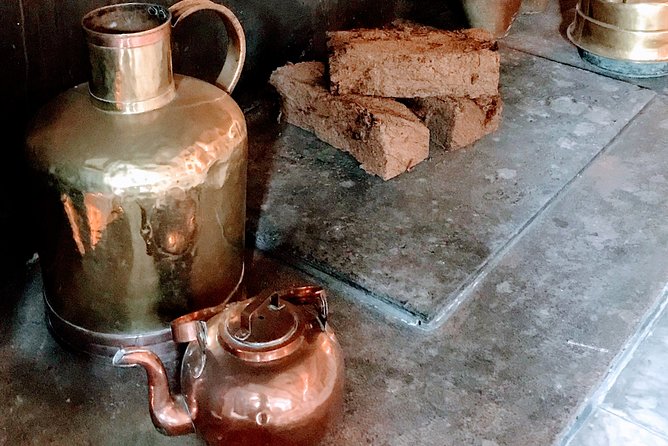
After Nieuwmarkt and De Waag, the tour gives special attention to the Rembrandt House. This is the big art-lovers moment.
You can expect the guide to talk about Rembrandt’s life, talent, and fate, and to explain what mattered for every successful artist in the Golden Age. That is a useful topic because it moves beyond biography. It forces you to consider how success worked then, likely tied to patrons, reputation, and the real-world pressures artists faced.
One practical consideration: the tour details do not clearly say whether entry to Rembrandt House is included or not, only that the stop receives special attention. So if you want to guarantee interior access, check what your tour includes for that specific visit when you book, rather than assuming.
Even if you only get the external viewpoint and a guided explanation, this stop can still be valuable. Rembrandt House becomes less about a single “see it” moment and more about understanding the artist as a person with a career, not a floating genius.
Portuguese Synagogue and the Jewish Quarter: Tradition, Diaspora, Rights
The tour ends at the Portuguese Synagogue of Amsterdam, in the Jewish neighborhood area around Mr. Visserplein 3. This is a quieter district feel compared to earlier parts of the day, and it is also where the sightseeing list becomes very practical.
You will have about 20 minutes focused on the Portuguese Synagogue and Jewish historical context, including the Jewish diaspora in the Netherlands, traditions, lifestyle, and rights. The area is also noted for nearby sights like the Jewish Historical Museum and a famous flea market.
This ending works because it closes the loop on how history shapes culture. If earlier stops handled religion and conflict through Catholic and Protestant context, this segment brings another angle, showing how communities navigated life, identity, and rights. You get a fuller view of the Golden Age world without pretending it was one uniform experience.
Admission for this stop is marked as not included, so plan your expectations accordingly. If the synagogue interior matters to you, budget for entry costs separately.
Price and Value for a 3-Hour Private Tour
The price is listed at $231.52 per person for about 3 hours. That sounds steep at first glance, until you compare what you are paying for. You are not paying for a bus or for a crowded group where questions get cut off. You are paying for a guide, a private format, and an art-focused route that connects multiple neighborhoods with a coherent theme.
This is also the kind of tour that can be worth it when your group has mixed interests. The route can be tailored, so you are not forcing one person to endure only art lectures or only architecture photos. Families with teenagers often like that structure because the stories are tied to real places.
One more value detail: group discounts are mentioned, and you get a mobile ticket. If you are traveling with companions, ask at booking about how discounts apply to your specific group size.
And remember, coffee and snacks are not included. You might want to grab something before the tour or plan a nearby stop for later, especially since you will be moving between neighborhoods.
Who This Tour Suits Best
This experience fits best if you want more than a sightseeing loop. If you like when art history comes with context, you will appreciate the way the guide links Dutch painters to social forces, war, religion, and daily life.
It also suits:
- Groups who want a private pace and easy conversation with the guide
- People planning a later museum visit, because the tour gives you story hooks you can carry into collections
- Anyone curious about Rembrandt beyond famous paintings, especially his life and the idea of artistic success in his era
- Travelers who enjoy thematic tours that can be adjusted to interests like maritime trade or women’s rights
If you want a long, fully indoor museum-style deep session, this may feel short, since it is built as a walking tour with compact stops. But as an introduction or an art-themed orientation, it is a strong format.
Should You Book This Private Painter Walking Tour?
I think you should book it if you want an art history day that feels grounded in Amsterdam streets, not sealed behind glass. The private format is the big advantage, because it lets the guide tailor the story to your interests and keep the pace comfortable. I also like the specific lineup of stops, from Centraal Station to St Nicholas Basilica, then into the old wooden-house bar and a Rembrandt-focused segment, ending in the Jewish neighborhood.
Skip it or reconsider if you dislike walking, or if you want every stop to include optional paid interiors. One stop, the Portuguese Synagogue, is listed with admission not included, and the Rembrandt House stop is described without clear admission details in what you were given.
If your group includes both art lovers and history-curious people, this tour is a rare kind of compromise that actually feels fun. You end the day with more than photos. You leave with a clearer sense of how people in the Dutch Golden Age lived, feared, celebrated, and commissioned art.
FAQ
What languages is the tour offered in?
The tour is offered in English and Russian.
How long is the Amsterdam Private Walking Tour of Famous Painters?
It runs for about 3 hours.
Is this a private tour?
Yes. It is a private activity, and only your group participates.
What does the tour cost?
The price is listed as $231.52 per person.
What is included in the tour price?
The guide is included. Coffee and snacks are not included.
Are admission tickets included?
Several stops are marked with admission ticket free, while the Portuguese Synagogue has admission not included.
Where do I meet and where does it end?
You meet at Amsterdam Central Railway Station, Stationsplein 13a, 1012 AB Amsterdam, and the tour ends at the Portuguese Synagogue of Amsterdam, Mr. Visserplein 3, 1011 RD.
Amsterdam at Walking Speed




Everything Else From Our Amsterdam Notebook



Also Reviewed Around Amsterdam




Fresh off the review pile in Amsterdam
- Full-Day Trip From Amsterdam to Keukenhof, Zaanse Schans + Cruise
★ 5.0 · 3 reviews - Boutique Dutch Food & History Tour with up to 8 guests only
★ 5.0 · 3 reviews - Private Tour to Windmills Zaanse Schans +Keukenhof – 7 Hours
★ 5.0 · 3 reviews - Full-Day Private Guided Countryside Tour from Amsterdam by Bike
★ 5.0 · 3 reviews - Amsterdam Red Light District and Old Town Walking Tour
★ 5.0 · 3 reviews
Walking Tours, compared.
 ★ 5.0Anne Frank’s Story – Guided Walking Tour through AmsterdamFrom $3911,619 reviews
 ★ 4.8Amsterdam: Life of Anne Frank and World War II Walking TourFrom $3710,467 reviews
 ★ 5.0Absolutely Amsterdam – the Essential Introductory Walking TourFrom $53,629 reviews
 ★ 4.8Amsterdam: Anne Frank Guided Small Group Walking TourFrom $282,722 reviews
 ★ 4.9Amsterdam: Anne Frank Walking Tour – Guided in EN/DE/IT/ESFrom $282,676 reviews
 ★ 4.9Amsterdam: Guided Cultural Walking TourFrom $292,384 reviews
 ★ 4.2Amsterdam: Guided Ganja Walking Tour of Coffee ShopsFrom $272,092 reviews
 ★ 5.0Anne Frank Walking Tour Amsterdam Including Jewish Cultural QuarterFrom $751,879 reviews
Browse the lists this tour appears in