
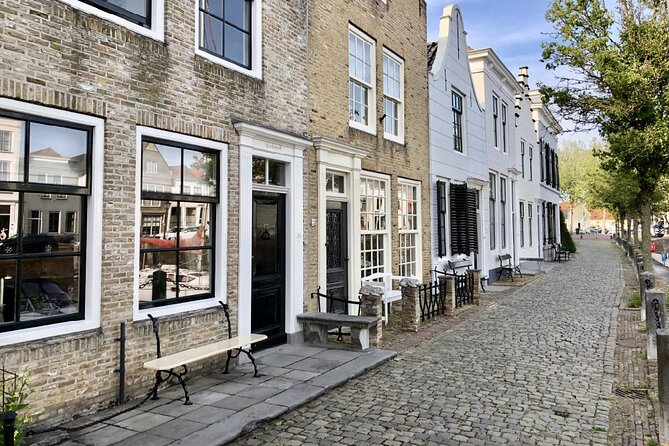
REVIEW · ZEELAND & THE DELTA
e-Scavenger hunt Goes: Explore the city at your own pace
A phone game turns a stroll into a mission. In Goes, this e-Scavenger hunt gives you a smart way to cover the town’s most important landmarks without locking you into a fixed walking pace. I like that you can start and pause whenever it suits your group, plus you get a solid overview of the area’s highlights in one outing.
The big practical win is value for small groups: one convenient fee covers up to six people, so it can work out far cheaper than paying per person for a guided walk. The one thing to consider is that the hunt depends on your phone, and some people have run into app issues like GPS or translation glitches, which can make the experience less smooth.
If you want a low-pressure way to explore Zeeland that still adds a little excitement, this is a good fit. Just plan for the fact that it’s not a classic guided tour, it’s a mobile game you run with your own rhythm.
In This Review
- Key points before you go
- How the e-Scavenger hunt works in Goes
- Price and who it makes the most sense for
- Getting started at Stationsplein, then building momentum
- Stadshaven of Goes: former harbor energy, now a marina
- Maria Magdalena Church area: when a parish becomes a castle site
- Historical Museum De Bevelanden: the former monastery setting
- City Hall complex: civic building, built in phases
- Former orphanage complex (Zusterstraat 13): gates, courtyards, and monastery roots
- Podium ‘t Beest: culture stop with child-friendly options
- Old man’s house with garden: a national monument in plain sight
- Grote Markt and the Tuesday market: plan around the day
- Tech and route reliability: the one thing to watch
- How to get the most out of the 2 to 4 hour time window
- Final verdict: should you book this e-Scavenger hunt in Goes?
- FAQ
- What is the duration of the e-Scavenger hunt in Goes?
- How much does it cost, and how many people can join?
- Is the game offered in English?
- What do I need to play the game?
- Where does the tour start and end?
- Can I pause and resume the hunt?
- What is the cancellation policy?
Key points before you go
- Self-paced game flow: start, pause, and resume on your timetable.
- One group price up to 6: good cost control for friends or families.
- A built-in route through central Goes: you’re nudged from spot to spot efficiently.
- Top landmarks tied to local stories: church site, monastery sites, and civic buildings all show up.
- Family-friendly stop included: Podium ‘t Beest has options for kids.
- Works best with cell service: data is needed, since your phone is the ticket and the game runs there.
More puzzle walks you can start whenever you feel like it
- e-Scavenger hunt Deventer: Explore the city at your own pace★ 4.0 · 34 reviews
- Discover Amerfoort’s city center in this Outside Escape game tour★ 4.5 · 32 reviews
- e-Scavenger hunt Zierikzee: Explore the city at your own pace★ 4.5 · 24 reviews
- e-Scavenger hunt Zwolle: Explore the city at your own pace★ 4.5 · 23 reviews
How the e-Scavenger hunt works in Goes
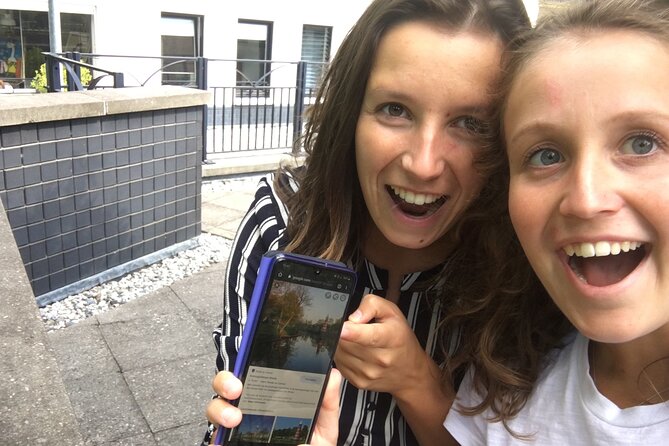
This experience is designed as an explore-at-your-own-pace city walk powered by an app. You start at Stationsplein, 4461 Goes, and the activity ends back at that same meeting point, so you’re not constantly wondering where you’ll land.
Expect a duration of about 2 to 4 hours. That time window is useful because it matches a typical half-day in Goes: long enough to feel like you covered real ground, but not so long that you’ll hate your shoes.
One detail that matters: you’re getting a mobile ticket and the game is played on your phone. That means your biggest job is simple: keep your phone charged, keep the screen readable, and follow what the app asks you to notice around town.
Price and who it makes the most sense for

The price is $37.29 per group, up to six people. In plain terms, this is the kind of deal that gets much better as your group grows. If you’re two people, you may feel the per-person cost more than if you’re a family of four or a small group of friends.
This format also suits travelers who like control. You can pause for coffee, hang back at a photo spot, or move faster if your group is energized. If you’re the type who prefers a flexible route over a tightly timed tour, this will probably feel comfortable.
Where it may feel less ideal is if you want a fully staff-led experience with guaranteed smooth tech. Because it’s app-driven, if your phone’s location signal is messy or the game text behaves oddly, you might spend a bit more time figuring things out than you planned.
Getting started at Stationsplein, then building momentum
Stationsplein is a smart starting point because it’s a natural entry into central Goes. It also helps that the activity runs Monday through Sunday, essentially all day during the long availability window listed, so you’re not boxed into one specific time slot.
When you begin, the key is to treat the hunt like a guided walk that lives in your pocket. I like this approach because it gives you structure without forcing the pace of a traditional tour guide. You’re not memorizing an itinerary, the app is doing the sequencing for you.
Practical tip: before you set off, make sure your phone is actually ready for use. The activity includes the app, but it does not include the use of your smartphone and data, so you’ll want to have both sorted out before you leave the station area.
Stadshaven of Goes: former harbor energy, now a marina
Your first meaningful stop is the Stadshaven of Goes, the former harbor. Today, it’s used as a marina, which changes the vibe from working port to boats and waterfront calm.
This is a good opening location because it frames the town quickly. Even if you know little about Zeeland, you’ll feel how water shaped Goes: the streets bend toward the harbor, and the waterfront becomes the anchor for the rest of your walk.
If you’re the kind of traveler who likes a quick “what is this place?” moment early on, this stop delivers. The only drawback is that weather can matter here. If it’s windy or rainy, you may want to keep the rest of your route flexible and pace yourself.
Out on the delta, other trips worth a look



Maria Magdalena Church area: when a parish becomes a castle site
Next comes one of the most story-rich locations in central Goes. In the shadow of the Maria Magdalena Church, there’s a stately building that was once a castle.
The site goes back to the twelfth century, when a parish church dedicated to Saint Mary Magdalene stood here. Over time, it saw extensions, then much of it was burned down in 1618, and later it rose again in restored glory.
What I like about this stop is that it gives you layered context without turning into a textbook. You’re looking at an architectural trace of religious life, conflict, rebuilding, and civic pride, all in a compact town center setting.
If you prefer explanations with visuals, this is where the hunt format helps. Instead of just reading a plaque, you’ll be prompted to notice specific details and move on when you’re ready.
Historical Museum De Bevelanden: the former monastery setting
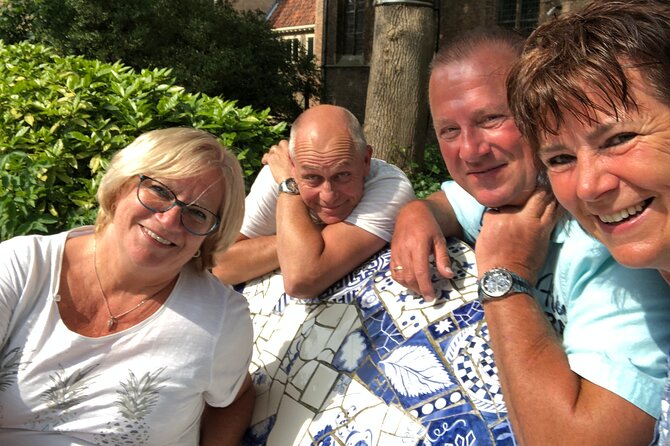
A short step forward brings you to the Historical Museum De Bevelanden. The standout detail here is location: it’s housed in a former monastery.
That matters more than it sounds. Museums can feel like generic rooms, but monastery settings tend to make the experience more atmospheric. Even without planning a deep museum visit, this stop helps you understand that Goes collected history in its institutions, not only in archives.
The museum stop can also be a good pacing tool. If your group is walking with energy, you’ll enjoy the momentum. If you’re tired, the museum setting gives you a chance to slow down and reset your senses for the next part of the route.
City Hall complex: civic building, built in phases
The City Hall of Goes is described as a large complex completed in several phases. That phased construction is a clue that you’re not looking at one single era frozen in time, but a building that expanded along with the town.
This is the kind of stop I like when I want a break from religious sites. You get a different lens on local life: government, administration, and how a town organizes itself physically.
If you’re not a big fan of architecture, don’t worry. In an e-hunt, your focus is usually on moving, observing, and answering what the game asks. City Hall works well because it’s easy to spot and connect to the idea of a functioning historic town.
Former orphanage complex (Zusterstraat 13): gates, courtyards, and monastery roots
One of the most intriguing stops is the former orphanage complex at Zusterstraat 13. It’s made up of several two-storey buildings around a courtyard, and you enter through a seventeenth-century gate.
Even better, this complex has deeper roots. It was founded in the fifteenth century as the Monastery of St. Agnes of the Black Sisters. That monastery origin gives the site a surprising story twist: religious community first, then later an orphanage complex.
I’d call this one of the best “slow look” moments in the whole walk. The courtyard layout and the gate are the kind of features you can actually see and feel, which makes the hunt prompts more engaging.
The only consideration is time. If you try to treat every stop as a full sit-and-read moment, the 2 to 4 hour window can start slipping. I recommend using this stop to slow down briefly, then keep the next stretches moving.
Podium ‘t Beest: culture stop with child-friendly options
Then you hit Podium ‘t Beest, a stage for music, theater, and film in Goes. For families, the important detail is that there are special children’s films and children’s theatre.
Even if you are not attending a performance on the day you go, this stop adds a modern layer. Many historic walks in the Netherlands focus only on old stone. Here, you’re reminded that towns keep living, and that cultural venues are part of the local identity.
For travelers with kids, this is a morale booster. A “museum and church” day can wear down younger attention spans, but a cultural venue signal often helps. For adults, it’s just a nice pace change and a reminder to look at the town as a place people experience today.
Old man’s house with garden: a national monument in plain sight
On Zusterstraat, you’ll also find the old man’s house with a garden behind it. This is marked as a national monument, which is exactly the kind of status that turns an otherwise ordinary building into a worthwhile photo stop.
This part of the route is valuable because it focuses on everyday life stories, not only grand religious or civic sites. A garden behind a house also gives you a small visual payoff, something quieter than plazas and larger courtyards.
If your group is doing this hunt as part of a broader day in Zeeland, this is a good place to gather your bearings again. You can pause, take a longer look, and reset before the final attraction pull towards the market area.
Grote Markt and the Tuesday market: plan around the day
If you’re in Goes on the right day, the market stop is a highlight. On Tuesdays, market vendors display their wares in the heart of Goes across the Grote Markt.
This detail changes how the whole hunt feels. A market day makes a city walk more flexible because you can turn pauses into snacks and small browsing sessions without breaking the flow. It’s also a built-in chance to interact with local life in a way no app can fully replace.
One caution: since the market is tied to Tuesdays, don’t assume it’s happening every day. If you’re visiting on another weekday, treat this stop as a central square highlight rather than a shopping event.
Tech and route reliability: the one thing to watch
The format is straightforward: your phone runs the game, and you move from stop to stop. The catch is that you’ll need data and you’ll rely on the app’s ability to locate you.
Some people have reported issues like GPS not working and bugs linked to translation problems. That’s not something you can fully eliminate, but you can reduce stress by going in prepared.
Here’s how to make it smoother:
- Keep your phone battery up, since the game and maps will be on screen.
- If your location pin is wrong, don’t panic. Follow the nearby buildings and street context the app points you toward.
- If you’re sensitive to language, double-check the language setting at the start so you’re not trying to interpret confusing text mid-walk.
How to get the most out of the 2 to 4 hour time window
This hunt works best when you treat it like a route with breathing room, not a race. Because you can start and pause whenever you want, you can shape the walk around your energy level.
I suggest building your plan like this:
- Spend the first third getting into the rhythm, don’t overthink each clue.
- Use the middle stops, like the monastery museum area and Zusterstraat sites, as your slower moments.
- Save flexibility near the end, especially if you might want to linger around the market area on Tuesdays.
The good part is that you’re not trapped by a strict end time, but the game does have a practical arc. If you wander off and lose the thread, you may find yourself backtracking more than you expected.
Final verdict: should you book this e-Scavenger hunt in Goes?
Book it if you want a structured self-guided city walk that covers real landmarks in central Goes, and you’re traveling with a small group that can share the one-group price up to six people. It’s also a smart choice if you like the added energy of solving prompts rather than just sightseeing passively.
Skip it or be extra cautious if you strongly prefer an entirely staff-led tour, or if you know your phone and GPS tend to struggle in towns with spotty signals. Since the game is app-based and depends on data, you’ll want to be comfortable troubleshooting on the fly.
If you like towns that feel walkable and story-focused, this hunt turns Goes into an activity, not just an address list.
FAQ
What is the duration of the e-Scavenger hunt in Goes?
The experience lasts about 2 to 4 hours.
How much does it cost, and how many people can join?
It costs $37.29 per group, up to 6 people.
Is the game offered in English?
Yes, it is offered in English.
What do I need to play the game?
You need the online app on your phone, and you’ll need your smartphone and data (data use is not included).
Where does the tour start and end?
It starts at Stationsplein, 4461 Goes, Netherlands, and ends back at the same meeting point.
Can I pause and resume the hunt?
Yes, you can start and pause the game whenever it suits you.
What is the cancellation policy?
Free cancellation is available. You can cancel up to 24 hours in advance for a full refund. If you cancel less than 24 hours before the experience starts, the amount paid will not be refunded.
Also Reviewed Around Netherlands





Out Across the Zeeland Delta



Puzzle Your Way Around Netherlands


Fresh off the review pile in Netherlands
- Hattem’s Windmills, Bakeries and Ghosts: A Self-Guided Audio Tour
★ 3.5 · 3 reviews - Zeeland Beach safari with Fishnet NL/DE
★ 5.0 · 3 reviews - e-Scavenger hunt Terneuzen: Explore the city at your own pace
★ 4.5 · 4 reviews - Discover Zutphen with a self-guided Outside Escape city game tour
★ 4.5 · 4 reviews - e-Scavenger hunt Tiel: Explore the city at your own pace
★ 4.5 · 4 reviews
Zeeland & the Delta, compared.
 ★ 4.6Rotterdam: Waterbus Ticket to Dordrecht and/or KinderdijkFrom $11542 reviews
 ★ 4.5Middelburg: City Canal CruiseFrom $17527 reviews
 ★ 4.2Biesbosch: Boat Cruise through National ParkFrom $21470 reviews
 ★ 4.4Werkendam: Boat Cruise and Biesbosch Museum Entry TicketFrom $28402 reviews
 ★ 4.4Middelburg: Guided City Walking TourFrom $14180 reviews
 ★ 4.6Dordrecht: City Canal CruiseFrom $21179 reviews
 ★ 4.7Dordrecht: Highlights and Hidden Gems Walking TourFrom $1584 reviews
 ★ 4.5Zeeland Zeehonden strand safari NL/DEFrom $1958 reviews
Browse the lists this tour appears in