
REVIEW · HISTORICAL TOURS
Financial History Tour
Money talks in Amsterdam, if you know where. This private 2.5-hour walk connects the city’s financial muscle to its culture, starting at Beurs van Berlage and heading through the Dam-area with room for great photo stops along the way. It’s priced as a group experience (up to 10), so the pace stays human, not bus-like.
What I especially like is the guide focus. In particular, Tijs de Boer stood out for the clear explanations and the extra local hints, the kind that help you notice more on your own. The route also gives you more than one angle on Amsterdam’s money story, including how speculation took hold.
One consideration: the tour is moderate walking with shorter on-site time blocks, so if you want a long, slow museum-style visit, you may wish you had more time than this gives.
In This Review
- Key highlights worth your attention
- A 2.5-hour private walk built around Amsterdam’s money trail
- Beurs van Berlage: the exchange building that shaped Dam-area finance
- Stadsarchief Amsterdam: the archives in a banking-era basement
- Amsterdam merchants, money-making, and how bubbles formed
- Photo stops and local hints you will actually use
- Price and value for a group up to 10 people
- Who this tour fits best, and who might want something else
- Should you book the Amsterdam Financial History Tour?
- FAQ
- Is this tour private?
- How long is the Amsterdam Financial History Tour?
- What is the meeting point and where does it end?
- Is the tour offered in English?
- Is the admission included for all stops?
- How much does the tour cost?
- What kind of ticket do I get?
- What is the fitness level requirement?
- What is the cancellation policy?
Key highlights worth your attention
- A money-themed route that starts at the exchange and keeps the story moving through the city’s financial center
- Stadsarchief Amsterdam’s archives setting, with a basement look that ties banking-era space to city records
- Amsterdam’s merchant class and how they made money, explained in a way that connects culture to cash
- Tulip Mania and the idea of an early market bubble, tied to the floating flower market setting
- Private pacing, with flexibility for your questions and what you want to linger on
More of the older layers of Amsterdam
- Amsterdam Food and Cultural Tour with Tastings★ 5.0 · 2,442 reviews
- Amsterdam: Haunted History and Ghost Walking Tour★ 4.5 · 488 reviews
- Amsterdam High-End Dutch Food & History Tour – Up to 8 guests★ 5.0 · 482 reviews
- Amsterdam: Historic City Sightseeing Canal Cruise★ 4.5 · 444 reviews
A 2.5-hour private walk built around Amsterdam’s money trail
This is a private tour for just your group, up to 10 people. That matters more than it sounds. When you are not sharing the same narrow sidewalk with strangers, you get fewer awkward stops and more room to ask follow-up questions.
The tour runs about 2 hours 30 minutes and is offered in English with a mobile ticket. You start at Bistro Berlage, Beursplein 1 (1012 JW Amsterdam) and finish at Rokin 24HS (1012 KS Amsterdam), about 500 meters from the starting point. In other words, it’s not a marathon through town. You are concentrating on a specific financial slice of the city rather than trying to cover everything.
You should plan for moderate physical fitness. Nothing here screams strenuous, but expect walking and brief time at each stop. The biggest “work” is keeping your brain switched on, because the tour is about how finance shaped places, buildings, and behavior.
Beurs van Berlage: the exchange building that shaped Dam-area finance
You begin at Beurs van Berlage, one of Amsterdam’s exchange buildings built around the Dam area. Even before you get deep into the story, the setting gives you a clue about the city’s priorities. This is the built environment of trade and trust, the kind of architecture that signals order and credibility.
The entry here is free, and the stop is short, around 10 minutes. That quick timing is good for most people, because it keeps momentum while still giving you a meaningful start. You are not just looking at a facade. You are getting the idea that Amsterdam’s finance was not some abstract concept, it was a physical system that people worked around every day.
Photo-wise, this is a solid start point. The exchange district style tends to photograph well, and you will also have an easier time setting yourself up for the rest of the route. If you like taking pictures at recognizable landmarks, start with your first photos here, then let the guide steer your attention for what comes next.
A small practical note: since this is the first stop, it’s smart to show up a little early so you are not rushing your first questions. The best tours usually start with you already relaxed.
Stadsarchief Amsterdam: the archives in a banking-era basement
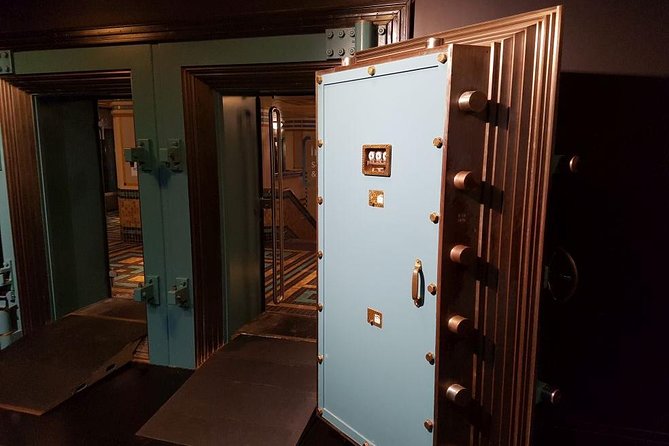
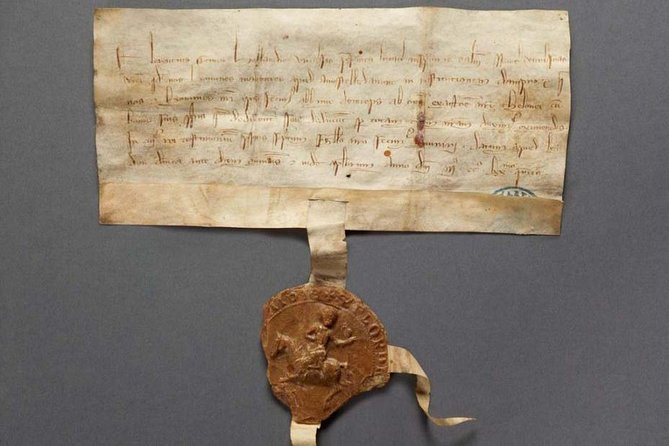
Next you head to Stadsarchief Amsterdam, where you get the feeling that money and records were never far apart. The tour highlights the contrast between a historic, 1920s bank building setting and what lives in the basement today: the city’s archives.
This stop also clocks in at about 10 minutes, and the admission ticket is included. That matters for value, because archives-type visits often cost extra on their own. Here, you are rolling that access into the tour, while still keeping the overall experience moving at a quick, story-driven pace.
What I liked about this part is the way it reframes “archives” as something more than quiet storage. When a city archives its own past, it’s making a decision about what deserves to be remembered. In a financial history tour, that connects nicely to how records support trade, property, and identity.
You’ll also be able to spot the “bank” atmosphere in the building. Even if you do not know architecture terms, you can usually tell when a space was designed for serious transactions rather than casual public visiting.
Amsterdam merchants, money-making, and how bubbles formed
After the building stops, the story turns toward people and behavior. This part is where the tour becomes more than architecture spotting. You learn about the rich merchants in Amsterdam and how they made their money, and then the tour brings in one of the most famous speculative episodes linked to the city: Tulip Mania.
The tour frames this in a practical way. It’s not just a trivia lesson about tulips. It’s about how a market idea can spread, how confidence gets priced into objects, and how an initial enthusiasm can become something bigger than anyone expects.
Tulip Mania is also where you can connect the dots to Amsterdam’s reputation for trade and early financial innovation. Amsterdam didn’t just build systems, it also tested human psychology inside those systems. Once you see that, the rest of the city’s history feels more coherent, like the same engine was running in different eras.
There is also a floating flower market angle in the story, tied to how the tulip trade operated in the city context. You get the sense that finance was not happening behind a desk only. It was part of the street-level rhythm, visible to people who were not bankers.
If you enjoy history that explains why people do what they do, this portion will click. If you only care about dates and names, you might want to pair this tour with a separate reading session afterward so you can keep the details straight. The tour is built for understanding, not for delivering a textbook.
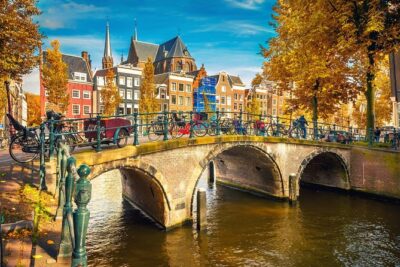


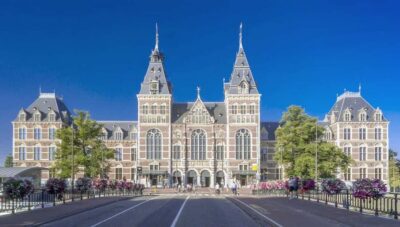
Photo stops and local hints you will actually use
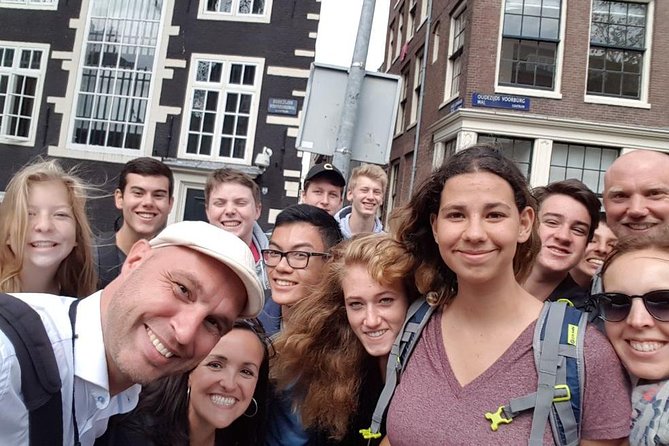
One of the best parts of this kind of private city tour is how it balances icons with less-obvious moments. The tour promises plenty of opportunities for photos at some of Amsterdam’s most iconic locations, and it also mixes in quieter stops as you travel through the city.
What makes it feel worth your time is the guide’s role. The feedback highlights that Tijs de Boer offers insights plus local hints on pretty much everything. That combination matters because it turns a “watch and listen” tour into something that changes how you move afterward.
Also, the route finishing near the end point helps your flow. You end at Rokin 24HS, and it is about 500 meters from where you started. So after the tour, you are still close to the core tourist infrastructure if you want to keep sightseeing. No forced trek back across town.
Here’s a small tactic I recommend: bring your questions about money and markets, but also ask simple Amsterdam questions like where locals go for something specific you care about. If your guide is good, those answers will come easily, because they already know the city’s rhythm and can connect it back to the history you just heard.
Price and value for a group up to 10 people
The price is $390.50 per group, for up to 10 people, for about 2 hours 30 minutes. That price point only makes sense if you treat it as a group deal, not an individual ticket.
To put it into a quick math reality check:
- If you fill the group with 10 people, the per-person cost is roughly $39.
- If you only have 4 people, it becomes about $98 per person.
So the value depends on your group size. Where this tour tends to shine is with families, friend groups, or couples who want a more personal pace and a guide who can tailor questions. The fact that it is private also supports the value idea, because you are paying for the flexibility and the human attention.
Another value signal is how far out people book it. On average, it’s booked 28 days in advance. That often means it’s popular enough to sell out on specific days, so planning ahead helps you avoid last-minute disappointment.
If you are the type who likes to learn while walking and you want a guided explanation for how Amsterdam became a financial heavyweight, this tour’s format is a good match. You get multiple stops tied into one storyline rather than random facts at separate points around town.
Who this tour fits best, and who might want something else
This experience is a strong fit if you care about how finance shaped a city, not just what money is in theory. The tour connects culture, buildings, and major events like Tulip Mania in a way that helps you understand Amsterdam as a living system.
It also suits people who like structure but still want flexibility. A private group with the ability to respond to your questions generally feels more comfortable than a fixed script. If you want time for photo moments, this route is designed with that in mind.
You might choose a different experience if you prefer long museum time or very deep economic modeling. The tour is short per stop, around 10 minutes at key locations, so it’s not meant to replace a full visit where you wander for hours.
And if you have very limited mobility, you should think carefully. The tour calls for moderate physical fitness, which usually means you will be on your feet for stretches. It does not say it is wheelchair accessible, so plan around your comfort level.
Should you book the Amsterdam Financial History Tour?
I think you should book this tour if you want a focused Amsterdam story about money and how it changed culture, and you like guides who explain clearly and add practical local tips. The guide mention of Tijs de Boer plus a consistent top rating suggests you are likely to get that solid combination of storytelling and insight.
Book it especially if your group is big enough to make the per-person cost feel reasonable. With up to 10 people, the price can turn into a bargain when shared, and the private format is the whole point.
You may skip it if you already know Amsterdam finance history well and you want deeper museum time. In that case, this might feel too short at each stop.
If you do book, my best advice is simple: come with curiosity. Ask one or two questions about how markets work and how people get swept up. This tour is built to answer those questions in a way that makes Amsterdam feel more understandable, not just more interesting.
FAQ
Is this tour private?
Yes. It is a private tour/activity, and only your group participates.
How long is the Amsterdam Financial History Tour?
It is about 2 hours 30 minutes.
What is the meeting point and where does it end?
You start at Bistro Berlage, Beursplein 1, 1012 JW Amsterdam, Netherlands. You end at Rokin 24HS, 1012 KS Amsterdam, Netherlands, about 500 meters from the starting point.
Is the tour offered in English?
Yes, it is offered in English.
Is the admission included for all stops?
Admission is free for Beurs van Berlage (Stop 1). Admission ticket is included for Stadsarchief Amsterdam (Stop 2).
How much does the tour cost?
It costs $390.50 per group, up to 10 people.
What kind of ticket do I get?
You receive a mobile ticket.
What is the fitness level requirement?
Moderate physical fitness is recommended.
What is the cancellation policy?
Free cancellation is available. You can cancel up to 24 hours in advance for a full refund. If you cancel less than 24 hours before the start time, the amount paid is not refunded.
Digging Into Older Amsterdam



Everything Else From Our Amsterdam Notebook




Also Reviewed Around Amsterdam




Fresh off the review pile in Amsterdam
- Full-Day Trip From Amsterdam to Keukenhof, Zaanse Schans + Cruise
★ 5.0 · 3 reviews - Boutique Dutch Food & History Tour with up to 8 guests only
★ 5.0 · 3 reviews - Private Tour to Windmills Zaanse Schans +Keukenhof – 7 Hours
★ 5.0 · 3 reviews - Full-Day Private Guided Countryside Tour from Amsterdam by Bike
★ 5.0 · 3 reviews - Amsterdam Red Light District and Old Town Walking Tour
★ 5.0 · 3 reviews
Historical Tours, compared.
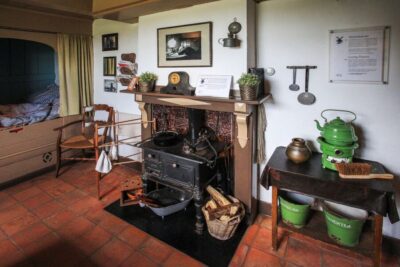 ★ 4.6Rotterdam: Kinderdijk UNESCO World Heritage Entry TicketFrom $251,477 reviews
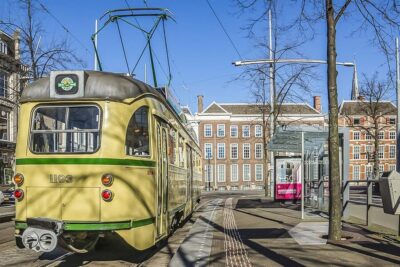 ★ 4.4The Hague: Hop-on Hop-off Old-Fashioned Heritage Tram TourFrom $181,083 reviews
 ★ 4.2Rotterdam: Harbor Cruise on a Historic ShipFrom $20812 reviews
 ★ 4.5Amsterdam: Haunted History and Ghost Walking TourFrom $30488 reviews
 ★ 5.0Amsterdam High-End Dutch Food & History Tour – Up to 8 guestsFrom $157482 reviews
 ★ 4.6Leiden: Cruise through the Historic City Center with GuideFrom $15445 reviews
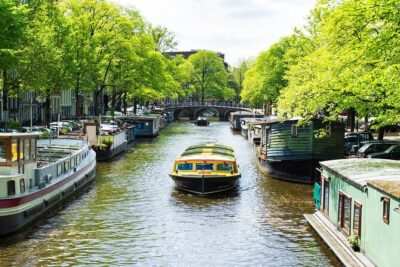 ★ 4.5Amsterdam: Historic City Sightseeing Canal CruiseFrom $18444 reviews
 ★ 4.6Amsterdam: Historical Highlights Walking Tour with TastingFrom $34381 reviews
Browse the lists this tour appears in