
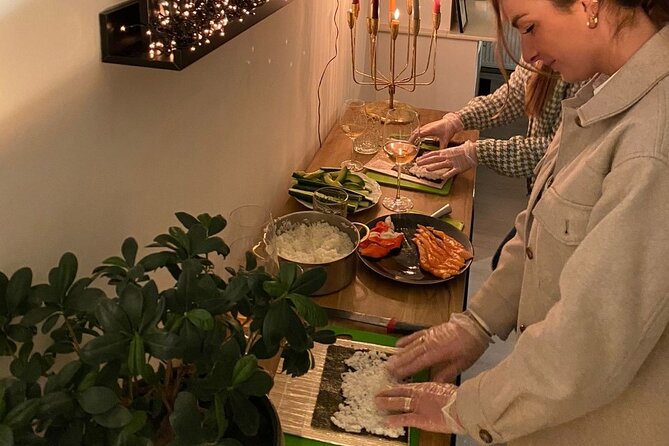
REVIEW · WORKSHOPS
Private Sushi Workshop in Hilversum
Sushi you actually make tastes better. This private workshop in Hilversum is built around learning four sushi styles, with chef guidance from start to dinner. You’ll cover maki, nigiri, uramaki, and temaki, and then eat what you make.
I especially like the hands-on coaching from Nigel van der Weerd, a former sushi restaurant owner and chef. The best part is the focus from rice to toppings, which is exactly where most home sushi falls apart.
One thing to consider: this experience needs a minimum group size of 4, so if you’re just two people, double-check availability before you plan the rest of your day.
In This Review
- Quick reasons this Hilversum sushi class works
- Where the workshop starts in Hilversum (and why it matters)
- Meet Nigel van der Weerd, the chef behind the counter
- A 2.5 hour plan built around making four sushi styles
- Maki: the roll that teaches you control
- Nigiri: the hand-pressed classic
- Uramaki: the inside-out roll
- Temaki: the hand cone you can finish fast
- Rice, toppings, and the small decisions that change everything
- The dinner part is real, not an afterthought
- Vegetarian, meat, or fish: you can tune the menu
- Private format and small group size: what you gain
- If you want it at your Airbnb or vacation rental
- Price and value: is $108.45 per person fair?
- Who should book this workshop
- Should you book this private sushi workshop in Hilversum?
- FAQ
- How long is the private sushi workshop?
- What does it cost per person?
- Where is the meeting point in Hilversum?
- What time does the workshop begin?
- What types of sushi will I learn to make?
- Can the menu be vegetarian?
- Are snacks and drinks included?
- Is there a minimum or maximum group size?
- What is the cancellation policy?
Quick reasons this Hilversum sushi class works
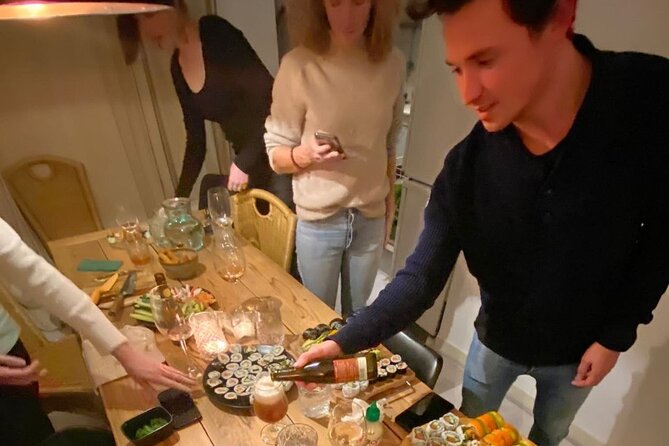
- Chef-led, private format that stays focused on your questions
- Four sushi styles in one 2.5 hour session, not a single-trick demo
- Snacks plus wine or beer included, or non-alcohol drinks if you prefer
- Teaching that starts at sushi rice, then moves to toppings and assembly
- Small max group size (10 travelers) keeps the pace from turning chaotic
More North Holland trips with just your group
- Private Electric Boat Rental in Haarlem (No License Required)★ 5.0 · 186 reviews
- Haarlem Private Canal Tour with Bites and Unlimited Drinks★ 4.5 · 18 reviews
- Private Transfer Service Between Ijmuiden and Amsterdam★ 5.0 · 6 reviews
- IJmuiden to Amsterdam Private Transfer★ 5.0 · 6 reviews
Where the workshop starts in Hilversum (and why it matters)
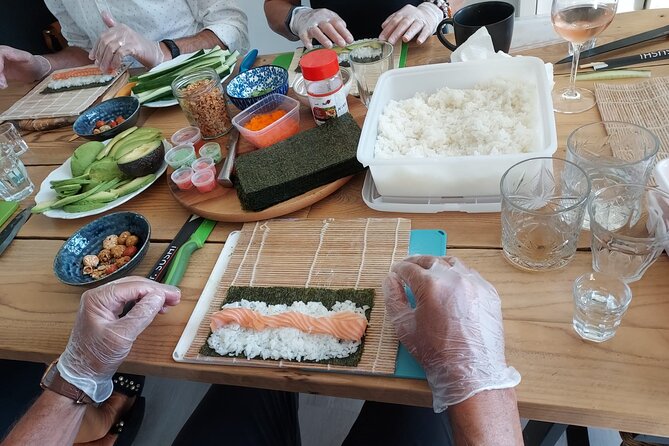
The workshop meets at Kometenstraat 1223, Hilversum, Netherlands, with a start time of 5:00 pm and an end back at the meeting point. That evening timing is great if you want a food-focused activity without stealing half your day.
Hilversum is also an easier base than you might expect. The workshop notes it’s near public transportation, so you can plan to arrive without stressing about parking. And since it’s a private experience with a capped group size, you’re not walking into a huge crowd where you get separated from the action.
Practical tip: arrive a few minutes early. Sushi classes move fast, and the first part usually sets your station up for the rest of the evening.
Meet Nigel van der Weerd, the chef behind the counter
This isn’t a generic cooking class taught by someone reading from a card. The workshop is led by Nigel van der Weerd, described as a sushi chef and former sushi restaurant owner. That matters because sushi is fussy. Technique, timing, and texture are the whole game.
In the short reviews, Nigel and Chantal are mentioned as a warm, patient team, bringing both passion and knowledge. You can feel what that means in practice: you’re less likely to get rushed through the basics, and more likely to learn why something works, not just how to copy a shape.
If you’ve ever tried making sushi at home and ended up with rice stuck to everything but the sushi, you’ll understand why this kind of guidance is worth paying for.
A 2.5 hour plan built around making four sushi styles
The core promise is simple: in about 2 hours 30 minutes, you’ll learn and make four kinds of sushi, then eat them as dinner. You start at the meeting point, you cook during the session, and you end where you started.
Here’s what you should expect from the structure, based on what’s emphasized in the experience details and what the reviews highlight:
1) You begin with sushi basics, including the rice.
2) Then you move into assembly skills for each style.
3) Finally, you enjoy the sushi you made for dinner, with included snacks and drinks.
Because the class covers four styles, pacing is key. You won’t have time to perfect one type to chef-level standards, but you will leave with repeatable skills and a clearer sense of what to practice next.
Maki: the roll that teaches you control
Maki is the classic rolled sushi. It’s where you learn pressure, alignment, and how to keep the filling from escaping. Even if you’ve made a simple wrap before, sushi rolls have their own rules because the rice texture and moisture matter.
In a class like this, maki is usually taught early enough that you get comfortable with the tools and the rhythm. You’ll likely learn how to spread rice evenly, then add toppings in a way that makes rolling achievable.
What to watch for: too much filling makes rolling messy. Too little makes it fall apart. The chef guidance is valuable because you can correct that quickly while you still have ingredients and time.




Nigiri: the hand-pressed classic
Nigiri is less about rolling and more about shaping and topping. It’s an excellent style for learning how sushi rice behaves with pressure and temperature.
Nigiri also tends to show you what sushi restaurants mean by balance. You’re not just making something that looks right. You’re building a texture pairing, where the rice and topping work together.
If you like the idea of sushi that feels more like art than food math, nigiri is often the most satisfying to make.
Uramaki: the inside-out roll
Uramaki is the inside-out roll style. It’s the one people recognize immediately because it has rice on the outside.
This is where you learn how spreading rice differently changes the whole experience. It also helps you understand why sushi chefs care about stickiness and moisture. Get that wrong and the roll becomes a rice glove.
Uramaki teaches you a useful trick for future home sushi: even if your knife skills are not perfect, your assembly can still look clean if your rice layer is right.
Temaki: the hand cone you can finish fast
Temaki is a hand-formed cone. It’s fun because you can get a result without needing perfect rolling technique every time.
Temaki is often the best “confidence builder” in a class that covers multiple styles, because it lets you apply what you learned about toppings and rice handling without the same tight wrapping demands.
The end result is also easy to share and eat. You get individual pieces that are slightly imperfect in a human way, which is exactly what makes temaki feel approachable.
Rice, toppings, and the small decisions that change everything
One of the most praised parts is the teaching from rice to toppings. That phrasing is a big deal. A lot of sushi failures happen in the middle zone, where people know how to buy ingredients but not how to handle the components.
In a structured workshop like this, you’ll get guidance on things like:
- How to handle sushi rice so it doesn’t go grainy or gummy
- How to build toppings so they don’t overpower the rice
- How to assemble with enough care that the sushi holds together long enough to eat
Also, because the workshop is private, you can ask the questions that matter to you. Maybe you want less raw fish. Maybe you’re nervous about shaping. Maybe you want to know why your roll unravels. A small group format makes those questions easier to answer quickly.
And honestly, sushi is one of those cuisines where you learn faster by watching someone correct your technique than by reading a recipe and hoping for the best.
The dinner part is real, not an afterthought
After the workshop, the sushi you make becomes your dinner. That changes the value equation compared with classes where you cook, then watch or taste a tiny portion.
You’ll also have snacks plus drinks included. The experience details specify alcoholic beverages like wine or beer, along with non-alcohol drinks as an option. So this is also a social, evening meal, not just a cooking task.
Practical note: since it starts at 5:00 pm, treat it like an early dinner plan. If you’ve already eaten a big meal, you might not get to enjoy everything.
Vegetarian, meat, or fish: you can tune the menu
This workshop can include menus with meat and fish, and it can be adapted for vegetarians. That flexibility is important for groups where not everyone wants the same style of sushi.
If you’re vegetarian, you’re not signing up for a compromise where you just watch others eat. You’re choosing a class that can be adjusted to your preferences.
If your group includes both fish lovers and people who prefer no fish, having a chef handle menu adaptation is the difference between a smooth experience and everyone quietly eating the wrong thing.
Private format and small group size: what you gain
The activity has a maximum of 10 travelers. It’s private by design, and reviews describe a cozy, warm vibe with plenty of patience.
That matters because sushi requires hands-on practice. If the group is too large, you end up waiting. With a smaller group, you get quicker feedback and a better chance to repeat moves until they click.
There’s also a stated preference for a group of minimal 4 people. That means you’ll likely see the best atmosphere when there’s enough of you to make it feel social, but not so many that the chef becomes a traffic controller.
If you’re traveling as a solo person or a couple, this is where you should be practical: availability might depend on that minimum.
If you want it at your Airbnb or vacation rental
A neat feature here is the possibility to hold the workshop at your guest or Airbnb location, as long as you have a kitchen available.
That can be a great fit if you want the most “at home” feeling, especially for groups staying together. It also turns the evening into a memorable host moment, where the chef brings the skill and you provide the setting.
Before you assume it’s possible, confirm what you have on hand. The only explicit requirement is a kitchen available, but in practice, a functional workspace makes everything smoother.
If you don’t have a kitchen setup that works for food prep, the standard meeting point format will likely feel easier.
Price and value: is $108.45 per person fair?
At $108.45 per person for about 2 hours 30 minutes, this is not a budget activity. But sushi classes with real chef instruction and a meal made from scratch are rarely cheap. The question is what’s included.
Here’s what you’re paying for:
- Private chef guidance from a former sushi restaurant owner
- Hands-on practice making four sushi types
- Snacks included
- Drinks included, including wine or beer, plus non-alcohol options
- A dinner you can actually eat, made from your own work
When you compare that to paying for a meal out plus a separate class, the bundled value is easier to justify. You’re essentially getting an instructor, ingredients, and dinner in one package.
Where it can be less valuable is if you only want to try one sushi type, or if you already have strong sushi-making skills and only need a refresher. For most people, though, learning four styles in one evening is a solid payoff.
Who should book this workshop
This is a great match if:
- You want hands-on food learning, not just watching someone cook
- You’re curious about the differences between maki, nigiri, uramaki, and temaki
- You want a real dinner experience, with snacks and drinks included
- You’re traveling with friends or family and prefer a smaller, focused class
It might be less ideal if:
- You’re traveling as two people and the minimum group size of 4 affects availability
- You hate the idea of evening scheduling, since the start time is 5:00 pm
- You don’t have flexibility for a kitchen setup if you’re hoping to host it at your rental
Should you book this private sushi workshop in Hilversum?
I’d say book it if you want a chef-guided sushi lesson where the goal is practical skill and a satisfying dinner. The biggest selling points are the hands-on coverage of four sushi styles and the teaching approach that goes from rice to toppings, with patience called out in the reviews.
If you’re on the fence, check availability for your group size first, especially if you’re fewer than four people. Also think about whether you want the standard meeting point format or you’d rather bring the chef to your Airbnb kitchen.
If you like learning through doing, you’ll come away with more than a nice meal. You’ll have a method you can repeat at home.
FAQ
How long is the private sushi workshop?
It runs for about 2 hours 30 minutes.
What does it cost per person?
The price is $108.45 per person.
Where is the meeting point in Hilversum?
The workshop starts at Kometenstraat, 1223 Hilversum, Netherlands.
What time does the workshop begin?
The start time is 5:00 pm.
What types of sushi will I learn to make?
You’ll make four varieties: maki, nigiri, uramaki, and temaki.
Can the menu be vegetarian?
Yes. Menus can include meat and fish or be adapted for vegetarians.
Are snacks and drinks included?
Yes. Snacks and alcoholic beverages are included, with wine or beer mentioned, plus non-alcohol drinks.
Is there a minimum or maximum group size?
The experience has a maximum of 10 travelers, and it notes it is preferably with a group of minimal 4 persons.
What is the cancellation policy?
You can cancel for a full refund up to 24 hours before the experience starts. If you cancel less than 24 hours before, the payment is not refunded.
Nobody Else on the Booking




Also Reviewed Around North Holland



Fresh off the review pile in North Holland
- Discover Texel (Den Burg) with Self-Guided Outside Escape game
★ 4.0 · 3 reviews - Private Sushi Workshop in Hilversum
★ 5.0 · 3 reviews - Private Transfer Service Between Ijmuiden and Amsterdam
★ 5.0 · 6 reviews - Amsterdam to Schiphol Airport Transfer Comfort & service.
★ 5.0 · 6 reviews - IJmuiden to Amsterdam Private Transfer
★ 5.0 · 6 reviews
Workshops, compared.
 ★ 4.8Amsterdam: Traditional Dutch Syrup Waffle Making WorkshopFrom $234,093 reviews
★ 5.0Amsterdam Traditional Dutch Syrup Waffle Making WorkshopFrom $27960 reviews
 ★ 4.8Amsterdam: Bols Cocktail Experience and Cocktail WorkshopFrom $41666 reviews
 ★ 4.5Amsterdam: 3-Course Meal in Historic 1st Class Waiting RoomsFrom $61292 reviews
 ★ 4.7The Hague: Beginner’s Surf LessonFrom $4578 reviews
 ★ 5.0Amsterdam Light Festival Winter Walk with Stroopwafel Workshop66 reviews
 ★ 5.0Distilling Class @ Spirited Union Rum Co. (Amsterdam)From $9665 reviews
 ★ 5.0Cocktail workshop @ Spirited Union Rum Co. (Amsterdam)From $5458 reviews
Browse the lists this tour appears in