
REVIEW · AMSTERDAM
Small Group LGBTQ+ History Tour in Amsterdam
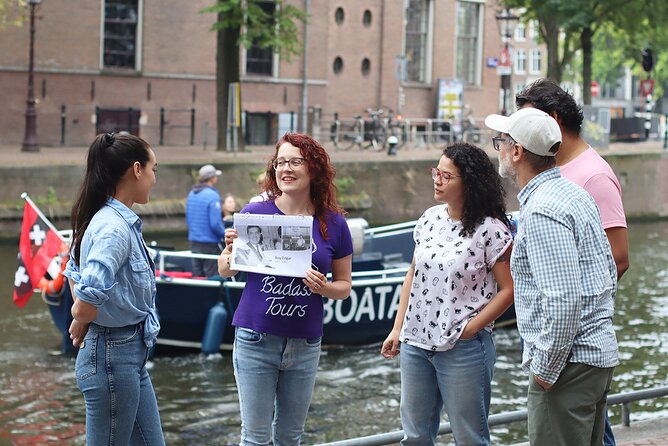
Amsterdam feels personal on this LGBTQ+ history walk. This small-group tour (max eight) lets you connect the dots across centuries, with storytelling local guides in English. You also get to see Amsterdam’s nighttime and canal corners without the usual crowds.
I love how the route picks surprising places where queer life and rights history actually happened. Expect free ticket moments and big stories, from the world’s first legal gay marriage to a trans soldier linked to the 18th-century militia.
One drawback to plan around: the experience requires good weather, so it is not a great pick when you know you will be dealing with heavy rain all day.
In This Review
- Key points I’d prioritize before you book
- Why a small-group LGBTQ+ history walk fits Amsterdam so well
- Timing, meeting point, and how the mobile ticket helps
- Rembrandtplein: nightlife center, a king’s affairs, and the world’s first legal gay marriage
- Munttoren (Munt Tower): a shopkeeper trying to shield friends from state violence
- Koningsplein: a name the Catholic Church tried to keep hidden
- Keizersgracht (Emperor’s Canal): the Pope of the Gays, a lesbian love triangle, and legal fallout
- Gay Monument: celebration, mourning, and a badass lesbian hero
- Herengracht: queer Resistance fighters in an inconspicuous canal house
- Torensluis: the trans soldier in Amsterdam’s 18th-century militia
- Who this tour is for, and who might want a different fit
- Value and the real takeaway from the $47.34 price
- Should you book this Amsterdam LGBTQ+ history tour?
- FAQ
- How long is the tour?
- Where does the tour start and end?
- How big is the group?
- Is the tour offered in English?
- Are admission tickets included for the stops?
- What happens if the weather is bad?
Key points I’d prioritize before you book

- Small group size keeps the conversation human, not lecture-style.
- English-only storytelling makes the history easy to follow and remember.
- Free admission moments are built into each stop, so you get more than just street scenes.
- Canal-town specifics like Keizersgracht and Herengracht turn famous Amsterdam landmarks into real-life evidence.
- A strong emotional arc goes from celebration to mourning, then into resistance and survival stories.
- Guides with energy like Guus and Elyzabeth can make a 2-hour walk feel way faster.
More of the older layers of Amsterdam
- Amsterdam Food and Cultural Tour with Tastings★ 5.0 · 2,442 reviews
- Amsterdam: Haunted History and Ghost Walking Tour★ 4.5 · 488 reviews
- Amsterdam High-End Dutch Food & History Tour – Up to 8 guests★ 5.0 · 482 reviews
- Amsterdam: Historic City Sightseeing Canal Cruise★ 4.5 · 444 reviews
Why a small-group LGBTQ+ history walk fits Amsterdam so well
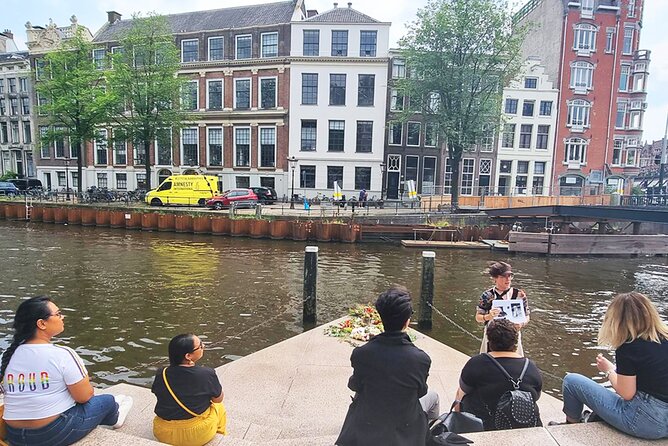
Amsterdam is perfect for history that feels present. This tour works because it does not treat LGBTQ+ stories like a side chapter. You move through the city the way people actually lived, socialized, and organized, with canal views and street-level details that make the past feel less distant.
What makes it especially effective is the format. With no more than eight people, you can ask questions and keep the pace comfortable. And because it is a guided walk with a local storyteller, the facts land as stories, not just dates.
Also, this is not only for LGBTQ+ history fans. If you love politics, religion, law, art, or everyday street history, you will still get a lot out of it. The guide connects the personal to the public, and that connection is where the tour becomes memorable.
Timing, meeting point, and how the mobile ticket helps
You start at Utrechtsestraat 4 (1017 VN Amsterdam) and end on Torensluis bridge (1012 VK Amsterdam) near the Multatuli sculpture. The tour runs about two hours, and with seven stops, it stays active without feeling rushed.
The mobile ticket is a practical touch. You avoid printed paper, and you are not trying to juggle a phone at the wrong moment. It matters more than it sounds because you are moving through different areas of central Amsterdam where meeting points can blur together.
Two more practical notes that help you enjoy the walk:
- Wear comfortable shoes. Amsterdam streets and canal-adjacent sidewalks are not always flat, and your time adds up fast.
- Bring a layer. Even on a clear day, canal wind can change the feel quickly.
Rembrandtplein: nightlife center, a king’s affairs, and the world’s first legal gay marriage
Your first stop sets the tone. Rembrandtplein is one of those places where visitors think they already know the story, because it is known for nightlife today. But your guide reframes it as a stage where queer life, public visibility, and political consequences all overlap.
You get a quick overview of Amsterdam, then the history starts landing. The tour shares stories about LGBTQ clubgoers, a married king who had affairs with men, and the claim of the world’s first legal gay marriage in Amsterdam. Whether you arrive knowing much or almost nothing, this opener does a smart job of hooking you into the bigger pattern: power, secrecy, and community all coexisted here.
Why I like this stop for first-time visitors: it gives you bearings fast. You understand where things are located in the city, and you also learn what to look for later, like how “respectable” institutions often sat right next to informal social life.
Possible drawback: because this is the first stop, it moves a bit quicker than later segments. If you love to linger, you might want to mentally flag the places you want to revisit after the tour.
Munttoren (Munt Tower): a shopkeeper trying to shield friends from state violence

Next you head to Munttoren (Munttower), and the mood shifts from nightlife to risk. This stop centers on a shopkeeper who tried to protect his friends when the state was pushing back hard.
This is where the tour becomes more than social history. You start hearing about what it costs to be part of a minority when the system is not neutral. The story is grounded in ordinary life, which is often the real shock. It is not just big-name leaders in official documents. It is people who make choices day to day, then pay the price when those choices matter.
If you like human-scale history, you will appreciate how this one is framed. It also helps you understand the later stops, because you can see the throughline: community, connection, then conflict with authority.
A small caution: stops like this can feel heavier if you prefer light and celebratory tours. Still, it is handled as part of the full picture, not as random sadness.
Other Amsterdam bookings from our review pile
Koningsplein: a name the Catholic Church tried to keep hidden
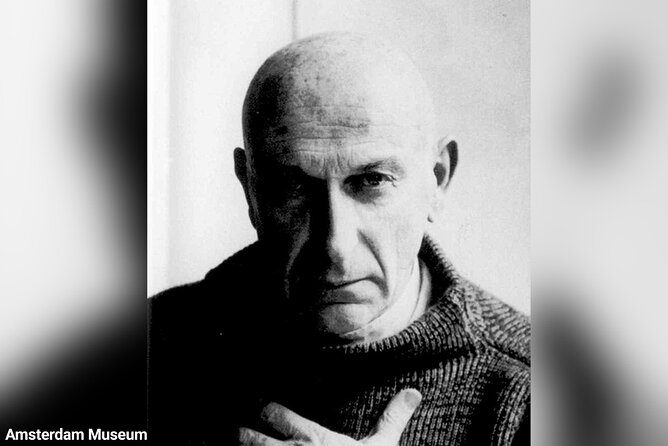
At Koningsplein, the tour turns toward religion and reputation. You learn how a familiar name connects to LGBTQIA history, in a way that the Catholic church tried to keep hidden.
That theme is important in Amsterdam’s story. The city is known for tolerance in popular imagination, but tolerance is complicated and uneven. Institutions shape what becomes visible, what gets recorded, and what gets erased. When your guide brings up how church power could influence public memory, it helps you read the city with sharper eyes.
This stop also balances the previous one. Instead of the state directly grabbing control, the church influence shows how other forces could manage visibility through suppression and silence. You start to notice how “hidden” does not just mean private. It can mean missing from the official narrative.
If you are the kind of person who likes to compare competing versions of history, you will likely enjoy this section a lot.
Keizersgracht (Emperor’s Canal): the Pope of the Gays, a lesbian love triangle, and legal fallout
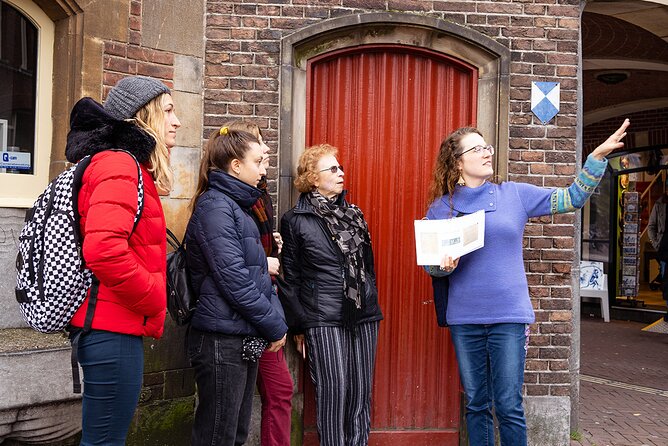
Then you move along Keizersgracht, and the stories get almost cinematic. Your guide shares the tale of the Pope of the Gays, a 17th-century literary lesbian love triangle, and a pompous doctor whose actions may have accidentally given lesbians legal cover.
Even if the details feel wild, the value is in what you learn about how rights can shift. Sometimes change comes from activism and community organization. Sometimes it comes from how courts, writings, and daily life intersect in ways nobody planned. The tour highlights that legal protection and social acceptance were not always cleanly connected. They could arrive by accident, or through reinterpretation, not just through noble speeches.
This stop is also visually satisfying. Canal streets are Amsterdam at its most iconic, but the tour uses that setting to teach you how to see meaning in plain geography. A canal becomes more than scenery. It becomes evidence of proximity, networks, and the places where people could meet without announcing everything.
The possible downside here is concentration. Keizersgracht stories are packed with characters and concepts in a short time. If you like to absorb slowly, you might want to take quick notes on your phone so you can look up names afterward.
Gay Monument: celebration, mourning, and a badass lesbian hero
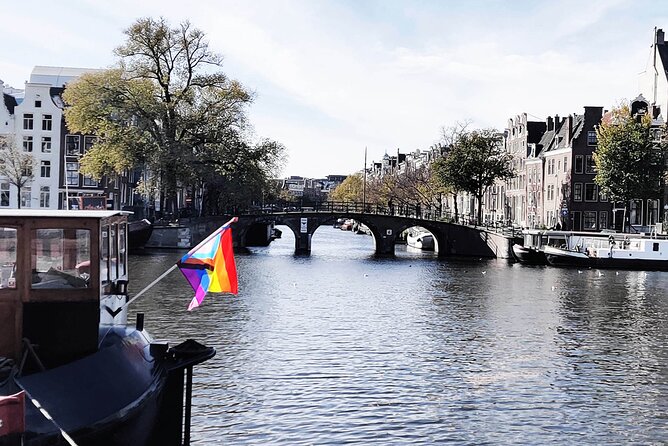
The Gay Monument stop is where the tour turns emotional in a different way. Your guide explains how, since its unveiling, it has served as a place of both celebration and mourning for Amsterdam’s LGBTQIA community.
This is one of the stops that makes the tour feel grounded. It is not only looking backward. You are standing in a public space where memory is maintained through time. That matters because it reminds you that LGBTQ history is not just what happened centuries ago. It is also what still needs space, visibility, and respect today.
The tour also frames the monument through a spotlight on a badass lesbian hero. That kind of framing is smart because it avoids turning everyone into abstract “figures.” You leave the stop with a clearer sense of personhood.
Possible drawback: if you are uncomfortable with public memorials or want strictly upbeat content, this stop may feel more intense. Still, it is part of why the tour works, it honors what joy and grief can share in the same community.
Herengracht: queer Resistance fighters in an inconspicuous canal house
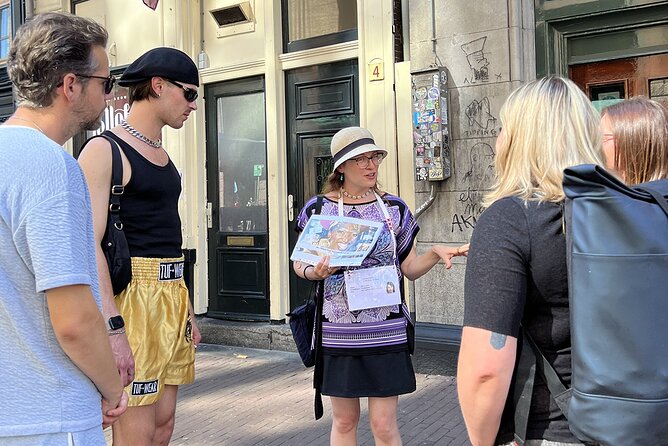
At Herengracht, the story shifts toward survival and resistance. You learn about queer Resistance fighters who worked from an inconspicuous canal house, which is exactly the point.
This stop is a reminder that resistance does not always look dramatic. Often it looks like silence, coordination, and careful movement through ordinary spaces. A canal house is not the first thing most people imagine when they think resistance, but that is why it lands. It teaches you to respect the everyday.
You also get a better understanding of why Amsterdam’s queer history is sometimes hard to find in standard routes. If people had to operate quietly, then records and visibility were also constrained. The tour helps you see what invisibility costs.
This is a great stop for readers who like history that explains how people endured, not only how they stood out. It gives the tour a strong “how did they survive” angle.
Torensluis: the trans soldier in Amsterdam’s 18th-century militia
You end at Torensluis, on the bridge by the Multatuli sculpture. The final story is one you might not expect: a trans soldier who served in 18th-century Amsterdam’s militia.
That last stop gives the tour a satisfying full-circle feeling. You started with public space, moved through power struggles, then landed on community resilience. Ending with a trans military figure reinforces that gender variance and queer presence were not new concepts even when they were undocumented or disguised.
Just as important, this stop helps you zoom out from the city’s present-day reputation. Amsterdam has always been a crossroads, and the tour reminds you that real people, with complex identities, lived their lives here long before modern labels.
If you are the type who likes to leave a tour with one lasting image in your head, this is likely to be it.
Who this tour is for, and who might want a different fit
This is a strong choice if you are:
- A history buff who likes stories tied to real addresses, not vague areas
- LGBTQ+ history curious, or anyone who wants a deeper view beyond stereotypes
- Someone who enjoys small groups and a chatty guide style
It may be less ideal if you want purely light and funny entertainment. Some stops lean into state pressure, forced silence, church suppression, and grief at a memorial. The tone is thoughtful, and the emotional arc is intentional.
If you already know a lot of Amsterdam LGBTQ history, you might still appreciate the route because it threads through surprising neighborhoods and creates connections between legal, religious, and social pressures.
Value and the real takeaway from the $47.34 price
At $47.34 per person for about two hours, this tour prices like a premium walking experience, but the value is in the structure. You get:
- A local storyteller style guide
- Max eight people, which keeps the group intimate
- Multiple free admission moments at each stop
- A route that covers centuries without turning into a lecture marathon
In other words, you are not paying only for a walk. You are paying for the guide’s ability to make connections and translate complicated history into human stories you can retell later.
The reviews also back up that you are getting energy, not just facts. People highlighted guides like Guus, who kept a small group engaged even during a cold, wet, windy Friday morning, and the sense that time flew by. Another guide mentioned in feedback, Elyzabeth, was praised for bringing history to life and changing the way Amsterdam feels when you see it through queer rights and lived experience.
That is the kind of payoff you want from this price. If you show up ready to listen, you will leave with a city you can read differently.
Should you book this Amsterdam LGBTQ+ history tour?
If you want a compact, high-impact way to understand LGBTQIA history in Amsterdam, I think you should book it. The mix of small group size, storytelling energy, and stops that most visitors miss is a strong combo.
Choose it if you care about context, not just names. The tour’s power is in the connections, how legal change can be accidental, how institutions shape visibility, and how community keeps showing up.
One last practical check: watch the weather. Because it needs good conditions, pick a day when you can comfortably walk outside for about two hours. If you do that, you will likely come away with that rare feeling, you learned a lot and still had fun doing it.
FAQ
How long is the tour?
The tour is about 2 hours.
Where does the tour start and end?
It starts at Utrechtsestraat 4, 1017 VN Amsterdam and ends on Torensluis bridge, 1012 VK Amsterdam, by the Multatuli sculpture.
How big is the group?
The tour has a maximum of 8 travelers.
Is the tour offered in English?
Yes, it is offered in English.
Are admission tickets included for the stops?
Yes, the stops list free admission tickets, and the tour includes a mobile ticket.
What happens if the weather is bad?
This experience requires good weather. If it is canceled due to poor weather, you will be offered a different date or a full refund.
Digging Into Older Amsterdam



Everything Else From Our Amsterdam Notebook




Also Reviewed Around Amsterdam




Fresh off the review pile in Amsterdam
- Full-Day Trip From Amsterdam to Keukenhof, Zaanse Schans + Cruise
★ 5.0 · 3 reviews - Boutique Dutch Food & History Tour with up to 8 guests only
★ 5.0 · 3 reviews - Private Tour to Windmills Zaanse Schans +Keukenhof – 7 Hours
★ 5.0 · 3 reviews - Full-Day Private Guided Countryside Tour from Amsterdam by Bike
★ 5.0 · 3 reviews - Amsterdam Red Light District and Old Town Walking Tour
★ 5.0 · 3 reviews
Historical Tours, compared.
 ★ 4.6Rotterdam: Kinderdijk UNESCO World Heritage Entry TicketFrom $251,477 reviews
 ★ 4.4The Hague: Hop-on Hop-off Old-Fashioned Heritage Tram TourFrom $181,083 reviews
 ★ 4.2Rotterdam: Harbor Cruise on a Historic ShipFrom $20812 reviews
 ★ 4.5Amsterdam: Haunted History and Ghost Walking TourFrom $30488 reviews
 ★ 5.0Amsterdam High-End Dutch Food & History Tour – Up to 8 guestsFrom $157482 reviews
 ★ 4.6Leiden: Cruise through the Historic City Center with GuideFrom $15445 reviews
 ★ 4.5Amsterdam: Historic City Sightseeing Canal CruiseFrom $18444 reviews
 ★ 4.6Amsterdam: Historical Highlights Walking Tour with TastingFrom $34381 reviews
Browse the lists this tour appears in