
REVIEW · ARNHEM
The Battle of Arnhem (from Amsterdam)
Arnhem is small, but the story hits hard. This private day trip connects the dots of Operation Market Garden with WWII sites you can actually stand on. You get round-trip transit from central Amsterdam, and an English-speaking guide who turns locations into clear, human stories.
I love the focused, private format, because the route feels personal instead of rushed. I also like that you spend real time at key stops like John Frost Bridge and the Airborne Museum at Hartenstein, not just a drive-by photo line.
One consideration: it is a long day at about 8 hours, with walking and standing, and lunch is not included. If you want a relaxed meal break, plan ahead and bring a snack or budget time to buy lunch.
In This Review
- Key Highlights at a Glance
- Why Arnhem Still Feels Personal
- From Central Amsterdam to the Battlefield: Transit and Timing
- John Frost Bridge: The Operation’s Main Target
- Hartenstein Airborne Museum: British HQ and Market Garden Context
- Wolfhezerheide Drop Zones: Where the Airborne Landed
- Martin van Elmpt and the Real Value of a Private Tour
- Price and Value: What $414.53 Buys You
- Who This Tour Is Best For
- A Simple Game Plan for the Best Day
- Should You Book This Arnhem Battle Tour from Amsterdam?
- FAQ
- How long is the Arnhem battle tour from Amsterdam?
- What stops are included during the tour?
- Are museum tickets included?
- Do I need to worry about lunch?
- Is this a private tour?
- What language is the tour in?
- Is pickup available from Amsterdam?
- What if I need to cancel?
- What happens if the minimum number of travelers is not met?
Key Highlights at a Glance
- John Frost Bridge: Free admission, and the main target of the operation in one place
- Airborne Museum at Hartenstein: Included museum time in a former British HQ
- Wolfhezerheide drop zones: Walk the landscape where paratroopers landed
- Private, English-speaking guiding: Martin van Elmpt shares story-level detail you will not get from plaques
- Simple Amsterdam logistics: Round-trip transit from central areas, plus a mobile ticket
More wartime ground to cover in Amsterdam
- Amsterdam: Life of Anne Frank and World War II Walking Tour★ 4.8 · 10,467 reviews
- Amsterdam: Dutch WWII Resistance Museum Entry Ticket★ 4.7 · 951 reviews
- Small Group Tour to Nazi WWII concentration camp from Amsterdam★ 5.0 · 112 reviews
- Amsterdam: Anna Frank and World War II History Walking Tour★ 4.8 · 86 reviews
Why Arnhem Still Feels Personal
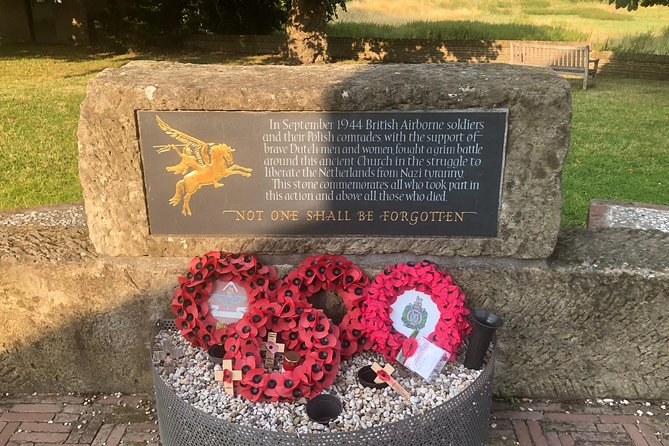
Arnhem is one of those WWII places where the geography matters, and you can feel it the moment you start moving between sites. The battle did not happen in a vacuum. Rivers, bridges, roads, farms, and hedgerows shaped every decision. On this tour, you are not just seeing points on a map. You are learning how the fighting played out across the area, and why the outcome was so heartbreaking for people hoping for liberation in 1944.
What makes this experience stand out is the mix of famous locations and the kind of added context that makes the story click. You will get the big picture of the Operation Market Garden plan, then zoom in on what happened when airborne forces landed, moved, and tried to connect with ground units. If you already know the movie A Bridge Too Far, this tour helps you separate what is shown dramatically from what the ground actually suggests.
You will also notice how the tour balances emotion with facts. It can be intense, but it is never vague. The guide keeps the timeline clear and focuses on what mattered at each location. That is the difference between reading about a battle and understanding why it went the way it did.
From Central Amsterdam to the Battlefield: Transit and Timing
The day starts at 9:00 am, and you are set up with round-trip transit from central Amsterdam. That matters more than it sounds. Getting out to Arnhem on your own can mean extra hassle: transfers, schedules, and uncertainty when you are trying to hit specific museum entry times. Here, you can get your bearings fast and focus on the learning.
The tour lasts about 8 hours. You will move between three main stops, with one longer museum visit in the middle. The structure is simple, but do not confuse simple with rushed. This kind of private guiding works best when you take your time at each site, and your guide can help you decide what to linger on.
Also, remember lunch is not included. In practice, that means you should treat food as your responsibility. If you like to eat on schedule, you might want to bring a snack for the morning and plan where you will grab lunch during the day. Comfortable shoes also help, because even when locations are close together, WWII terrain is rarely designed for easy strolling.
John Frost Bridge: The Operation’s Main Target
Stop one is the John Frost Bridge (John Frostbrug). This is the bridge that became the main target of the operation, and standing here really does something to your brain. You can look at the span, then look around and try to imagine what it would mean to control this crossing under real pressure.
The admission here is free, which is a nice bonus. More importantly, the guide uses the setting to explain why this bridge mattered. It is not just about the bridge itself. It is about how delays, distances, and ground access affected what airborne troops could realistically achieve.
Practical note: this is a place where photographs are easy, but understanding takes a little effort. If you care about accuracy, ask your guide how the real events compare to what people remember from film or books. One of the best ways to use this tour is to come in with a few questions, like what “success” would have looked like operationally at this point, or why holding a bridge was harder than it seems on paper.
If you want a head start, it is worth reading or watching A Bridge Too Far beforehand. The tour experience tends to land harder when you already have names and the basic timeline in your mind. You can then use the day to confirm what fits and what is dramatized.
Hartenstein Airborne Museum: British HQ and Market Garden Context
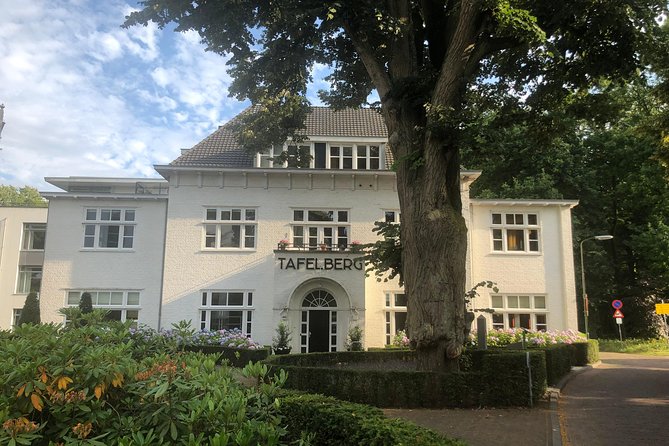
Next up is the Airborne Museum at Hartenstein. This is a former British HQ, and that alone gives the museum a different tone than many WWII collections. Instead of feeling like you are just looking at artifacts, it feels like the building itself is part of the story.
Museum time is about 1 hour, and the admission is included. That is great value because museums can add up fast when you travel. It also means your day stays smoother, since you are not coordinating ticket purchases mid-route.
One standout you might not expect is the way the museum uses immersive elements. In one account, the most memorable part was a simulated experience related to the glider landing, with a moment that felt frightening because it recreated a sudden, realistic-feeling transition. Even if that specific moment is not your thing, it signals the museum is not only about reading panels. It tries to get you to experience the fear and urgency airborne soldiers faced.
Your guide also helps you connect museum content back to the rest of the day. That is one of the biggest strengths of a private tour. You are not just consuming information. You are getting the “why this matters” translation that turns museum facts into battlefield understanding.
Shop for shoes and patience: museums are easy places to speed-walk. Try not to. The time is just right for absorbing the key story points, then asking your guide about the decisions and constraints behind them.
Forest, heath and Arnhem: more nearby

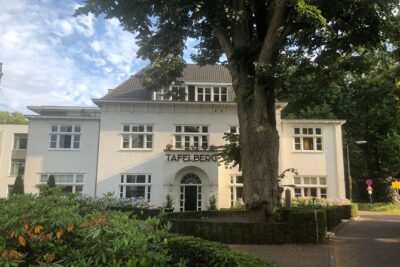

Wolfhezerheide Drop Zones: Where the Airborne Landed
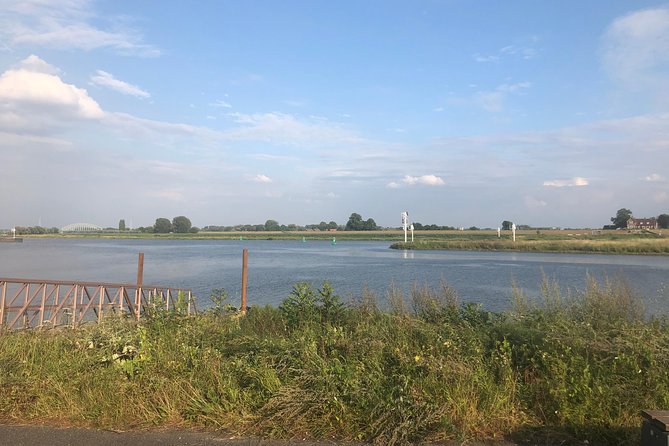
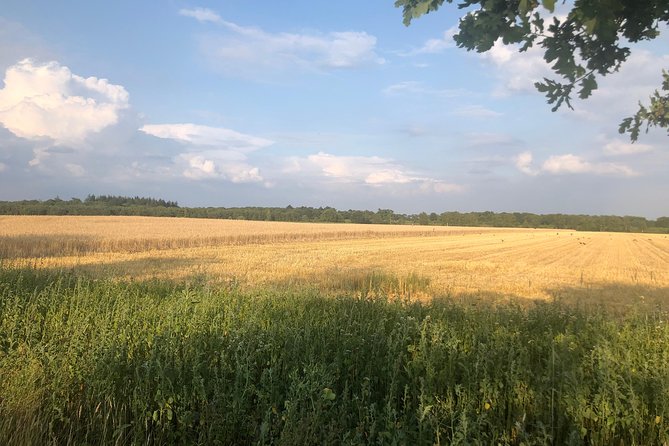
Stop three takes you to Wolfhezerheide, the drop zone area where British Airborne troops landed. Admission is free, and that keeps the overall day balanced. More of your budget goes into what you came for, interpretation and access, not extra entry fees.
This stop is where the battlefield starts to feel physical. Standing near the kind of ground where paratroopers landed helps you understand the early chaos of airborne operations. Drop zones were not blank stages. They were messy, affected by timing, weather, terrain, and confusion. Your guide can explain what those variables meant for moving troops afterward.
In the best versions of this tour, you do not just look at one point and move on. The guide can help you read the area like a map in real life. You might also cover nearby sites tied to the battle’s wider perimeter, which is useful if you want the bigger narrative behind the bridge.
If you are a film fan, ask your guide how the battlefield details compare to what you saw. Accounts of this tour note that the guide can match real places shown in A Bridge Too Far and explain what is accurate and what is not. That is the kind of talk that makes a tour feel worth paying for, because you are using the guide to fact-check your own memory.
Martin van Elmpt and the Real Value of a Private Tour
A private tour can either be “same stuff, fewer people,” or it can be genuinely better. Here, it is clearly the second option.
The experience is led by Martin van Elmpt, and the style is what makes it work. You are not stuck with a script that forces every group into the same tempo. The guide is flexible, and the talk becomes more tailored as you share what you care about, whether that is named units, specific moments, or understanding how the plan went wrong.
This comes through in the kinds of extra context and off-the-beaten-path stops people enjoyed. The tour has expanded beyond the three headline sites for some groups, including visits to locations connected with British drop zones, a British military cemetery, areas tied to the perimeter, and even spots connected to Polish Brigade efforts and General Urquhart. Some days include additional memorial sites and nearby bridges tied to the larger operation. The key point for you is this: if you are the type who wants to see more than the standard checklist, this format gives you room to do it.
Personalizing the day also matters emotionally. For someone with family ties to the conflict, the tour can feel like a serious history lesson that connects names to places. Even if you do not have that connection, a good WWII guide helps you avoid the danger of turning tragedy into trivia. The best moments are when you understand what soldiers could see, what they could not, and what they had to decide fast.
Price and Value: What $414.53 Buys You
Let us talk about the money without pretending it is nothing. At $414.53 per person, this is not a budget day. It is closer to a premium history experience, and you should buy it only if you value interpretation, access, and time with a skilled guide.
Here is what you are paying for, in practical terms:
- Private guiding with Martin van Elmpt, not a large-group lecture
- Round-trip transit from central Amsterdam, which saves time and transport stress
- Included museum admission at Hartenstein, so you are not adding extra ticket costs mid-day
- A route built around specific battle locations like the John Frost Bridge and Wolfhezerheide drop zones
When you compare this to cheaper group tours, the main difference is control. With a private format, you can spend longer at what grabs you, and you can ask sharper questions without feeling like you are slowing everyone down. For WWII history, that matters because the stories hinge on small details, like timing, terrain, and operational limits.
Also, you are booking far enough in advance on average, which hints this day is popular. If you want the date you planned, do not wait until the last minute.
Who This Tour Is Best For
This tour is a strong fit if you:
- Care about WWII history and want more than surface-level facts
- Prefer a private format where you can ask questions
- Enjoy battlefield geography, like how bridges, rivers, and drop zones affect outcomes
- Want an English-speaking guide to guide the story clearly and chronologically
It is also a good match if you already know the basics and want to test your understanding. People who came in with familiarity around A Bridge Too Far often leave with better clarity on what is accurate and what is dramatized.
If you are traveling with kids, you would need to think about their attention span and how they handle heavy history. The tour includes walking and standing, and the physical demand is described as moderate. If moderate means fine for you, you will be okay, just plan your shoes and pacing.
A Simple Game Plan for the Best Day
You can make your experience smoother with a few choices:
- Wear comfortable walking shoes. Bridges, museum floors, and outdoor sites all add up.
- Eat smart in the morning. Since lunch is not included, a snack helps you avoid the late-day energy dip.
- Bring a question or two, like how airborne units were supposed to connect or why controlling a bridge was so hard.
- If you like film or books, read or watch A Bridge Too Far by Cornelius Ryan before you go, or at least refresh the outline. You will get more out of the locations.
One more tip: this is a day where you will want to pause occasionally, especially at the bridge. Take 2 minutes to look around, then let the guide explain what you are seeing and why it mattered. That pause is where the story sticks.
Should You Book This Arnhem Battle Tour from Amsterdam?
If you want WWII history with context, and you like standing in the places where real decisions were made, I think this is a smart booking. The strongest reasons to choose it are the private guide-led approach, the inclusion of the Airborne Museum admission, and the straightforward Amsterdam logistics that keep you focused on learning.
Skip it only if you are on a tight budget and want a cheaper group outing, or if a full 8-hour day with walking and standing sounds like too much. Also, if you do not enjoy history unless it is light and casual, this one may feel intense.
For the right traveler, this is the kind of day you will remember for years, not because it is dramatic, but because it makes the landscape and the people behind it feel real.
FAQ
How long is the Arnhem battle tour from Amsterdam?
It runs for about 8 hours (approx.), starting at 9:00 am.
What stops are included during the tour?
You visit the John Frost Bridge, the Airborne Museum at Hartenstein, and Wolfhezerheide.
Are museum tickets included?
The Airborne Museum at Hartenstein has admission included. The John Frost Bridge and the Wolfhezerheide drop zones are free.
Do I need to worry about lunch?
Lunch is not included, so you will need to plan your own meal.
Is this a private tour?
Yes, it is a private tour or activity, and only your group participates.
What language is the tour in?
The tour is offered in English.
Is pickup available from Amsterdam?
Pickup is offered, and the tour also notes that you are near public transportation.
What if I need to cancel?
You can cancel for a full refund if you cancel up to 24 hours in advance of the experience’s start time.
What happens if the minimum number of travelers is not met?
If it is canceled because the minimum is not met, you will be offered a different date or experience or receive a full refund.
Also Reviewed Around Amsterdam




Arnhem, Forest and Heath



Wartime Amsterdam


Fresh off the review pile in Amsterdam
- Full-Day Trip From Amsterdam to Keukenhof, Zaanse Schans + Cruise
★ 5.0 · 3 reviews - Boutique Dutch Food & History Tour with up to 8 guests only
★ 5.0 · 3 reviews - Private Tour to Windmills Zaanse Schans +Keukenhof – 7 Hours
★ 5.0 · 3 reviews - Full-Day Private Guided Countryside Tour from Amsterdam by Bike
★ 5.0 · 3 reviews - Amsterdam Red Light District and Old Town Walking Tour
★ 5.0 · 3 reviews
Arnhem & the Veluwe, compared.
 ★ 4.4Nijmegen: River Cruise with All-You-Can-Eat Dutch PancakesFrom $32341 reviews
 ★ 4.4Apeldoorn: Het Loo Palace Entry TicketFrom $25277 reviews
 ★ 4.6Rhenen: Ouwehands Zoo Entry TicketFrom $36126 reviews
 ★ 4.5Otterlo: De Hoge Veluwe National Park Entry TicketFrom $1697 reviews
 ★ 4.7Arnhem: Burgers’ Zoo Entry TicketFrom $3388 reviews
 ★ 4.4Harderwijk: Dolfinarium Entry TicketFrom $2881 reviews
 ★ 4.7Oosterbeek: Airborne Museum Hartenstein Entry TicketFrom $1958 reviews
 ★ 4.52 hour Private E-Chopper Tour in NijmegenFrom $4725 reviews
Browse the lists this tour appears in