
REVIEW · AMSTERDAM
Amsterdam in World War Two Cycle Tour
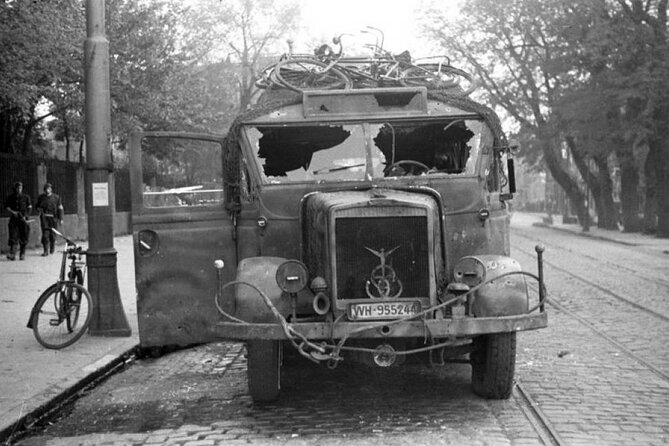
Amsterdam has layers. This tour rides you straight through them. You get WWII photos placed against modern streets, so the occupation era stops feeling abstract. I also like the way you cover a lot of ground by bike, so you see neighborhoods that most visitors only pass through.
Two things I especially like: first, the focus on exact locations tied to arrests, resistance actions, and punishment sites, like the June 20, 1943 roundup and the Frank family connections. Second, the small group size, max six, with guides Rudy and Peter bringing stories with local context.
One possible drawback to think about: this is serious subject matter, and the route includes details about deportations and reprisals. If you want a lighter, purely sightseeing ride, this may feel heavy.
In This Review
- Key highlights to look for
- Why this WWII bike tour works in Amsterdam
- Meeting at Tesselschadestraat and riding with a small crew
- Bike access in Amsterdam South, where the city feels quieter
- Stop by stop: from June 1943 raids to the Frank family network
- Tilex Bar, PBA barracks, and how occupation offices took over everyday buildings
- Coffee break at Roelof Hartplein and resistance photo development
- Beethovenstraat and Rubensstraat: executions, reprisals, and a targeted RAF mission
- Olympiaplein registration, Amsterdam Lyceum HQ, and the Queen Emma flowers moment
- What you should know before you book
- Should you book the Amsterdam in World War Two Cycle Tour?
- FAQ
- How long is the Amsterdam in World War Two Cycle Tour?
- Where does the tour start?
- What time does it start?
- How large is the group?
- Is the tour offered in English?
- Will I receive a mobile ticket?
- Is there a coffee or break during the ride?
- Is cancellation free if I cancel ahead of time?
Key highlights to look for
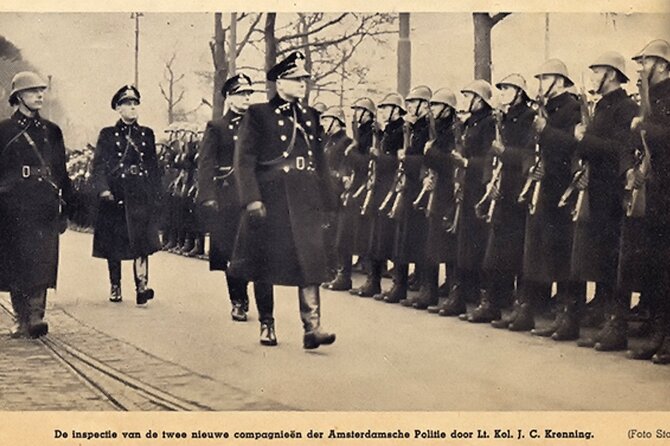
- Street-level WWII before-and-after photos that match what you see today, building real context fast
- A small group (max six), so questions and pauses feel natural
- Amsterdam South access by bike, including quieter streets cars cannot use easily
- Rudy’s local perspective, including how he learned and lived with this history in his own area
- Peter’s added support, making the ride smoother and the stories clearer
- Coffee and a restroom stop at Cafe Wildschut during the ride
More wartime ground to cover in Amsterdam
- Amsterdam: Life of Anne Frank and World War II Walking Tour★ 4.8 · 10,467 reviews
- Amsterdam: Dutch WWII Resistance Museum Entry Ticket★ 4.7 · 951 reviews
- Small Group Tour to Nazi WWII concentration camp from Amsterdam★ 5.0 · 112 reviews
- Amsterdam: Anna Frank and World War II History Walking Tour★ 4.8 · 86 reviews
Why this WWII bike tour works in Amsterdam
Amsterdam can be a blur. Streets look the same, but the city’s story keeps shifting under your feet. This tour uses bicycles as a tool to slow you down without stopping your momentum. You ride, you look, you listen, and then you compare what your eyes see now with what used to be there.
The best part is the method: you get WWII-era photos that line up with present-day streets. That technique matters because it turns names into geography. When you learn about raids, offices, or safehouses, you can actually point to them. And when history repeats the same kind of power dynamics, you catch the pattern faster because you are viewing it in the physical place where it happened.
The ride format also makes practical sense. Walking a long stretch while absorbing complex history is tough. Cycling lets you cover a wide area, then stop briefly at each site to connect the dots.
Meeting at Tesselschadestraat and riding with a small crew
The tour starts at Tesselschadestraat 1, 1054 ET Amsterdam, at 11:00 am, and it ends back at the meeting point. Expect about 2 hours 30 minutes to 3 hours 10 minutes, depending on pace and how much time you spend at stops.
The group stays intentionally small, with a maximum of six travelers. That small number is not just a comfort perk. It changes the feel of the tour. When you can actually hear the guide and ask questions without shouting over a crowd, the historical details land better.
Language is English, and you’ll receive a mobile ticket. That’s helpful in Amsterdam, where paper tickets can become one more thing you forget in your pocket.
Safety comes up in the reviews, and it also makes sense for this kind of route. The route is designed to be doable as a bike ride while still taking time for history stops. If you’re a confident cyclist, you’ll likely enjoy the rhythm. If you’re nervous, pick a day with calm traffic and ride with extra care.
Bike access in Amsterdam South, where the city feels quieter
This is not a pedal-and-photos loop in the most tourist-packed core. The tour is built to reach Amsterdam South areas that cars can’t easily access, which helps you experience the city in a more local way.
That matters because Amsterdam’s WWII story is not confined to the postcard-center. Occupation offices, police operations, resistance networks, and punishment spaces also lived in everyday neighborhoods. By cycling into quieter streets, you see a more complete city map, not just the famous museum zone.
You’ll also get the benefit of scale. When you move between locations by bike, you feel the distance between decisions and consequences. A street corner is not just a spot, it is part of a route someone walked, drove, or guarded during the occupation.
Stop by stop: from June 1943 raids to the Frank family network
Your first major WWII moment is at Victorieplein, historically known then as Daniël Willinkplein. On June 20, 1943, a major raid hit Amsterdam. Large groups of Jewish citizens were arrested during a so-called Judenaktion. Dutch police units and police volunteers assisted, and people were transported, including to Olympiaplein for registration before onward transfer to the Westerbork concentration camp in the east.
Even if you know the broad timeline of deportations, this kind of stop changes your understanding. You’re not learning about a distant tragedy. You’re seeing the administrative step, the registration step, the place where power was turned into paperwork and then transport.
Next comes the Merwedeplein 37-II area, associated with the Frank family. The guide points out that in summer 1942, Otto Frank moved his family and acquaintances to Het Achterhuis, the Secret Annex located on the Prinsengracht, with Otto’s workplace nearby. There is a statue commemorating Anne Frank on Merwedeplein.
Nearby, you reach the bookstore connection tied to the early publication story of the diary. Around the corner at the Waalstraat area, Jimmink sells the first edition of Het Achterhuis, published in 1947. The tour also highlights the personal detail: Otto Frank bought the diary for his daughter at that shop.
The Frank story can feel like a museum exhibit if you only see it indoors. Put into these street stops, it becomes more like a timeline of ordinary places, where families tried to survive and where later testimony entered public life.
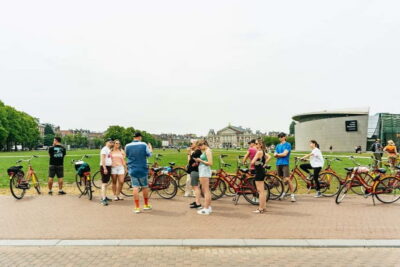
This is cycling country. More Amsterdam rides
Tilex Bar, PBA barracks, and how occupation offices took over everyday buildings
At Waalstraat 48, opposite Merwedeplein, the tour points to what used to be Tilex Bar, run by Tilly and Lex van Weren. The site today is Café Blek. During the war, Lex van Weren survived Auschwitz because he was forced to play his trumpet at executions.
This stop hits differently because it pulls you into the cruel logic of coercion. The guide uses the location to explain how survival sometimes depended on being made to perform for the oppressors. You don’t just learn facts, you feel the moral weight of what those facts imply.
Then you move to Cornelis Troostplein 23, a spot that once housed the PBA baracks. Before the war, the area was connected with a Catholic complex called the “peace parish,” including convents and a school. In spring 1942, the chief of the Sicherheitsdienst, Rauter, inspected the PBA and met Reichsführer-SS Heinrich Himmler at Museumplein.
From there, Museumplein becomes one of the most intense sections of the ride. The Germans transformed the square into a stronghold. Offices took over surrounding buildings, including places tied to deportation administration, such as the Zentralstelle für Jüdische Auswanderung in the former United States consulate building. The tour also notes other functions nearby, like the Ortskommandantur and Feldgendarmerie offices.
Even the ground tells a story. At the IJsclubterrein on the square, the Germans built bunkers and anti-aircraft (Flak) batteries. After the war, the bunkers were blown up, so you are standing in a place that once held war machinery, now softened back into daily city life.
This is where the bike format shines again. You can move along the arc of occupation power quickly, without losing your train of thought.
Coffee break at Roelof Hartplein and resistance photo development
A short pause helps you reset your attention. At Roelof Hartplein, you stop at Cafe Wildschut for coffee and a restroom visit. This break is brief, about 10 minutes.
Then the tour goes into a quieter kind of history at Roelof Hartstraat. The guide explains a photo shop next to the library building where the Dutch resistance used the store to develop unique photos, including images of the first roundup of Jews in Amsterdam by the SD/Gestapo and German police. A name you’ll hear here is Charles Breijer.
From a reader standpoint, this stop is a good reminder that resistance was not only dramatic acts. It also involved documentation, evidence, and information. Even when you cannot stop events, you can still preserve truth so it doesn’t vanish.
A small monument in the neighborhood marks Jews taken from the area. It’s easy to miss on your own. The tour makes sure you slow down long enough to see it.
Beethovenstraat and Rubensstraat: executions, reprisals, and a targeted RAF mission
At the corner of Beethovenstraat and Apollolaan, the tour lays out a specific moment from October 1944. Herbert Oelschlägel, an SS officer and Sicherheitsdienst/Gestapo agent, was executed by a Dutch resistance member near the location. Retaliation followed quickly: the SD/Gestapo burned down two houses and executed 29 resistance fighters.
The guide also notes that street names have changed. At the time, this street was called Euterpestraat, and the tour ties it to resistance leader Gerrit van der Veen. It’s a sharp way to show how a city can rebrand itself while the stakes of the past remain the same.
Next you get a dense administrative and violent power section at the corner of Memlingstraat and Rubensstraat. The tour points to two offices of major Nazi oppression organizations: SD-HQ Amsterdam (SD Aussenstelle under Willy Lages) and the Hausraterfassungsstelle, tied to stealing possessions from deported Jews as part of the Zentralstelle für Jüdische Auswanderung. The leader mentioned here is Henneicke, identified as a Dutch collaborator.
This is also where the tour connects resistance actions to outside force. In November 1944, the resistance requested the Royal Air Force through a secret radio message to attack the SD/Gestapo and Hausraterfassungsstelle headquarters. The main aim was to destroy SD/Gestapo files.
You’ll also hear about a safehouse on the corner of Rubensstraat and Gerrit van der Veenstraat, with the tour pointing you to a Stolperstein address. The guide includes the painful complication: in June 1944, that address was betrayed to the SD/Gestapo by a female informant known as V-Frau.
As history goes, this section is intense. It teaches you how networks worked, how surveillance worked, and how the resistance tried to stay ahead.
Olympiaplein registration, Amsterdam Lyceum HQ, and the Queen Emma flowers moment
At Olympiaplein on Parnassusweg, the tour returns to the raid story, connecting June 1943 arrests to processing. Jewish people arrested during the June 1943 raid at the sports complex were registered by the SD/Gestapo with assistance from Jewish camp police sent from Westerbork. The tour’s framing helps you see how systems used victims as tools within the machinery of oppression.
This stop adds a grim nuance. You’re not only looking at where arrests happened. You’re looking at the step where people were turned into records, and records were turned into routes.
Then you reach Valeriusplein, near the Amsterdam Lyceum building. The guide says this school building served as the headquarters of the Luftwaffe at the end of the occupation. It’s one more example of how ordinary institutions got repurposed into command centers.
Finally, there is a quieter defiance moment at the statue of Queen Emma on Emmalaan and Prins Hendriklaan. In summer 1940, people placed flowers at the statue in defiance of the German occupiers. A smaller detail ties in resistance photographer Charles Breijer again, showing how photos preserved moments of occupation-era power.
The ride ends with a look at aftermath. When Germany surrendered on May 7, 1945, dangerous situations broke out between frustrated German troops and resistance fighters. The tour includes a monument to victims of one of the shootings on the last day. After this, the route guides you through Vondelpark back toward Leidseplein, where you started.
What you should know before you book
This tour is best for you if you want WWII history that feels spatial. If you like learning by seeing the exact corners where events happened, you’ll probably love this format. The street-level photo comparisons make complex occupation and resistance stories easier to track in your head.
It is also a good fit if you want to avoid bus crowds and get into quieter streets in Amsterdam. The route is built to cover more ground by bike than walking would allow, while still taking enough time at each stop to understand why it matters.
Who might pause before booking? If you want a purely sightseeing ride with minimal emotional weight, this is not that. The topic includes arrests, deportations, and reprisals. You should be ready for serious content, delivered clearly at real locations.
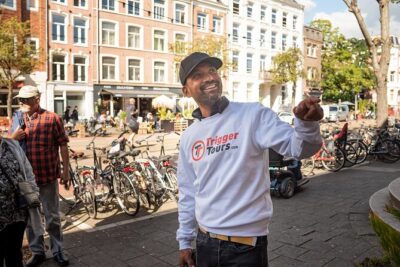
Finally, this is one of those tours where the guide quality is the whole deal. The reviews highlight Rudy as an excellent, well-read guide and also mention Peter alongside him. That pairing suggests the ride stays organized while the history stays understandable.
Should you book the Amsterdam in World War Two Cycle Tour?
Yes, if you want WWII Amsterdam history you can see in the streets, not just read in a museum. I’d book it if you like small groups, you want a bike ride through Amsterdam South, and you appreciate how WWII photos matched to current locations can make facts click.
I’d skip it only if you want an easygoing, light-content tour. Otherwise, this is a strong choice for travelers who care about accuracy, place-based storytelling, and getting beyond the usual tourist loop.
FAQ
How long is the Amsterdam in World War Two Cycle Tour?
It runs for about 2 hours 30 minutes to 3 hours 10 minutes.
Where does the tour start?
The tour starts at Tesselschadestraat 1, 1054 ET Amsterdam, Netherlands.
What time does it start?
It starts at 11:00 am.
How large is the group?
The tour has a maximum of six travelers.
Is the tour offered in English?
Yes, it is offered in English.
Will I receive a mobile ticket?
Yes, the tour includes a mobile ticket.
Is there a coffee or break during the ride?
Yes, there is a short stop at Cafe Wildschut for coffee and a restroom visit.
Is cancellation free if I cancel ahead of time?
Free cancellation is available up to 24 hours in advance for a full refund.
Everything Else From Our Amsterdam Notebook



Also Reviewed Around Amsterdam



Wartime Amsterdam

Fresh off the review pile in Amsterdam
- Full-Day Trip From Amsterdam to Keukenhof, Zaanse Schans + Cruise
★ 5.0 · 3 reviews - Boutique Dutch Food & History Tour with up to 8 guests only
★ 5.0 · 3 reviews - Private Tour to Windmills Zaanse Schans +Keukenhof – 7 Hours
★ 5.0 · 3 reviews - Full-Day Private Guided Countryside Tour from Amsterdam by Bike
★ 5.0 · 3 reviews - Amsterdam Red Light District and Old Town Walking Tour
★ 5.0 · 3 reviews
Dutch WWII History Tours, compared.
 ★ 4.8Amsterdam: Life of Anne Frank and World War II Walking TourFrom $3710,467 reviews
 ★ 4.7Amsterdam: Dutch WWII Resistance Museum Entry TicketFrom $21951 reviews
 ★ 4.6Oranjehotel World War II Prison Entrance TicketFrom $15708 reviews
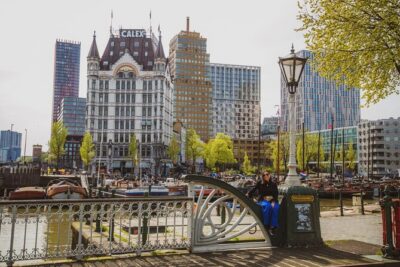 ★ 5.0Rotterdam Walk: Hilights, Gems, Architecture & WWII | 2 or 3hrsFrom $49149 reviews
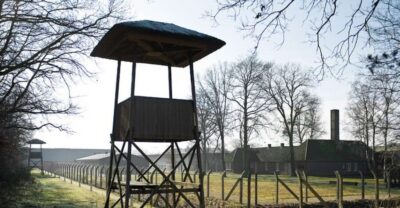 ★ 4.6Vught: National Monument Concentration Camp Entry TicketFrom $14137 reviews
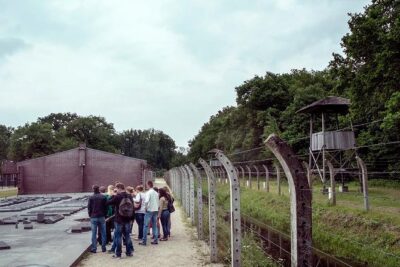 ★ 5.0Small Group Tour to Nazi WWII concentration camp from AmsterdamFrom $199112 reviews
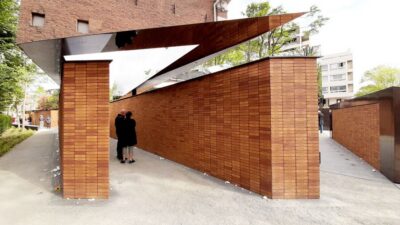 ★ 4.8Amsterdam: Anna Frank and World War II History Walking TourFrom $2886 reviews
 ★ 4.5Amsterdam: Anne Frank and World War II Walking Tour (TOP RATED)From $2972 reviews
Browse the lists this tour appears in