
REVIEW · THE HAGUE
The Hague Must-See attractions Private Walking Tour With A Guide
The Hague feels unusually manageable on foot. This private 2-hour walking tour strings together art, politics, and royal life around the city center, starting and ending near Plein 17.
You’ll get to love the one-group-only format, so the pace stays friendly, and the guide can tailor stops. I also like that the route is packed with big names and big ideas, from Willem van Oranje to Johan de Witt.
One possible drawback: the timing is tight, with about 10 to 15 minutes per stop, so you will want to ask questions early if you want deeper answers.
In This Review
- Key highlights to notice before you go
- A private walking tour that actually helps you see The Hague
- Getting started at Plein 17, Het Plein, and Willem van Oranje
- Mauritshuis: Vermeer’s The Hague in a quick, focused visit
- Binnenhof and Ridderzaal: where Dutch democracy has been housed for ages
- Hofvijver pond, Thorbecke, and the characters behind the state
- Lange Voorhout and Noordeinde Palace: elegance with real government work
- Grote Kerk, the stork statue, and remembering Johan de Witt
- The best guides: what you can expect from Elfi or Elizabeth
- Price, value, and what the tour actually gives you
- Who should book this private The Hague walk
- Should you book it, or choose a different format?
- FAQ
- How long is the private walking tour?
- Is this tour private or shared with other groups?
- What language is the guide?
- Where does the tour start and end?
- Are tickets to attractions included?
- Are admission tickets required for the stops on the route?
- Do I need to use public transport during the tour?
- What is the cancellation window?
Key highlights to notice before you go
- Private and exclusive: your group is the only group on the walk
- English-speaking guide: ideal if you want the context behind the sights
- City-center route: built around walkable landmarks with short stop times
- Mauritshuis and Dutch statesmen: art plus political history, kept practical
- Royal palace viewpoint: Noordeinde Palace exterior without the long detours
- Most listed admissions are free: you can focus on seeing and learning without ticket pressure
More of The Hague, sea air included
- The Hague: City Canal Cruise★ 4.6 · 2,024 reviews
- The Hague: Madurodam Miniature Park Entry Ticket★ 4.6 · 1,559 reviews
- The Hague: Hop-on Hop-off Old-Fashioned Heritage Tram Tour★ 4.4 · 1,083 reviews
- The Hague: Escher in The Palace Museum Ticket★ 4.6 · 896 reviews
A private walking tour that actually helps you see The Hague
I like tours that do not just point at buildings. This one gives you a map made of stories, so you start recognizing why each corner matters. In about two hours, you move from early Dutch independence themes to the art that The Hague is famous for, then straight into how modern democracy takes shape at the Binnenhof.
The private format is the real advantage. If you want the guide to slow down at one spot, or skip the extra background at another, you can do that. If you prefer architecture over trivia, or the other way around, you can steer the conversation. That matters in a city like The Hague, where government offices and grand facades sit side by side, and the meaning is easy to miss if you are just walking fast.
The route also stays concentrated. You start at Plein 17, you do not spend your energy on transit, and you end back at the same place. Near public transportation, this is also easy to plug into a longer day of museums or seaside wandering.
Getting started at Plein 17, Het Plein, and Willem van Oranje
Your walk begins at Plein 17, in the middle of The Hague’s action. First stop is Het Plein, where you focus on Willem van Oranje, often remembered as the Father of the Nation. The guide frames him in the Dutch Revolt against Spanish rule in the 16th century, which is a useful starting point because later stops connect back to how the country organized power and legitimacy.
What I like about this opener is that it sets up the rest of the tour without weighing you down. You are not stuck in a lecture. You are getting just enough historical scaffolding to understand why a place like the Binnenhof is more than a pretty complex.
Time here is short, about 15 minutes, and that is the theme of the whole tour. If you are the kind of traveler who likes to compare timelines in your head, ask early how the Dutch Revolt era leads into the later constitutional moments. If your style is more casual, you can just enjoy the overview and let the other stops reinforce the story as you go.
Mauritshuis: Vermeer’s The Hague in a quick, focused visit
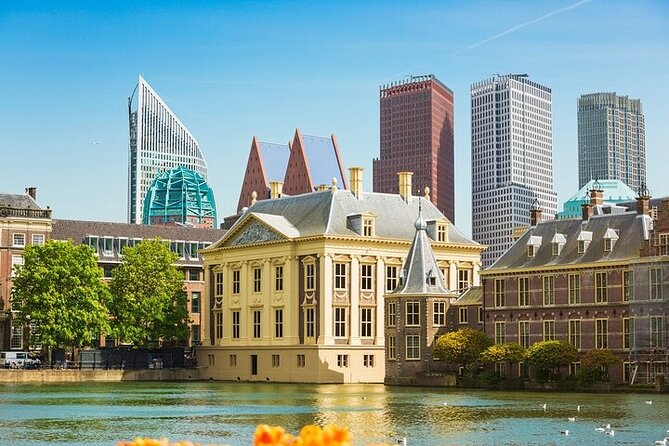
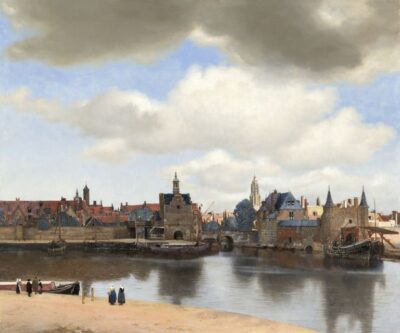
Next comes Mauritshuis, a museum stop built around the idea that The Hague is not only politics. It is also art that people talk about for centuries. The highlight names are big: Johannes Vermeer’s Girl with a Pearl Earring and View of Delft. Even if you are not an art superfan, those titles give you an instant entry point.
This stop is listed as 15 minutes, so it is not a full museum marathon. Instead, it works like a guided preview, helping you understand what makes the collection special and what to look for when you come back on your own. If you love museum logic, you’ll appreciate that the guide is not just saying the names, they help connect art to place and mood.
One practical consideration: the tour notes ticket status as free for this stop, and it also says tickets to attractions are not included. That means you should plan as if you may need to confirm what is actually required for the museum access on your specific day. The good news is you get support to book tickets for visits you want, so you are not left guessing.
Binnenhof and Ridderzaal: where Dutch democracy has been housed for ages
Now you hit the political heart: Binnenhof & Ridderzaal. This is where the walking tour shifts from story background to tangible civic space. You explore the Binnenhof complex, home to the Dutch Parliament, and you learn about its origins dating back to the 13th century. Then you focus on Ridderzaal (Knight’s Hall), a ceremonial room tied to major political events.
I like this stop because it makes government feel real. It is easy to read about democracy, harder to sense it in your body when you stand near the places where meetings, ceremonies, and decisions have played out over time.
Your time here is about 15 minutes, so you will not see everything, but you will leave with a mental picture of how the Dutch political system uses space, formality, and continuity. If you are curious about how a country changes while keeping traditions, this is the kind of stop that gives you that feeling fast.
Prefer to see it on foot? More The Hague walks

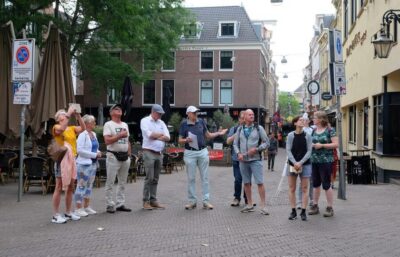
Hofvijver pond, Thorbecke, and the characters behind the state
Between the grand buildings, the tour gives you a calmer pause at Hofvijver. This pond sits surrounded by historic buildings, and the guide explains why it mattered. You hear its amusing past, including its role as a hunting ground for medieval nobility. It is a nice contrast after the heavier political landmarks, and it helps you understand how power and everyday life used to overlap.
Then you move to the Thorbecke Monument. You learn about Johan Rudolph Thorbecke, known for drafting the Dutch Constitution in 1848 and laying groundwork for modern parliamentary democracy in the Netherlands. Even with only about 15 minutes here, the guide can help you connect constitutional change to the kind of civic spaces you saw at the Binnenhof.
This part is where the tour becomes more than a checklist. By placing Hofvijver and Thorbecke close together, the route quietly teaches cause and effect. The pond shows social hierarchy in the past. Thorbecke shows the shift toward constitutional government.
If you care about political history, ask the guide to point out how these different periods shaped the city’s layout and public spaces.
Lange Voorhout and Noordeinde Palace: elegance with real government work
For a change of pace, you take a leisurely stroll along Lange Voorhout, an elegant street lined with stately mansions and embassies. The highlight tied to this stop is the Escher Museum, connected to the works of M.C. Escher. Even if you are not stopping inside, the street context helps you picture why The Hague fits so well with Dutch art styles, where geometry and architecture often feel like cousins.
From there, you reach Noordeinde Palace. This is one of the most interesting contrasts on the route: you admire the exterior of a working royal residence, linked to King Willem-Alexander and Queen Máxima. You do not need a full palace visit to get the point. You are seeing how monarchy is still present in the city, not just as history but as an operating institution.
Your time at Noordeinde Palace is about 10 minutes, so keep it simple. Ask what role the palace plays today, and what changes are mostly ceremonial versus practical.
I find these two stops especially good for people who like atmosphere. You get elegance, you get diplomacy, then you land on monarchy, all without losing the tour’s historical throughline.
Grote Kerk, the stork statue, and remembering Johan de Witt
The tour ends with the kind of storytelling that sticks. You visit Grote Kerk, also known as St. Jacobskerk, dating back to the 15th century. You also get a heads-up on the nearby stork statue, an easy detail to miss if you are just scanning for the big building.
Then you close the loop at the Statue of Johan de Witt. This is the emotional, human-history part of the walk. The guide explains how Johan de Witt, and his brother Cornelis, were lynched by an angry mob in 1672 during the political turmoil known as Rampjaar (Disaster Year).
I like that the tour does not hide from messy moments. It brings you from governance and constitution drafting into the reality that political systems can turn dangerous in a hurry. Even if the visit time here is around 10 minutes, the guide’s explanation gives you a clearer idea of how fear, conflict, and legitimacy can collide.
One practical note: these final stops are outdoors and you will likely be standing around for photos. Wear comfortable shoes, and if it is a windy day, plan for it.
The best guides: what you can expect from Elfi or Elizabeth
The guide experience is the biggest difference between a so-so city walk and a memorable one. The feedback I see makes it clear that Elfi and Elizabeth can be both entertaining and useful, mixing humor with solid context. One theme is engagement: the kind of guide who explains architecture and current government structure in a way that feels friendly, not rehearsed.
That said, there is also a possible downside tied to delivery style. If your priority is animated presentation, and you are sensitive to monotone voices, keep that in mind. The tour itself has a great range of topics, so even a calmer guide can still give you the content. But the overall feeling will depend on the person leading.
If you want to maximize your chance of a lively tour, arrive with 1 or 2 questions prepared, like what you most want to understand about Dutch government or why certain buildings have specific roles.
Price, value, and what the tour actually gives you
The price is $88.72 per person for about 2 hours. That sounds like a lot until you break down what you are paying for: a private walking tour, an English-speaking guide, and help with ticket booking for desired visits. You also get a format where you are not sharing the guide with strangers, so you are effectively buying time and attention.
Value improves because many stops are set up with admission ticket free status in the schedule, so you are not constantly paying entry fees to keep the tour moving. Plus, the tour stays in the city center. You spend less time and money on getting from place to place, since transport costs are your responsibility and the tour is built around walking.
What is not included matters too. Tickets to attractions are not included, and tips are optional. Food and drinks are also not included, so plan a quick snack break if you want one. Also, the tour does not include transport, so factor in any tram or bus rides you need before the meeting point.
For me, this is best value if you want orientation and context fast. It is less ideal if you already know The Hague deeply and only want museum time.
Who should book this private The Hague walk
This tour makes the most sense if you want your city day to feel organized. I would book it if you are:
- Visiting The Hague for the first time and want a practical overview
- Interested in the Dutch Revolt, constitutional history, and political institutions
- A fan of major Dutch culture, especially art like Vermeer
- Someone who appreciates architecture and city planning as much as the facts
It is also a smart choice if you like flexibility. Because it is private, you can spend a bit more time at a stop that interests you, like Mauritshuis or the Binnenhof complex, and let the rest stay quick.
And if you have limited time, the stop structure is built for efficiency. You cover nine landmarks with short stays, so you get momentum instead of wandering.
Should you book it, or choose a different format?
Book this tour if you want stories tied to specific places, led by a guide who can connect government buildings, art, and iconic monuments into one walkable route. The route is short enough to fit easily, and the private format is worth it if you want personal explanations instead of listening to a group you cannot quite hear.
Skip it if you want long museum time inside Mauritshuis or a slow, photo-heavy day. This walk is designed for orientation, not for exhaustive interiors. Also, if you know you need a highly animated guide to stay engaged, ask about guide style or come ready to focus on the information even if the delivery is calmer.
FAQ
How long is the private walking tour?
The tour is listed as about 2 hours.
Is this tour private or shared with other groups?
It is private and exclusive, meaning only your group participates.
What language is the guide?
The guide is English-speaking.
Where does the tour start and end?
It starts at Plein 17, 2511 CS Den Haag, Netherlands, and it ends back at the meeting point.
Are tickets to attractions included?
Tickets to attractions are not included. The guide or team provides help to book tickets for visits you want.
Are admission tickets required for the stops on the route?
The tour information lists admission ticket free for the listed stops.
Do I need to use public transport during the tour?
Transportation is not included, and any public transport costs are your responsibility.
What is the cancellation window?
You can cancel for a full refund up to 24 hours in advance of the experience start time. Free cancellation is available under that condition.
Everything Else From Our The Hague Notebook





Also Reviewed Around The Hague


The Hague and the Sea
Fresh off the review pile in The Hague
- Private Tour of Vermeer’s Delft + Tickets to Vermeer Museum
★ 5.0 · 3 reviews - Private Tour of Rotterdam and The Hague including Transfer
★ 5.0 · 3 reviews - Surfing at The Shore in The Hague
★ 4.5 · 3 reviews - 3 Course Walking Dinner in Delft with Guided Tours in Between
★ 5.0 · 3 reviews - Surprise Walk of The Hague with a Local
★ 4.5 · 3 reviews
The Hague & Scheveningen, compared.
 ★ 4.7The Hague: Mauritshuis Entrance TicketFrom $252,706 reviews
 ★ 4.6The Hague: City Canal CruiseFrom $172,024 reviews
 ★ 4.2From Amsterdam: Rotterdam, Delft & The Hague Guided Day TourFrom $901,765 reviews
 ★ 4.6The Hague: Madurodam Miniature Park Entry TicketFrom $241,559 reviews
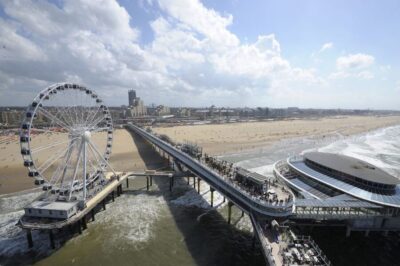 ★ 4.4The Hague: The Pier SkyView Ticket with Drink and SnackFrom $191,398 reviews
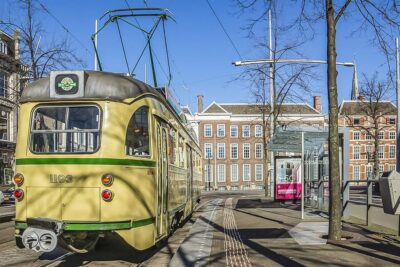 ★ 4.4The Hague: Hop-on Hop-off Old-Fashioned Heritage Tram TourFrom $181,083 reviews
 ★ 4.6The Hague: Escher in The Palace Museum TicketFrom $15896 reviews
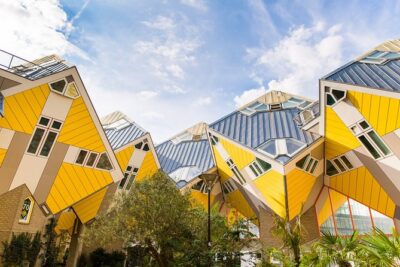 ★ 4.0Rotterdam, Delft, the Hague, Madurodam from AmsterdamFrom $90793 reviews
Browse the lists this tour appears in