
REVIEW · AMSTERDAM
Amsterdam: Private World War Two History Walking Tour
WWII history in Amsterdam feels up close. This private walking tour traces the Nazi occupation through street-level sites you can actually stand in front of. What makes it especially absorbing is the small group size and the fact that retired historians guide you with paper handouts and time for questions.
I love how the tour does more than point at plaques. You’ll follow the story of occupation, deportation, and survival through photos preserved from Dutch resistance fighters, and you’ll see specific memorial details, including an Auschwitz violin-player statue. One drawback to think about first: the tour focuses on this occupation narrative, so it does not include the Anne Frank House, the Resistance Museum, or Hollandsche Schouwburg.
In This Review
- Key things you’ll notice on this Amsterdam WWII tour
- Why Amsterdam’s Nazi-occupation story is best told by walking
- Meeting at Prinsengracht 263, and how the tour keeps a personal pace
- The Wehrmacht arrival, photos from resistance fighters, and the city’s early shock
- Dam Square on May 7, 1945, and a shooting incident you can’t ignore
- Winter of hunger and food drops: survival when the city tightened
- One Amsterdam street, the Jewish victims, and the small book of names
- Resistance monuments, deportation remembrance, and the Auschwitz violin-player statue
- Not visiting big WWII sites, and who this tour is for
- Price and value: $188 per group up to 4
- How to make the most of the walk in 3 hours
- Should you book this Amsterdam WWII private walking tour?
- FAQ
- Where does the tour start?
- Do you visit the Anne Frank House during the tour?
- How long is the walking tour?
- What is included during the tour?
- Are coffee and drinks included?
- Is the tour wheelchair accessible?
- What language is the tour guide?
- What should I bring?
- What important WWII sites are not visited?
Key things you’ll notice on this Amsterdam WWII tour
- Private group of up to 4 people, so you are not lost in a crowd
- No audio system, just live guiding and a pace that matches your group
- A coffee and restroom break about halfway through the walk
- A curated street memorial with a small book of names and photos
- Dam Square on May 7, 1945, tied to a specific wartime shooting incident
- Auschwitz deportation remembrance, including a statue of a famous violin player
More wartime ground to cover in Amsterdam
- Amsterdam: Life of Anne Frank and World War II Walking Tour★ 4.8 · 10,467 reviews
- Amsterdam: Dutch WWII Resistance Museum Entry Ticket★ 4.7 · 951 reviews
- Small Group Tour to Nazi WWII concentration camp from Amsterdam★ 5.0 · 112 reviews
- Amsterdam: Anna Frank and World War II History Walking Tour★ 4.8 · 86 reviews
Why Amsterdam’s Nazi-occupation story is best told by walking
Amsterdam’s WWII story is often discussed in museums and big exhibitions. This tour takes a different approach: you learn by moving through the city, piece by piece, until the occupation makes sense as something that happened block by block. If you like history that feels grounded in real streets, this format does that job.
You also get a very human scale. With a maximum of four people, the guide can slow down when a question matters or when a topic needs context. That matters a lot with subject matter like deportations, hunger in winter, and executions. You are not rushed, and you are not asked to just absorb names like facts on a screen.
The tour also keeps you oriented with practical tools. You receive information on paper that you can keep, which is a simple but smart touch for a topic that can get overwhelming. And because the guiding is live, you can ask for clarity when you need it, not after you’ve moved on.
Meeting at Prinsengracht 263, and how the tour keeps a personal pace
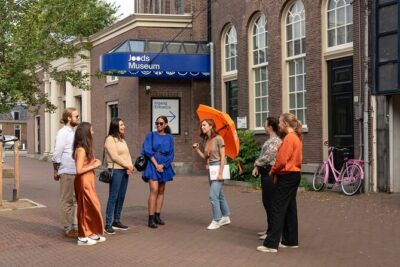
The meeting point is outside the old Anne Frank House on Prinsengracht 263. Your guide starts at 9:30 A.M., and you’ll know you’re in the right spot because there is a big notebook in hand. There’s even a playful local tip in the meeting directions, check for the number plate 263 between the museum and a lunch café.
The logistics are intentionally low tech. There is no audio system, so the guide’s voice and explanations stay direct and close to the group. That also means you can hear questions and answers without competing with headphones or group chatter.
The walk itself is designed around control of pace. You walk at a speed that works for you, which is a real benefit on a topic-heavy tour where your brain needs time to process. If you use a wheelchair, the tour is stated as wheelchair accessible, and it is recommended that you email in advance so they can plan the coffee stop and route accordingly.
One practical thing to bring: an umbrella. The tour is a walking route, and having a plan for rain keeps the experience comfortable.
The Wehrmacht arrival, photos from resistance fighters, and the city’s early shock
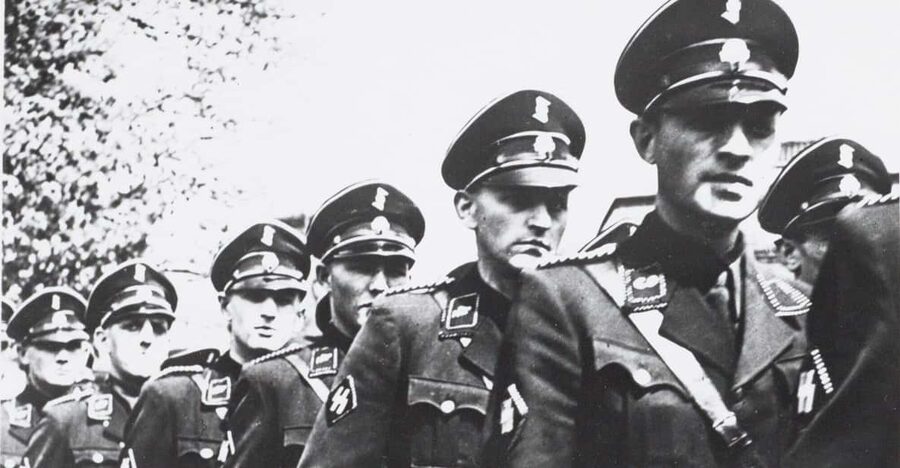
A key early focus is the entry of the German army into Amsterdam during the occupation. You start this part of the story by looking at the exact types of places where wartime decisions and public moments played out. The guide also shows photos related to the German entry, including material that was preserved by Dutch resistance fighters.
That choice of photos is important. It shifts the story from a distant timeline to the kind of evidence people gathered and protected under threat. Standing near the locations where moments happened gives those photos extra weight, because your eyes can match the past to what exists today.
There is also a sharp reminder of how quickly public perception could swing. The tour discusses the welcoming of the German army at the former town hall, now The Grand Hotel. The contrast is not subtle, later, the Canadian army was cheered there. That turn of events helps you understand that occupation was not just soldiers and orders, it was also propaganda, crowd psychology, and shifting morale.
Dam Square on May 7, 1945, and a shooting incident you can’t ignore
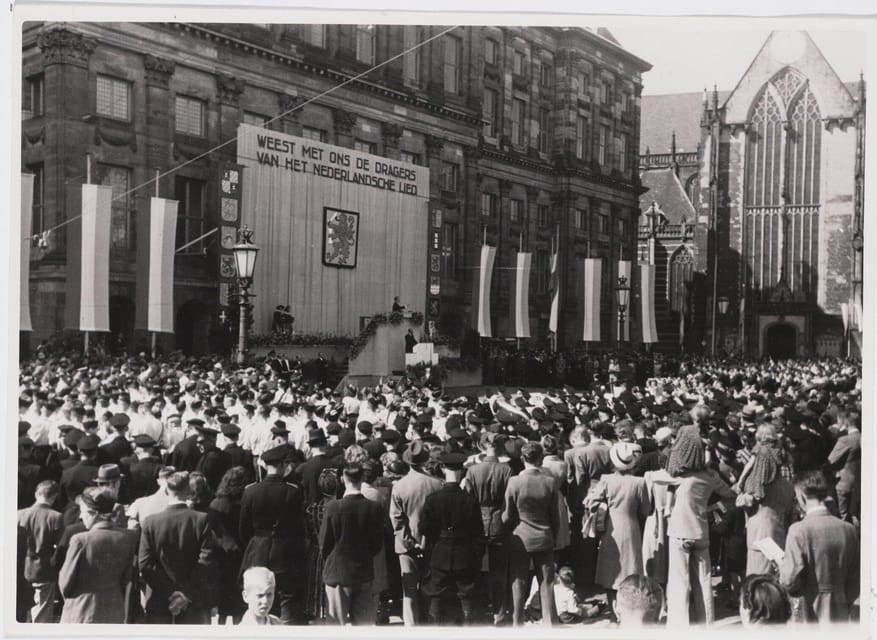
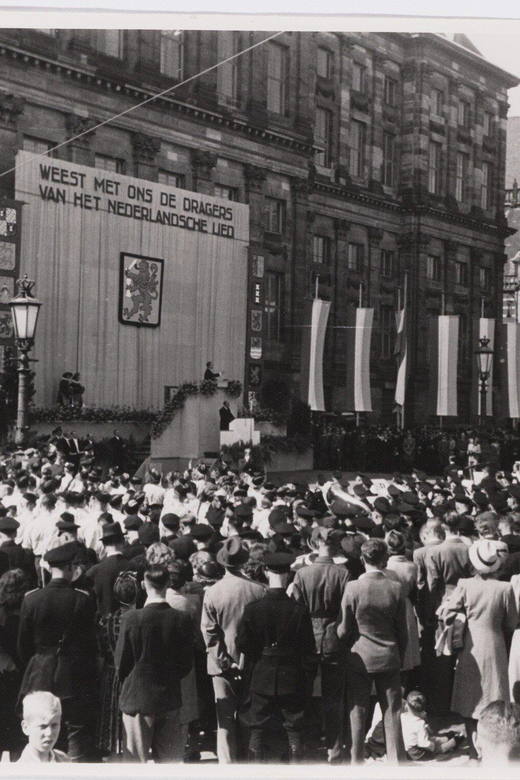
You will then come to Dam Square for the shooting incident on May 7, 1945. That date is close to the end of WWII in Europe, which makes the story harder to digest. The guide uses this moment to help you read the square not just as a postcard center, but as a public space where violence still broke through even at the war’s closing stretch.
This is the kind of stop where a walking tour can either feel vague or feel precise. Here, the benefit is the guide connects the square to what happened and why it mattered in the transition from occupation to liberation. You get enough context to follow the narrative without drowning in names.
Because you do not wear an audio headset, you stay tuned to what the guide is saying. And since the group is small, you can ask questions right there. When the topic is sensitive and complicated, that flexibility is a big part of the value.
Prefer to see it on foot? More Amsterdam walks

Winter of hunger and food drops: survival when the city tightened
One of the tour highlights is the story of food dropping during the winter of hunger. This is not a generic “people suffered” summary. The guiding focuses your attention on how starvation affected day-to-day life and what attempts at relief looked like in that harsh winter period.
You learn to see the city differently in this section. Instead of treating Amsterdam as a set of canals and museums, you start to understand it as a place where civilians had to adapt under extreme constraints. Food becomes more than a topic, it becomes a lens for everything else: desperation, risk, and survival choices.
This stop also works well if you want your WWII history to include civilian experiences, not only military movements. Hunger is one of those topics that can feel abstract in books. Here, it is treated as a real human reality tied to the occupation.
One Amsterdam street, the Jewish victims, and the small book of names
The tour’s most emotionally direct element is the memorial focus on Jewish victims from one Amsterdam street. You will see the sites connected to those victims and learn about their fate in the extermination camps, including Auschwitz and Sobibor. The guide has selected the Jewish residents of one specific street and created a small book for you with photos and names.
This is powerful because it refuses to keep history at the level of general statistics. By anchoring the story to one street and a defined set of people, it gives you a clearer picture of how deportation broke communities, not just “populations.” It also helps you practice remembering in a structured way, you can look back at the names and photos later.
The tour also pays attention to evidence. The guide shows preserved photos taken by Dutch resistance fighters at the same locations tied to these stories. That combination, names plus evidence, makes the walk more than a sequence of stops. It becomes a guided act of attention.
Important note for planning: this is heavy material. If you prefer lighter sightseeing on the same day, you may want to pair this tour with low-key time afterward, not a packed schedule.
Resistance monuments, deportation remembrance, and the Auschwitz violin-player statue
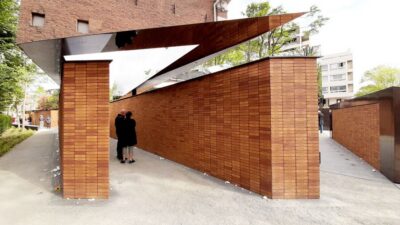
As you continue, you’ll pass additional locations tied to resistance and remembrance. The tour reflects on resistance monuments and explains the background behind them, so you understand what each memorial is doing in the city today. It is not just “here is a statue,” it is “here is why this exists.”
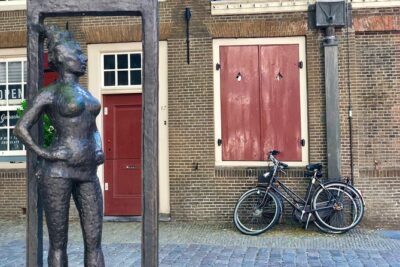
One of the standout highlights is a statue of the famous violin player from Auschwitz. That detail matters because it connects culture, identity, and survival stories to a place where people are trying to remember the unthinkable. Whether you already know the story or you’re learning it fresh, the guide’s framing helps you connect the symbolism to the wider deportation narrative.
This part of the tour also helps you understand the role of documentation. When the guide points to preserved resistance photos, it underlines that people at the time were collecting evidence while trying to survive. It’s a reminder that history was not only recorded after the war, it was fought over during the war.
Not visiting big WWII sites, and who this tour is for
This walking tour is built around the Nazi occupation story, and it intentionally avoids a few major related attractions. You do not visit the Anne Frank House, the Resistance Museum, or Hollandsche Schouwburg (the deportation center). Tickets for museums are not included, and the focus stays on walking, photos, and memorial context in the streets.
That is the trade-off. If your dream WWII day includes those specific sites, this tour might feel like it leaves out big pieces. But if you want a smaller, more personal way to understand the occupation in public space, this is exactly the right kind of tour. It is ideal if you like going off the beaten path and following a story that doesn’t rely on museum walls.
The guide team is described as three retired historians, and the English guiding is live. In the standout feedback for the experience, the guide Peter Schaapman is repeatedly praised for exceptional storytelling and for making the subject matter easy to follow without flattening it.
Price and value: $188 per group up to 4
The price is listed as $188 per group for up to four people, for about 3 hours. That pricing is actually pretty fair for what you get, mainly because the experience is private. You are not paying per ticket slot and then sharing a guide with strangers.
Here is the practical math:
- If you book as a pair, you’re effectively paying $94 per person.
- If you fill all four spots, it drops to about $47 per person.
Either way, the value comes from the format: small group, live historian guiding, no audio headset setup, and paper materials you can keep. Coffee stop drinks are not included, and you are not buying entry tickets to museums as part of the tour, so what you pay is mostly for the guided time and the specialized narrative work.
If you’re traveling solo or as a couple and you find museum tickets and “group tour” time hard to justify, a private historian-guided walk can be a smarter use of your budget.
How to make the most of the walk in 3 hours
This tour lasts about 3 hours, but it can run a bit longer. Midway through the walk, you’ll get a short break for coffee and/or a restroom stop. The break is useful not just for comfort, it also gives your mind a reset, especially because the walk covers multiple traumatic themes.
Plan for weather by bringing an umbrella, and plan your day so you are not racing off immediately after. The topics include deportations, starvation, and shootings tied to the war’s end. You’ll likely want a moment to decompress in a calm place after.
Also, go in ready to ask questions. The guide is set up for back-and-forth, and because the group is small, your questions land. If you have specific things you want to understand about the German occupation, resistance, deportation routes, or memorial symbols in Amsterdam, this tour format is built to support that kind of curiosity.
Should you book this Amsterdam WWII private walking tour?
Book it if you want WWII history that is street-specific, story-based, and guided by retired historians in a private setting. You’ll probably love it most if you care about the occupation timeline from 1940 to 1945, and if you appreciate evidence like resistance photos plus memorial context like Dam Square, hunger in winter, and deportation remembrance.
Skip it if you specifically want museum entry to the Anne Frank House, the Resistance Museum, or Hollandsche Schouwburg as part of a single experience. This tour does not include those stops, so you’d need to plan them separately.
If you’re on the fence, here is my practical advice: if you can only do one WWII activity in Amsterdam, and you want a guided explanation that stays grounded in the streets, this is a strong choice.
FAQ
Where does the tour start?
The tour starts at 9:30 A.M. in front of the old Anne Frank House on Prinsengracht 263.
Do you visit the Anne Frank House during the tour?
No. The tour states that it does not visit the Anne Frank House.
How long is the walking tour?
It lasts about 3 hours, and it may extend a bit.
What is included during the tour?
The tour includes a private group of up to four people, live English guiding without an audio system, paper information you can keep, and a coffee or restroom break midway through the walk. It also includes the guiding and walking time itself.
Are coffee and drinks included?
No. Refreshments during the coffee stop are not included.
Is the tour wheelchair accessible?
Yes, the tour is described as wheelchair accessible. The route and the coffee stop may need planning, so it is recommended that you email in advance.
What language is the tour guide?
The tour is offered in English.
What should I bring?
Bring an umbrella, since it is a walking tour.
What important WWII sites are not visited?
The tour states it does not visit the Resistance Museum or Hollandsche Schouwburg (the deportation center), and it does not include visits to the Anne Frank House.
Everything Else From Our Amsterdam Notebook




Also Reviewed Around Amsterdam




Wartime Amsterdam


Fresh off the review pile in Amsterdam
- Full-Day Trip From Amsterdam to Keukenhof, Zaanse Schans + Cruise
★ 5.0 · 3 reviews - Boutique Dutch Food & History Tour with up to 8 guests only
★ 5.0 · 3 reviews - Private Tour to Windmills Zaanse Schans +Keukenhof – 7 Hours
★ 5.0 · 3 reviews - Full-Day Private Guided Countryside Tour from Amsterdam by Bike
★ 5.0 · 3 reviews - Amsterdam Red Light District and Old Town Walking Tour
★ 5.0 · 3 reviews
Dutch WWII History Tours, compared.
 ★ 4.8Amsterdam: Life of Anne Frank and World War II Walking TourFrom $3710,467 reviews
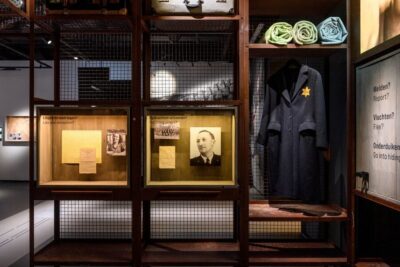 ★ 4.7Amsterdam: Dutch WWII Resistance Museum Entry TicketFrom $21951 reviews
 ★ 4.6Oranjehotel World War II Prison Entrance TicketFrom $15708 reviews
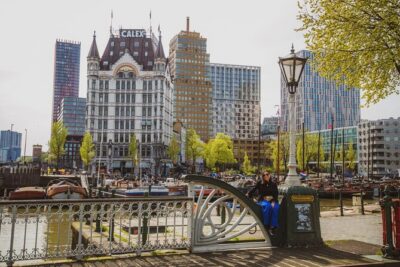 ★ 5.0Rotterdam Walk: Hilights, Gems, Architecture & WWII | 2 or 3hrsFrom $49149 reviews
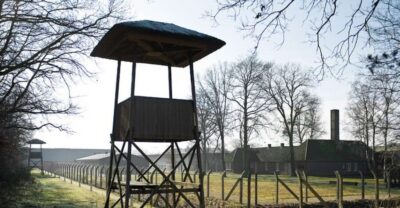 ★ 4.6Vught: National Monument Concentration Camp Entry TicketFrom $14137 reviews
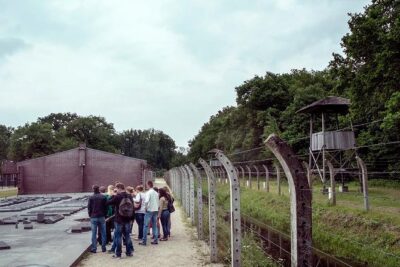 ★ 5.0Small Group Tour to Nazi WWII concentration camp from AmsterdamFrom $199112 reviews
 ★ 4.8Amsterdam: Anna Frank and World War II History Walking TourFrom $2886 reviews
 ★ 4.5Amsterdam: Anne Frank and World War II Walking Tour (TOP RATED)From $2972 reviews
Browse the lists this tour appears in