
REVIEW · AMSTERDAM
Amsterdam: World War II Private Walking Tour
A Nazi occupation left scars on Amsterdam, and this walk explains how. You get a private format, small enough to feel personal, plus a focused route that centers on Jewish resistance and the city’s wartime reality. It is not the usual checklist, and that makes it more useful if you want the human story behind the streets.
I like that it is guided in English (and also available in German), so you are not stuck guessing at the meaning of what you see. I also love the off-the-main-path feel, with the chance to stand near the places where traumatic events unfolded, not just admire monuments from a distance. The guides for this tour are Ben de Jong and Peter Schaapman, and their approach matters here.
One possible drawback: this is a heavy topic, and you will not stop at the big names like the Anne Frank House or the Resistance Museum. If those are your top priorities, you might need a different tour to complete your Amsterdam WWII plan.
In This Review
- Key highlights worth your time
- A private WWII walking tour that feels practical, not tour-bus
- Starting at Prinsengracht and ending at the National Holocaust Names Monument
- Monument to Jewish Resistance: the heart of the tour
- What you learn while walking: Nazi control and everyday life
- The route choices: what is not included, and why that matters
- Pacing, comfort, and what 3 hours in Amsterdam really means
- The guides: Ben de Jong and Peter Schaapman
- Price and value for a private group of up to 4
- Who should book this Amsterdam WWII private walk
- Should you book it? My practical take
- FAQ
- FAQ
- How long is the Amsterdam World War II private walking tour?
- Is the tour offered in English?
- How private is this experience?
- What is included in the ticket price?
- Which major WWII sites are not visited?
- Where does the tour start and end?
- What time does the tour start?
- Can I cancel for a full refund?
Key highlights worth your time
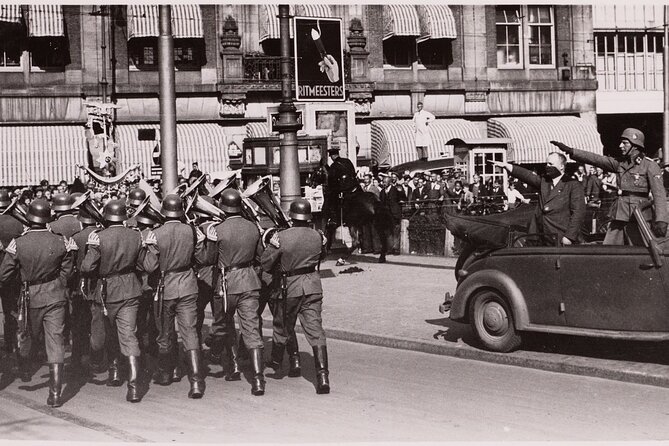
- Jewish Resistance focus at the Monument to Jewish Resistance, with context for Nazi occupation-era Amsterdam
- Private group up to 4, so questions feel welcome and the pace stays comfortable
- English or German, plus a mobile ticket for smoother day-of logistics
- Guides Ben de Jong and Peter Schaapman, known for turning street corners into clear, understandable stories
- Halfway coffee and restroom break, useful on a 2.5 to 3 hour walk
More wartime ground to cover in Amsterdam
- Amsterdam: Life of Anne Frank and World War II Walking Tour★ 4.8 · 10,467 reviews
- Amsterdam: Dutch WWII Resistance Museum Entry Ticket★ 4.7 · 951 reviews
- Small Group Tour to Nazi WWII concentration camp from Amsterdam★ 5.0 · 112 reviews
- Amsterdam: Anna Frank and World War II History Walking Tour★ 4.8 · 86 reviews
A private WWII walking tour that feels practical, not tour-bus
Amsterdam has plenty of WWII storytelling options, but most of them are built around one famous site. This experience builds around something more specific: how Nazi control shaped daily life and how resistance, especially Jewish resistance, continued despite the danger. You get 3 hours to connect the dots at walking speed, which is much easier than trying to read everything on your own later.
The private setup matters. With up to 4 people in your group, you can ask direct questions, slow down when a detail matters, and move on when you want to keep momentum. I find that kind of control is exactly what you want when the subject is painful and complicated.
You should know what the tour is designed to do, and what it is designed to skip. This is a focused route that takes you to key sites tied to the Nazi occupation from 1940 to 1945, but it does not try to cover every major WWII stop in Amsterdam.
Starting at Prinsengracht and ending at the National Holocaust Names Monument
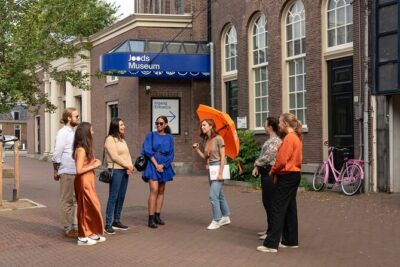
You meet at Prinsengracht 263, 1016 GV Amsterdam, with the start time at 9:30 am. The tour ends at the National Holocaust Names Monument, 1018 DP Amsterdam. That end point is a strong note to land on, because your walk finishes in a place built for remembrance, not sightseeing.
The route is set up for a 2.5 to 3 hour experience, and you will do it on foot. That matters because the pace is part of the teaching. When you move through small lanes and alley-like streets, you naturally start to understand why certain areas felt safer, why others were harder to navigate, and how daily movement could be risky under occupation.
You also get a built-in pause halfway through the walk. The tour includes a short break for coffee and/or a restroom visit. Coffee is not included, so plan to keep cash or a card handy if you want a drink.
Monument to Jewish Resistance: the heart of the tour
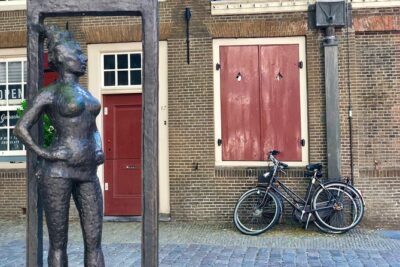
The main focus is the Monument to Jewish Resistance. This is where the tour earns its keep, because it gives you a clear theme before you start walking the wartime context. Instead of scattering facts across too many unrelated stops, you get a guided framework for what you are seeing.
You are taken to important sites and monuments related to the Nazi occupation of Amsterdam between 1940 and 1945. The guide’s job here is to connect place to meaning, so you understand why a specific spot matters and what happened there in the broader story. This kind of explanation is hard to get from a map, because the street view often looks calm when the past was not.
One of the best parts of this stop is that it sets the emotional tone without turning into a lecture. If you like history and you enjoy learning from a guide who can translate the past into something you can actually picture, this is the place where the tour clicks.
Practical note: the suggested minimum age is 13, and the subject matter is intense. If you are bringing teens, make sure they are ready for heavy content, not just dates and names.
What you learn while walking: Nazi control and everyday life
The tour is not just about where things happened, it is also about what it felt like to live in that era. Your guide explains the traumatic episode in Amsterdam’s long history and connects it to the reality of occupation. That includes how control worked in daily life, not only what happened during the most dramatic moments.
I like this style of learning because it helps you stop thinking of WWII as a single timeline. Instead, you start seeing how occupation-era Amsterdam was shaped by rules, fear, surveillance, and the constant risk of being caught. It also makes the resistance story feel grounded, because resistance is not presented as abstract heroism. It is presented as something people tried to do while living under pressure.
Expect the walk to feel like a guided sequence of street-level “why this place, why this detail.” That is the difference between passively taking pictures and actually building understanding.
Prefer to see it on foot? More Amsterdam walks

The route choices: what is not included, and why that matters
This is one of those tours where reading the exclusions helps you decide fast. The tour does not include visits to the Anne Frank House, the Resistance Museum, or the Hollandsche Schouwburg. Tickets for those museums and drinks are not included either.
Why does that matter? Because the Anne Frank House is often the centerpiece for visitors who want a personal story anchored in a single location. This tour is built for something else: an occupation-era walk focused on Jewish resistance and key monuments. If those excluded sites are your personal must-dos, you might feel shortchanged with only this experience.
At the same time, skipping those stops is exactly what makes this tour feel more off the beaten path. You get time for a tighter focus, and you are less likely to spend the day running from one ticket line to another.
If your goal is to understand the WWII context beyond the usual headline sites, this is a strong match. If your goal is to tick off the most famous museums, you should pair this with something else.
Pacing, comfort, and what 3 hours in Amsterdam really means
The tour runs about 2.5 to 3 hours, with a short break halfway through. It is not an all-day event, so it works well even if you are doing other sightseeing the rest of the morning or early afternoon.
You also get a reminder that the tour requires moderate physical fitness. Since this is a walking experience, wear shoes you actually trust. Amsterdam sidewalks can be uneven in places, and a 3-hour walk adds up. If you are fine with city walking for a solid stretch, you should be comfortable.
If you tend to get worn down by museum crowds, you will likely appreciate the format. This is not a long indoor time commitment, and the pace stays outdoors and on foot. That said, Amsterdam weather can change quickly, so bring layers you can adjust.
The guides: Ben de Jong and Peter Schaapman
Your guides are Ben de Jong and Peter Schaapman, and their names come up for a reason. The overall tone from what you can expect is clear, factual, and grounded in place. The guides are described as charming, with an ability to explain what Amsterdam looked and felt like under Nazi control.
I like guided history when it does two things at once: it gives context, and it makes you look at the environment with new eyes. That is what these guides are set up to do here. You are walking through streets you would not naturally choose for a WWII story if you were doing it on your own.
This is also where private format shines again. When a guide is good at explanation, you can ask follow-up questions without feeling rushed or stuck waiting for a group to catch up.
Price and value for a private group of up to 4
The price is $180.04 per group, up to 4 people, for about 3 hours. On the surface, that can look high if you only compare it to individual museum tickets. But for a private walking tour, the math is different.
Think of it as paying for two things: private guiding time and a carefully focused route. If you have 2 to 4 people, the cost becomes much more reasonable than booking separate tours or relying on general audio guides. And you are not just paying for information. You are paying for interpretation, especially for places that are harder to understand without context.
Also, the tour includes all fees and taxes. Coffee is not included, but the break is part of the schedule, so you are not stuck timing your own stop halfway through.
If you are traveling with family, a partner, or a small group of friends, this format often becomes good value because you can keep the learning experience tailored. If you are alone, it may feel less of a bargain, but the private nature still helps if you prefer a quieter, more focused day.
Who should book this Amsterdam WWII private walk
This tour is a great fit if you want WWII history that stays grounded in real neighborhoods and real places. You should book it if you care about the story of Jewish resistance and you want a guide to connect occupation-era events to the city you can walk through today.
It is also a good choice if you like history that does not rely on one famous site. The route skips a few major attractions, and that can be a plus if you are trying to build a fuller picture instead of collecting just the headlines.
You might consider skipping it if your top priorities are specifically Anne Frank House or specific museum stops. This experience is not designed to replace those. It is designed to complement them, or to give you a different angle entirely.
If you are bringing kids, stick with the minimum age guidance of 13 and be honest about the emotional weight of what you will hear. And if mobility is a concern, plan around the moderate physical fitness requirement.
Should you book it? My practical take
I think this is worth booking if you want a focused, private WWII walk that centers on Jewish resistance and occupation-era Amsterdam. The combination of small group privacy, an English option, and the Monument to Jewish Resistance focus makes it feel efficient and emotionally clear.
If your plan is already packed with the big WWII sites, this tour can still work well as a calm, structured alternative that fills in the context. But if your goal is to visit the Anne Frank House, the Resistance Museum, or the Hollandsche Schouwburg, you should choose a different tour or add those stops separately.
FAQ
FAQ
How long is the Amsterdam World War II private walking tour?
It lasts about 3 hours, roughly 2.5 to 3 hours.
Is the tour offered in English?
Yes. It is offered in English, and it is also available in German.
How private is this experience?
It is a private tour/activity, and only your group participates. The group size is up to 4 people.
What is included in the ticket price?
All fees and taxes are included. The tour also includes a short break halfway through for coffee and/or a restroom visit, but coffee or tea itself is not included.
Which major WWII sites are not visited?
The tour does not visit the Anne Frank House, the Resistance Museum, or the Hollandsche Schouwburg. Tickets for those museums and drinks are not included.
Where does the tour start and end?
It starts at Prinsengracht 263, 1016 GV Amsterdam. It ends at the National Holocaust Names Monument, 1018 DP Amsterdam.
What time does the tour start?
The start time is 9:30 am.
Can I cancel for a full refund?
Yes, you can cancel for a full refund if you cancel at least 24 hours before the experience starts. If you cancel less than 24 hours before, the amount paid is not refunded.
Everything Else From Our Amsterdam Notebook




Also Reviewed Around Amsterdam




Wartime Amsterdam

Fresh off the review pile in Amsterdam
- Full-Day Trip From Amsterdam to Keukenhof, Zaanse Schans + Cruise
★ 5.0 · 3 reviews - Boutique Dutch Food & History Tour with up to 8 guests only
★ 5.0 · 3 reviews - Private Tour to Windmills Zaanse Schans +Keukenhof – 7 Hours
★ 5.0 · 3 reviews - Full-Day Private Guided Countryside Tour from Amsterdam by Bike
★ 5.0 · 3 reviews - Amsterdam Red Light District and Old Town Walking Tour
★ 5.0 · 3 reviews
Dutch WWII History Tours, compared.
 ★ 4.8Amsterdam: Life of Anne Frank and World War II Walking TourFrom $3710,467 reviews
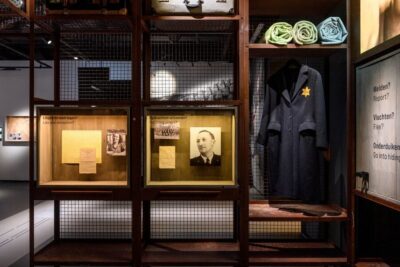 ★ 4.7Amsterdam: Dutch WWII Resistance Museum Entry TicketFrom $21951 reviews
 ★ 4.6Oranjehotel World War II Prison Entrance TicketFrom $15708 reviews
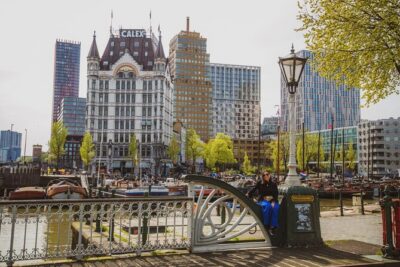 ★ 5.0Rotterdam Walk: Hilights, Gems, Architecture & WWII | 2 or 3hrsFrom $49149 reviews
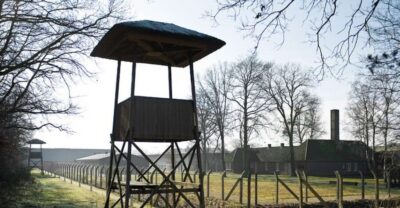 ★ 4.6Vught: National Monument Concentration Camp Entry TicketFrom $14137 reviews
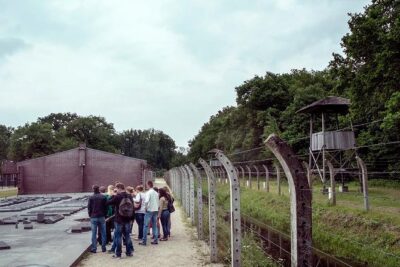 ★ 5.0Small Group Tour to Nazi WWII concentration camp from AmsterdamFrom $199112 reviews
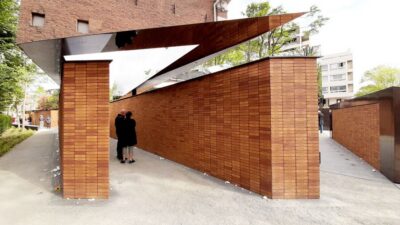 ★ 4.8Amsterdam: Anna Frank and World War II History Walking TourFrom $2886 reviews
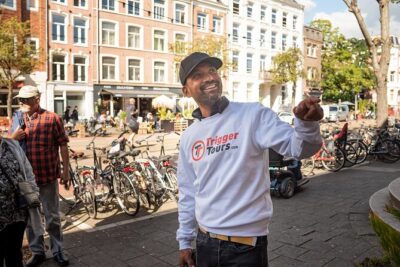 ★ 4.5Amsterdam: Anne Frank and World War II Walking Tour (TOP RATED)From $2972 reviews
Browse the lists this tour appears in