
REVIEW · DELFT
Delft: Private Historical and Cultural Guided Walking Tour
Delft gets real fast, when you walk it. This private guided tour turns canals and old streets into a clear story, and I love how it anchors everything to major Delft connections, especially the William of Orange mausoleum. You also get the good kind of guided access, like peeking inside the Renaissance-style town hall to understand how justice was spoken there long ago. The only real catch is time, at 2.5 hours you will have to choose your favorite landmarks instead of trying to tick them all off.
What makes it work so well is the control you get. You discuss what you want to see, then your route flexes around your interests, whether that means more bridge crossings, more churches, or more time staring at Delft Blue pottery details. The tour runs with a professional local guide in English, Dutch, German, French, Spanish, and Japanese, so you can actually follow the story without translation guesswork.
Delft is small, but it is packed. You will be on your feet rain or shine, so plan for comfortable walking shoes and a calm pace that lets the canals, courtyards, and bridges actually land.
In This Review
- Key things I’d plan around
- Meeting in front of Nieuwe Kerk, then getting oriented the Dutch way
- William of Orange and why Delft mattered beyond its walls
- The town hall and the medieval-to-Renaissance square shift
- Canals, bridges, and the quiet courtyard maze of Delft
- Churches, the only remaining windmill, and details you will remember later
- Vermeer on foot: following the painter’s Delft, street by street
- Delft Blue pottery: origin stories and watching the color get made
- Custom route control: choosing landmarks without feeling rushed
- Private group, languages, and what 2.5 hours adds up to
- Price and value at $135 per person
- Who should book this walking tour, and who might skip it
- Should you book this Delft private historical walking tour?
- FAQ
- What is the meeting point for the Delft private historical and cultural guided walking tour?
- How long is the tour?
- What is the price per person?
- Is this a private tour?
- What languages are available for the guided tour?
- Is the tour wheelchair accessible?
- Does the tour run in bad weather?
- What should I bring?
- Is food or drinks included?
Key things I’d plan around
- Nieuwe Kerk start point keeps you close to the old center right away
- William of Orange mausoleum gives Delft a national-level anchor
- Renaissance town hall justice stories add depth beyond postcard views
- Almonde courtyard and beguinage reward anyone who likes quiet corners
- Vermeer-focused walking route connects street scenes to famous paintings
- Delft Blue pottery session explains where the color comes from and how it is made
Delft, three more ways
- Delft: Canal Cruise with Guided Commentary★ 4.4 · 990 reviews
- Delft: Entrance Ticket for the Old and New Churches★ 4.4 · 229 reviews
- Delft: City Center Walking Tour★ 4.7 · 88 reviews
- Delft: Craft Beer Tasting in Medieval Brewery with Snacks★ 4.4 · 67 reviews
Meeting in front of Nieuwe Kerk, then getting oriented the Dutch way
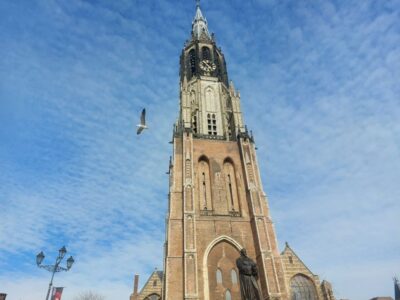
You meet your guide in front of the Nieuwe Kerk. That matters more than it sounds. Delft’s center is easy to wander, but the guide’s first job is to help you read the city, which starts with the big landmarks and quickly spreads out into the smaller alleys.
After the quick orientation, the walking becomes more than sightseeing. You are shown how Delft’s layout shapes the experience, canals guiding routes, bridges acting like checkpoints, and older buildings clustering around the squares. In a place like this, a guide saves time, because you stop guessing which street leads where and start noticing the patterns.
This is also a private group, so you can ask direct questions and get direct answers. If someone in your group prefers architecture, you can lean that direction. If someone else wants Vermeer and pottery, you can bias the route that way. You are not stuck with a one-size-fits-all loop.
William of Orange and why Delft mattered beyond its walls
The tour’s backbone is the mausoleum of William of Orange. This is not just a “see it, move on” stop. Your guide frames why Delft is tied to the founding story of the Netherlands, using this as the moment where the city stops being only scenic and starts being political, historical, and personal.
Seeing a major monument like this in a compact city makes it easier to understand the stakes. You get the feeling that Delft was part of the bigger national story, not just a pretty Dutch stop on the map. And because you walk from this anchor into smaller streets afterward, the city feels more connected, like the past is still laid out in front of you.
One practical thing to keep in mind, at the mausoleum and in church areas, you may want a bit of patience for foot traffic and tight spots. Bring that calm energy you’d use at a cathedral, not the hurry you’d use at a theme park.
The town hall and the medieval-to-Renaissance square shift
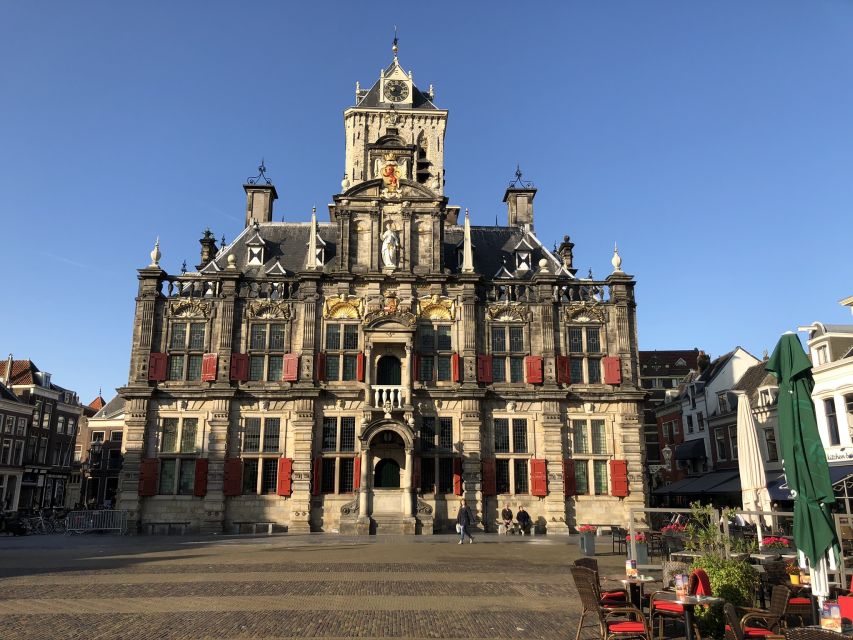
From the medieval square, you move toward the beautiful city town hall in Renaissance style. This is where the tour starts doing one of the most useful tricks a guide can do: showing you how styles and functions change over time, without treating them like museum labels.
You also get a key moment that adds real texture, the tour includes peeking inside to see how justice was spoken there centuries ago. That detail changes the way you look at the building. You stop thinking of the town hall as a backdrop and start treating it as a working civic space from another era.
If you like architecture, this stop is particularly satisfying. The Renaissance look is often photographed, but the inside story about justice adds purpose. It gives you a reason to imagine the people who came there, not just the stone that remains.
Canals, bridges, and the quiet courtyard maze of Delft
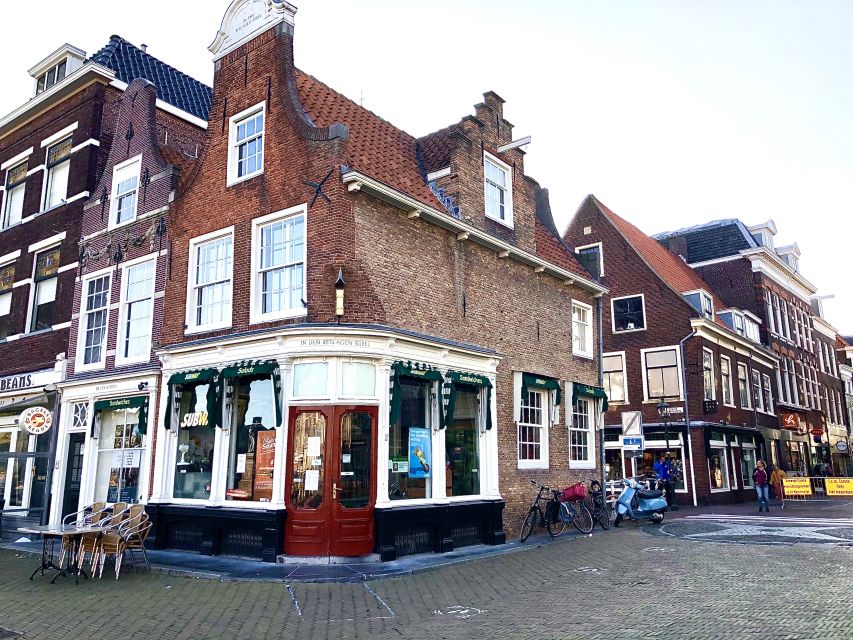
Delft’s canals are the obvious draw. The tour leans into that in the best way by combining views with context. You cross historic bridges, then you immediately connect what you see to why it’s there, how waterways shaped travel, trade, and where important buildings ended up.
Then you step into the places that most self-guided walkers miss: small alleys and charming courtyards. This is where the city becomes intimate. You find pockets of calm where the street noise fades, and you suddenly understand why Delft Blue and old merchant houses belong together. The architecture is not isolated. It sits inside a living network of passageways and shared spaces.
Two specific stops that help you feel the city’s texture are the Prince’s Court and the beguinage. The Prince’s Court gives you a glimpse of power and place. The beguinage shifts the mood toward community life, something quieter and more human. Even if you are not a formal history person, these are the stops that make the city feel lived in rather than staged.
Prefer to see it on foot? More Delft walks

Churches, the only remaining windmill, and details you will remember later
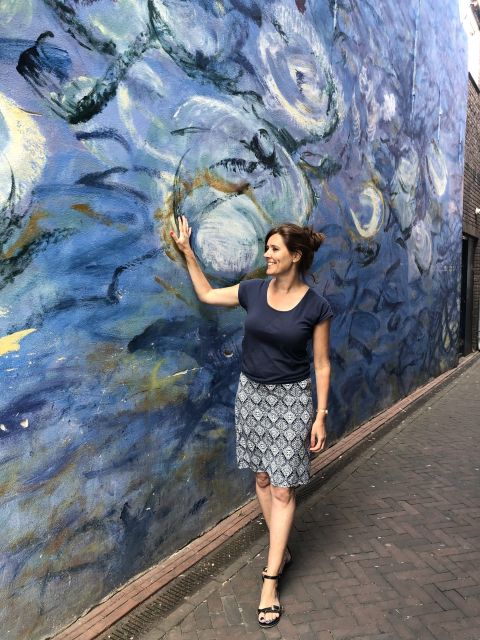
Delft has old churches and old streets. This tour treats those as more than landmarks. It strings them together so they work like chapters, with each church and crossing adding a new angle to the city’s identity.
One standout you get to look for is the only remaining historical windmill. A surviving windmill in a city like Delft is a reminder that “Dutch city canals” also meant daily work and energy. It is the kind of sight that is easy to overlook if you only follow a photo route, so it pays to have a guide nudging your attention.
And then there is the best hidden court of Delft, the court of Almonde. Hidden-court stops are not about secrecy for fun. They are about scale and survival. These are the spaces that endured when the city grew and changed, and they help you understand Delft as a place of craft, trade, and careful use of limited space.
Tip for enjoying these moments: pause when your guide stops. Delft rewards slow looking. If you keep walking through the interesting spots, you lose the city’s “click” moment, the one where it all starts to make sense.
Vermeer on foot: following the painter’s Delft, street by street
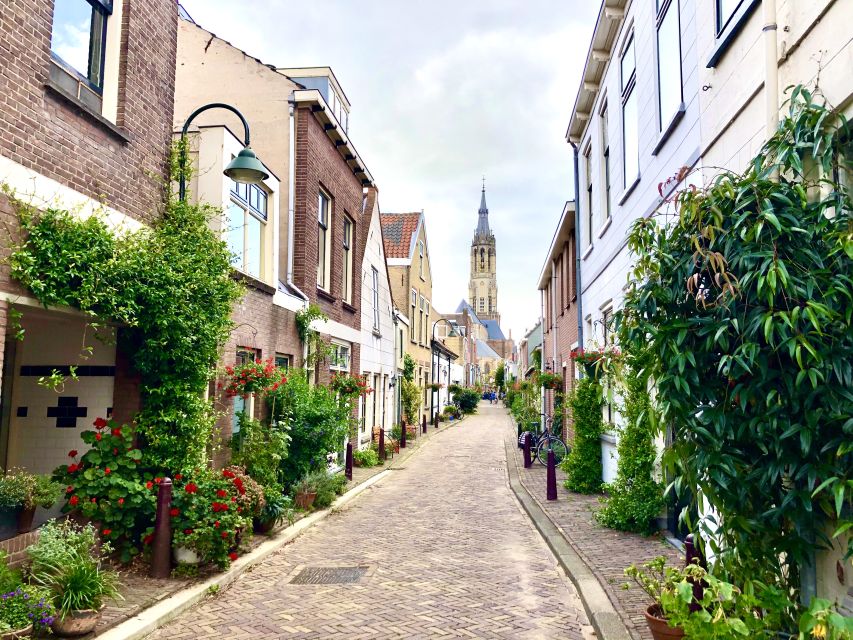
If Delft has one storytelling superpower, it is Johannes Vermeer. This tour takes you into the artist’s hometown and guides you to the kinds of places where his masterpieces were set.
The best way to enjoy this part is to think like a painter for an hour. Look at light, look at angles, and notice how a street scene could turn into a painting without needing big scenery. Vermeer’s world often feels ordinary on the surface, then strangely exact once you learn what to look for. A guide helps you train your eye so the walk stops being generic and becomes interpretive.
You also get this sense that Vermeer is not floating in art history. He is connected to neighbors, buildings, and the everyday rhythm of Delft. That connection is what makes the Vermeer segment feel worth the time and not like a quick photo stop.
If your group includes art fans and architecture fans, this is usually where everyone can agree. You get visuals, mood, and context all in one.
Delft Blue pottery: origin stories and watching the color get made
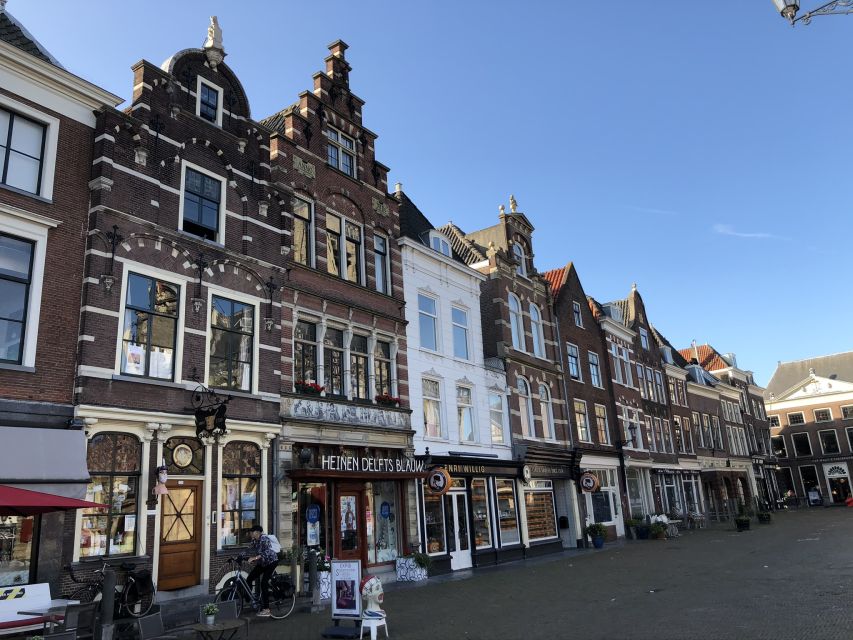
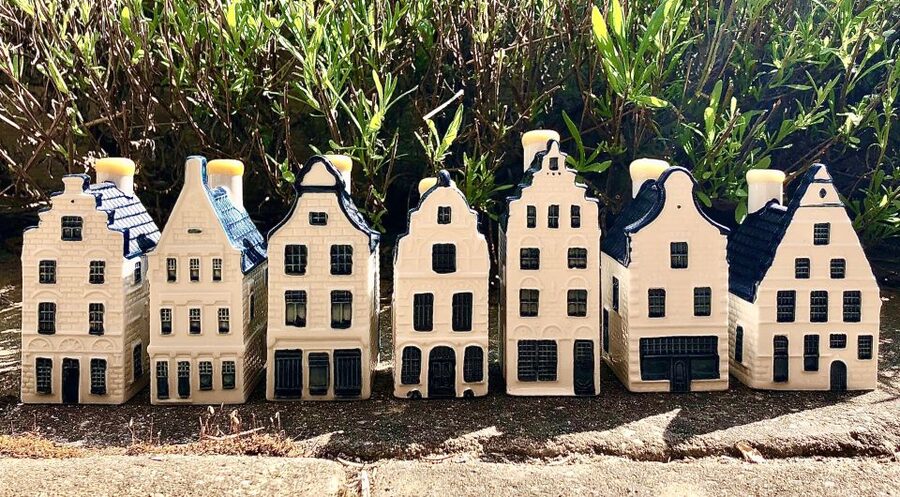
Delft is famous for Delft Blue pottery, and this tour uses that fame in a useful way. You learn about the origins of Delft Blue and then you visit a pottery place in town to see a master painter at work.
This is a great stop if you want a “how it’s made” moment instead of only looking at finished objects behind glass. You get the feel for the craft and the precision needed for the look. Delft Blue is often treated like a style, but here it becomes a process.
For value, pottery is one of the best uses of time in a short walking tour. A city like Delft can feel like “buildings, then more buildings.” But a pottery workshop gives you something different, texture, technique, and a clearer sense of what makes Delft Delft.
Two practical notes. First, pottery stops can take a little longer than expected if the guide encourages questions. Second, keep your expectations flexible, you will see the craft, but the exact type of demonstration is only as detailed as what the pottery place provides on the day.
Custom route control: choosing landmarks without feeling rushed
One of the smartest things about this tour is the customizable approach. You talk with your guide about which landmarks and routes you want to visit, then you build a plan that fits your group.
That flexibility is especially valuable in Delft because interests naturally split. Some people want William of Orange first. Some want Vermeer. Some want Delft Blue and the craft side. Some just want canals and bridges, plus churches. The customizable structure lets you choose what you care about most, instead of forcing every group into the same script.
In a private setting, the guide can also adjust to energy levels. If you have slower walkers, you can ask for a more gentle pace. If your group loves architecture, you can request extra stops in the most meaningful areas, like the town hall and the older courtyard spaces.
This is also why the tour works better with fewer people. You get more attention, and the guide can keep the route coherent even when it changes.
Private group, languages, and what 2.5 hours adds up to
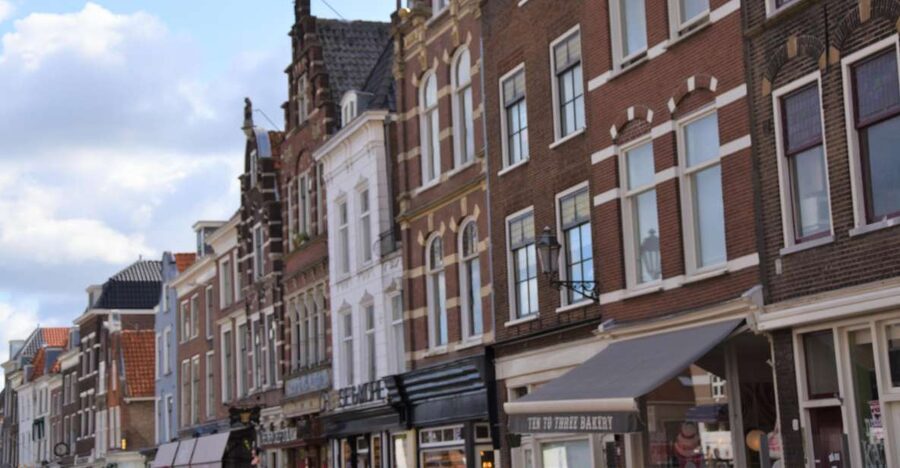
Duration is 2.5 hours. That is long enough to cover Delft’s key areas on foot, and short enough that the day stays flexible afterward.
In that time, you can expect a focused route through the historic center, with major stops tied together by a guide who explains what you are seeing and why it matters. You are also likely to spend time at places like the mausoleum, the town hall inside peek, and the Vermeer and pottery elements, which take more time than an outside-only photo stop.
Languages offered are a big practical plus. The tour is available in English, Dutch, German, French, Spanish, and Japanese for the private tour option. So if you are traveling with mixed language needs, this format is easier to manage than a one-language-only walking loop.
Wheelchair accessible is also listed. I’d still recommend you wear grippy shoes and keep a steady pace plan, because older city centers can have uneven surfaces and tight turns. Your guide can help you navigate, but you’ll want to be comfortable walking.
Price and value at $135 per person
At $135 per person for 2.5 hours, you are paying for a private guide and a tight route that focuses on the city’s big identity themes. That is not cheap, but it is not random either.
Here is where the value comes from. Delft is compact, but the best parts are not just “in sight.” They are in courts, small bridges, courtyard passages, and the kinds of civic details that only become interesting when someone explains them. The hidden court of Almonde and the justice story inside the town hall are good examples. Without guidance, those details often become background noise.
You are also getting a true private experience, not a crowded group squeeze. That means more time for questions and a route that can match your interests. If you care about architecture plus Vermeer plus craft, one private guide can connect all those threads, instead of forcing you into three separate self-guided missions.
One more value angle: food is not included. That can be a downside if you want everything handled, but it also gives you freedom to choose where you eat afterward. Delft has plenty of places to grab something local, and the guide can usually point you in the right direction based on your tastes, including sweet stops like pastelillos.
Who should book this walking tour, and who might skip it
This tour is a strong fit if you want Delft to feel meaningful, not just pretty. I especially think it works well for couples, small families with kids who can handle walking, and anyone who likes guided explanations tied to real places.
If you love art and want Vermeer without doing a separate research project, book it. If you care about craftsmanship and want to understand how Delft Blue happens, book it. If you mostly want postcard photos and minimal talking, a private guided format might be more than you need.
Also consider your pace. Delft’s charm is in the walking, the bridges, and the little courtyards. If you are not much for stairs and uneven sidewalks, you might prefer a slower tour style. But the listing does say wheelchair accessible, so if you need that support, ask how the route will be handled on the day.
Should you book this Delft private historical walking tour?
Yes, if your goal is to understand Delft as a connected story in just 2.5 hours. This is the kind of tour where the big names, William of Orange and Vermeer, are not treated like detours. They are used to explain the city itself, from squares and town hall interiors to hidden courts and canal crossings. Add in the Delft Blue pottery stop, and you get both culture and craft without turning the day into a checklist.
If you hate walking or you want a food-centered tour, this one may not fit. But if you want guided architecture, canals, and a smarter way to see Delft than wandering alone, this is a solid choice. Wear comfortable shoes, bring a curious mindset, and let the guide steer you through the places that make Delft feel like more than a backdrop.
FAQ
What is the meeting point for the Delft private historical and cultural guided walking tour?
Please meet your guide in front of the Nieuwe Church.
How long is the tour?
The tour lasts 2.5 hours.
What is the price per person?
The price is $135 per person.
Is this a private tour?
Yes, it is a private group.
What languages are available for the guided tour?
The tour is available in English, Dutch, German, French, Spanish, and Japanese.
Is the tour wheelchair accessible?
Yes, it is listed as wheelchair accessible.
Does the tour run in bad weather?
Yes, the tour takes place rain or shine.
What should I bring?
You should bring comfortable shoes.
Is food or drinks included?
No, food and drinks are not included.
Everything Else From Our Delft Notebook



Also Reviewed Around Delft


Delft, Three More Ways
Fresh off the review pile in Delft
- Private Tour of Delft + Visit to Royal Delft Museum
★ 5.0 · 4 reviews - Delft: Canal House Museum ‘Paul Tetar van Elven’ Ticket
★ 4.5 · 6 reviews - Delft: Christmas Walk with Oliebollen and Glühwein
★ 4.8 · 8 reviews - Delft: Guided Walking Tour
★ 4.7 · 9 reviews - Delft – Step/scootertour in and around the city
★ 4.8 · 9 reviews
Delft & Delft Blue, compared.
 ★ 4.2From Amsterdam: Rotterdam, Delft & The Hague Guided Day TourFrom $901,765 reviews
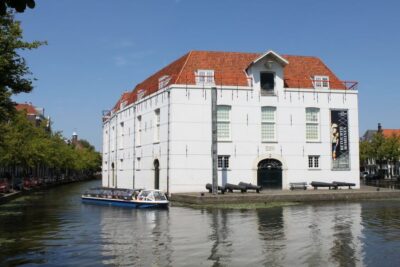 ★ 4.4Delft: Canal Cruise with Guided CommentaryFrom $15990 reviews
 ★ 4.0Rotterdam, Delft, the Hague, Madurodam from AmsterdamFrom $90793 reviews
 ★ 4.5Rotterdam, Delft and The Hague Small Group Tour from AmsterdamFrom $151599 reviews
 ★ 4.6Royal Delft: Delftblue Factory and MuseumFrom $21588 reviews
 ★ 4.2From Amsterdam: Guided Trip to Rotterdam, Delft & The HagueFrom $81529 reviews
 ★ 4.5The Hague, Delft and Rotterdam Small-Group Tour (Max. 8 People)From $156234 reviews
 ★ 4.4Delft: Entrance Ticket for the Old and New ChurchesFrom $11229 reviews
Browse the lists this tour appears in