
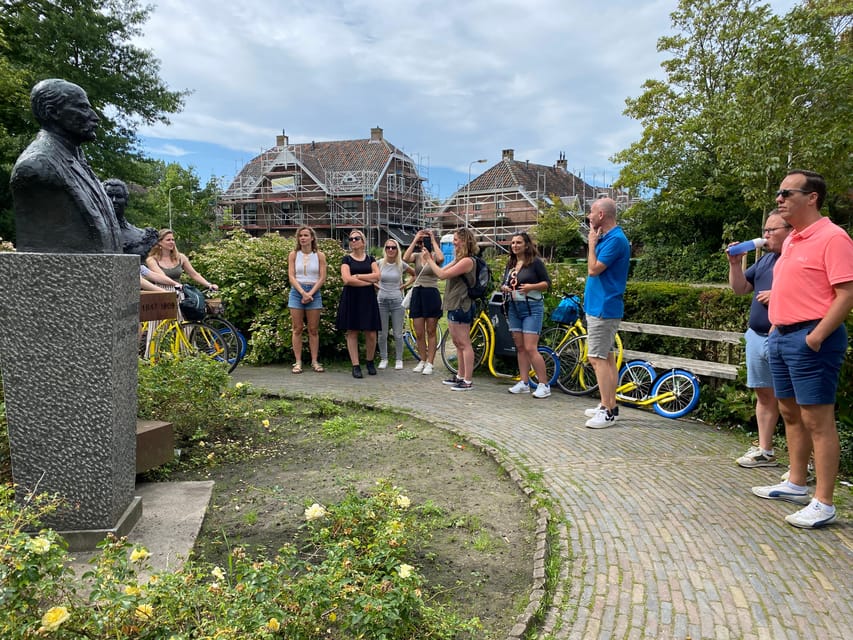
REVIEW · DELFT
Delft – Step/scootertour in and around the city
Delft looks better when you move differently. This step tocht is a fun, efficient way to see Delft’s big sights and quieter corners in just 1.5 hours, with an onboard guide telling stories as you glide. I especially like the mix of modern streets and old neighborhoods, so you don’t just get the usual postcard route. I also love that it includes photo stops at key places like the Markt and the Old Church, so you can slow down without breaking the flow. One drawback to plan around, the steps are non electric, so you need to be comfortable riding a bike like scooter.
You’ll start in the city center and quickly get a feel for Delft beyond the main tourist lanes. After the modern part, you roll to Mill de Roos, then into calmer spots like Agnetapark and Hofje van Pauw, places where Delft’s social history shows up in courtyards and gardens. The pacing is small group friendly, capped at 10 people, which keeps it easy to ask questions and hear your guide clearly. The main consideration is physical comfort, children under 16 are not recommended and the tour is not suitable for anyone who cannot ride.
In This Review
- Key Things You Will Notice on This Step Tour
- Why Step-Scootering Makes Delft Click
- Starting Point, Timing, and How the Ride Paces You
- The Modern Delft Stretch, Plus Mill de Roos Without the Rush
- Agnetapark: A Garden Village With Real People Behind the Story
- Hofje van Pauw Courtyard From 1707, and Why It Feels Like a Secret
- Eastern Gate and the Delft Neighborhoods That Feel Less Tourist
- Markt, New Church, and Town Hall, The Delft Postcard Moment Done Right
- Old Church and Its Leaning Tower, A Small Stop With Big Personality
- Non Electric Steps: What to Know Before You Try It
- Price and Value: How $32 Fits a 90-Minute Small-Group Tour
- The Guide Experience, From Fast Stories to Useful Local Tips
- Practical Advice So You Enjoy the Whole 90 Minutes
- Should You Book This Delft Step Tour?
- FAQ
- How long is the Delft step scooter tour?
- How much does the tour cost?
- Where do we meet?
- What kind of steps are used on the tour?
- What sights will the tour stop at?
- How big is the group?
- What languages are offered?
- Who is this tour not suitable for?
- What is included in the price?
Key Things You Will Notice on This Step Tour
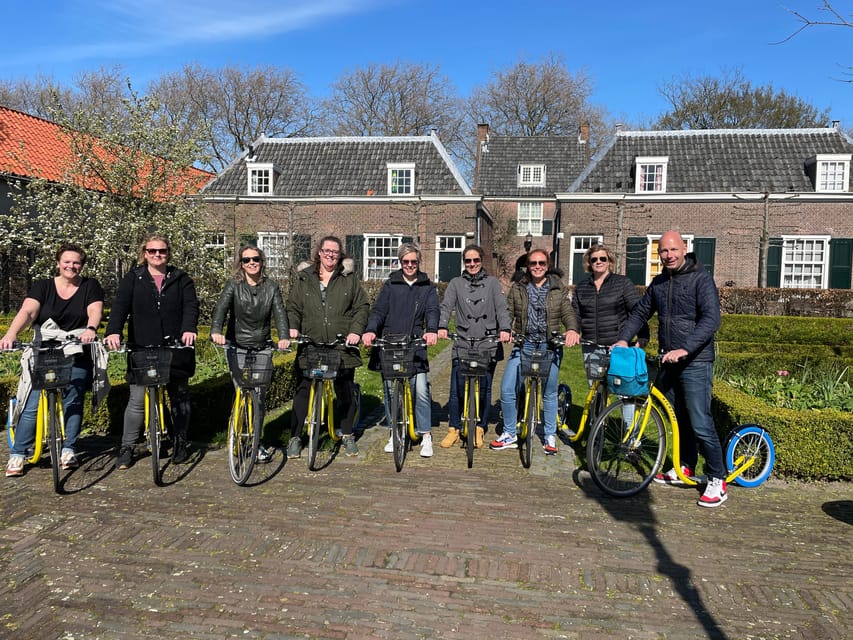
- Small group of up to 10 keeps the pace relaxed and questions possible
- Non electric steps make the ride feel hands on, like real street travel
- Mill de Roos is still in use, so it is not just a photo stop
- Agnetapark’s Marken story gives context to a quiet “garden village”
- Hofje van Pauw courtyard traces back to 1707, and it feels tucked away
- Old Church leaning tower is quick to see, but memorable in person
Delft, three more ways
- Delft: Canal Cruise with Guided Commentary★ 4.4 · 990 reviews
- Delft: Entrance Ticket for the Old and New Churches★ 4.4 · 229 reviews
- Delft: City Center Walking Tour★ 4.7 · 88 reviews
- Delft: Craft Beer Tasting in Medieval Brewery with Snacks★ 4.4 · 67 reviews
Why Step-Scootering Makes Delft Click
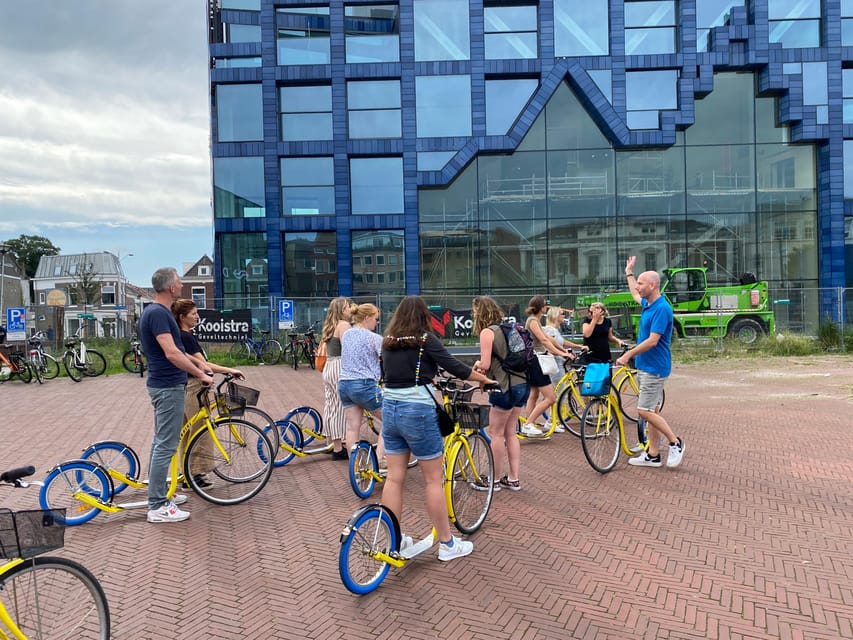
Delft has a way of rewarding slow attention. The step tour keeps you moving, but it still gives you moments to stop, look, and listen. That balance is the whole point: you get the compact hits of a top highlights walk, plus the side streets where you start recognizing Delft’s rhythm.
I like that the ride includes both visual variety and story variety. You pass the modern areas where construction has room, then you shift back into the older texture of the city. It helps you understand Delft as a living place, not a museum you visit for one hour and leave.
The route also solves a common problem. If you try to do all of these places on your own, you waste time backtracking or getting turned around. Here, the guide does the planning, and you concentrate on enjoying the ride and the details.
Starting Point, Timing, and How the Ride Paces You
You meet at Restaurant De Delf at Oude Delft 113. From there, you head out together from the garage where the steps are located. The whole experience runs about 1.5 hours, which is long enough to feel like a tour, but short enough to keep it energetic.
The stops are built for easy photo moments paired with short guided talks. You should expect about 15 minutes at each listed point, with time for you to get your bearings and settle into the ride. With a maximum group size of 10, it is usually easier to keep up than in big walking crowds, and it is simpler for the guide to notice if you are struggling with balance.
In practical terms, I think the sweet spot is this: you get a guided structure, but you also keep your freedom to ask a question or request a slower pace for photos.
The Modern Delft Stretch, Plus Mill de Roos Without the Rush
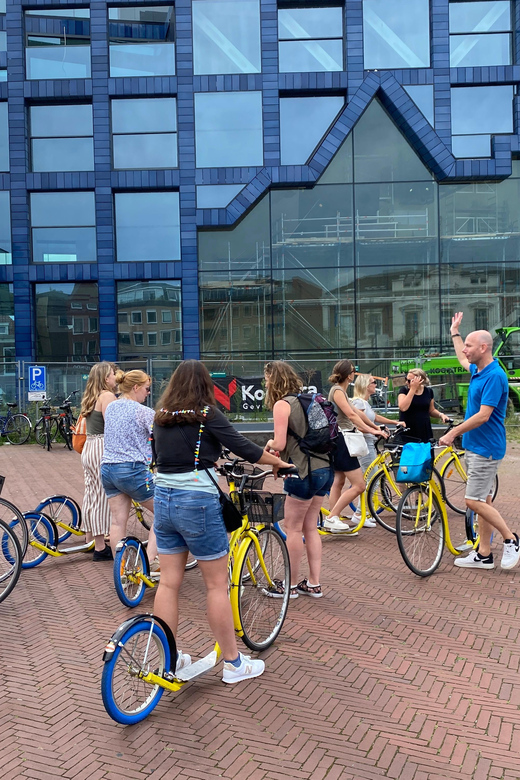
After you leave the garage, you first head toward the modern part of Delft. There is a specific reason for this opening stretch, the train now runs under the city, so there is space for construction. You can actually see how the city has grown around the infrastructure, and it makes the later old-street sections feel even more intentional.
Then you drive onward to Mill de Roos. It is still in use, which matters because it changes the mood from view only to working structure. Even if you just stand and look, you get a sense that Delft’s waterways and wind power traditions are not fully frozen in the past.
If you are the type who likes photos with context, this is a strong pairing. You start with city evolution, then shift to a historic tool that is still doing its job.
Agnetapark: A Garden Village With Real People Behind the Story
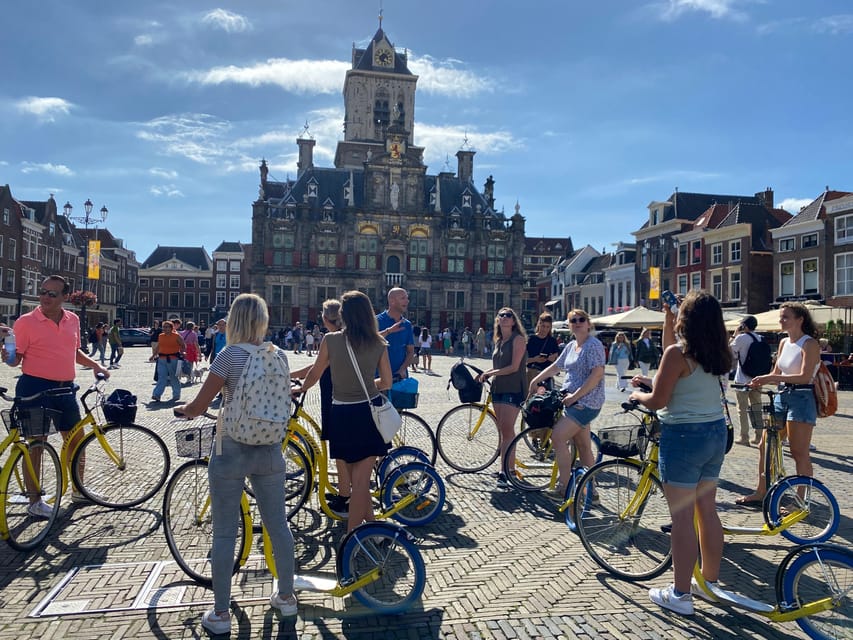
Next comes Agnetapark, a calmer neighborhood with a “garden village” feel. This is one of the stops where you can see why a guide matters, because the place is quiet, but it is not empty. Your guide shares stories connected to the Marken couple, and the way they are described helps you understand why this area was shaped the way it is.
I like Agnetapark because it gives your ride a break. After the busier center and the movement of the earlier stretch, this feels like a pause where the city slows down for you. You get space to look at the green pockets, the laid back streets, and the human scale.
One practical note: because it is peaceful, it is a great moment to ask questions. If you have been curious about what you saw in the modern part, this is a natural place to connect the dots.

Hofje van Pauw Courtyard From 1707, and Why It Feels Like a Secret
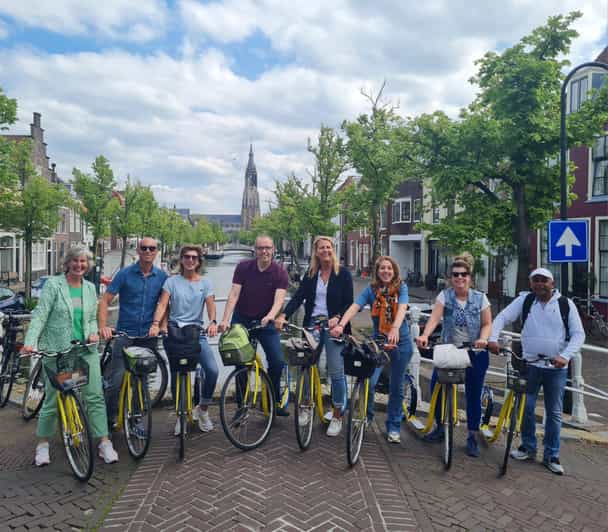
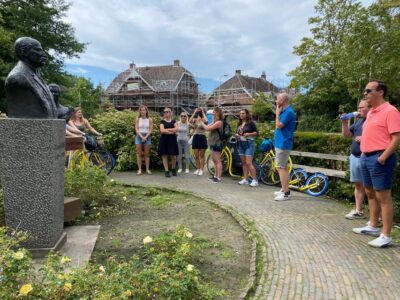
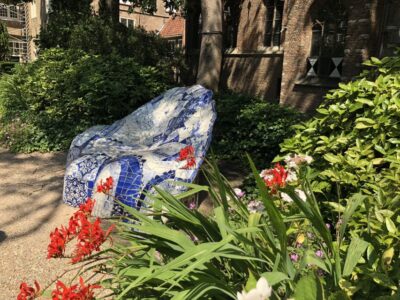
Then the tour moves to Hofje van Pauw. This is described as idyllic, and that fits the experience. A hofje is a specific kind of courtyard living arrangement, and the atmosphere here is built around that idea.
What makes this stop worth it is the detail your guide brings to the courtyard setting, including who founded it and the 1707 timing. You are not only seeing pretty architecture, you are getting the social logic behind it. That is a different way to appreciate Delft than just walking past buildings and hoping you remember everything later.
If you like places that feel protected from the street, this stop delivers. It also works well as a photo moment because the courtyard perspective is naturally framed. You end up looking at it like someone who belongs there, even though you are just passing through.
Eastern Gate and the Delft Neighborhoods That Feel Less Tourist
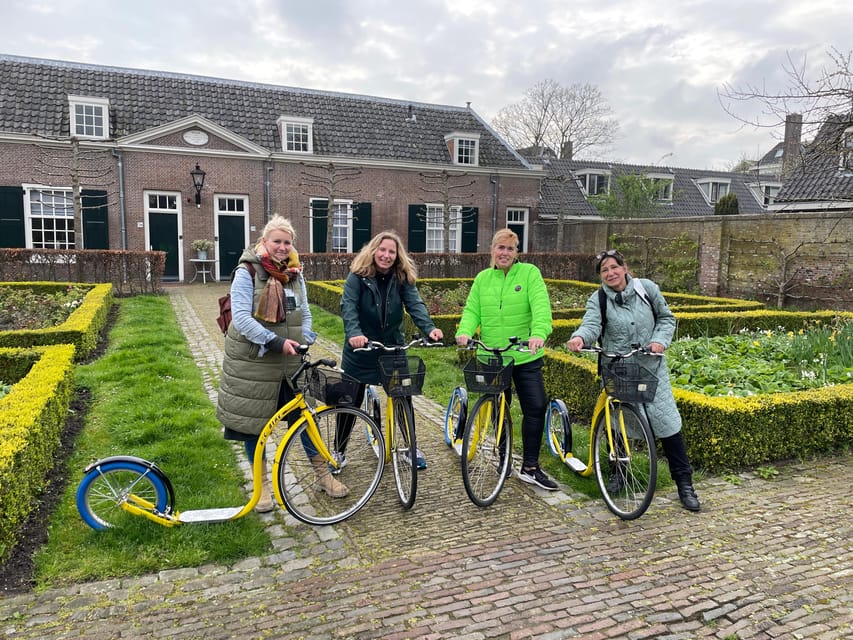
The tour then goes by the Eastern Gate, Delft, again with a photo stop and guided story time. Gates are useful because they mark where movement and boundaries used to matter more. Even if you already know Delft’s map basics, a gate stop helps you feel the city’s structure.
From there, you return through older streets and neighborhoods that sit outside the most obvious tourist center. This is valuable for two reasons. First, you see how Delft’s locals likely move around their day. Second, you understand the city as connected districts, not isolated highlights.
I always find that this “outside the center” section improves your last hour. By the time you reach the Markt again, you have context for how you got there and what kind of street scenes sit between the iconic buildings.
Markt, New Church, and Town Hall, The Delft Postcard Moment Done Right
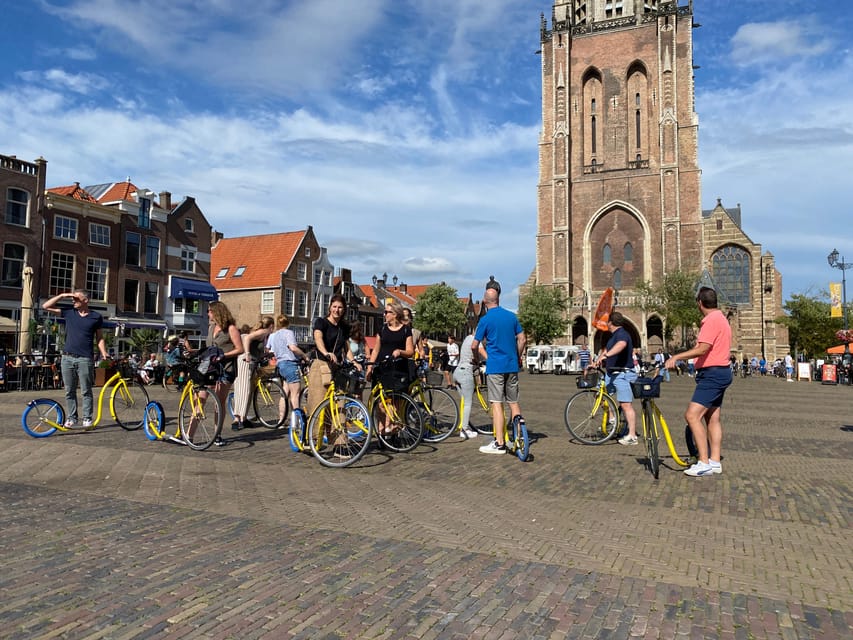
The Markt is the stop you probably came for, and it lives up to its reputation. Here you get the visual lineup of the New Church and the town hall, and the guide points out details that you might miss if you are just scrolling photos.
This is also where the tour stays efficient. You get a guided stop, but not an exhausting walk. In one place, you can collect the “big Delft” images while still hearing the story behind what you are seeing.
One small practical tip: arrive ready to slow down. Even though you are on a step, these central stops are where you will want clean photos. The Markt is open, so you can stand where the light and composition work best, then get back on and keep going.
Old Church and Its Leaning Tower, A Small Stop With Big Personality
The final standout architecture moment is the Old Church. The highlight is the leaning tower, and it is the kind of feature that looks better in person than in most photos. Part of that is scale, part is angle, and part is the fact that the tower makes the surrounding area feel a little off balance in a good way.
This stop works even if you are tired. It is paced like a photo opportunity with explanation, not a long climb or a museum marathon. You get the signature sight, then you move on.
If you like your tours with short “wow” moments instead of one long stretch of waiting, this is a win. The Old Church gives you that quick emotional hit and then you still have time to enjoy the ride back.
Non Electric Steps: What to Know Before You Try It
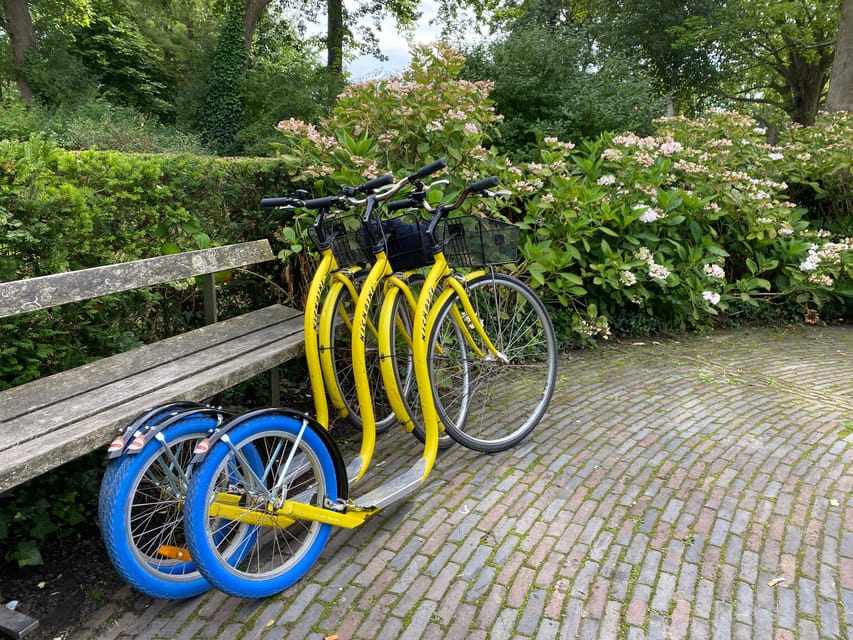
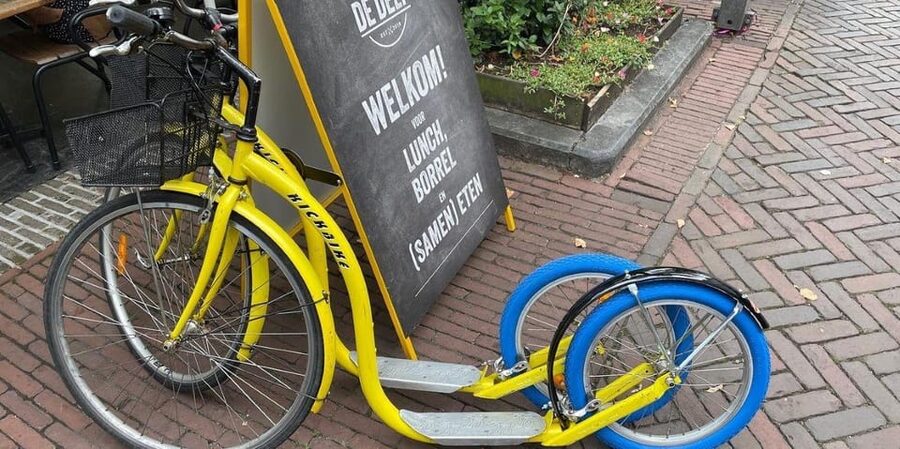
The Dutch word for scooter is step, and your tour is a steptocht. The big “know before you go” item is that the steps are non electric. That means you are powering yourself, and the motion depends on your balance and leg control.
In the real world, this changes the experience. You will feel the ground and your own effort a bit more than you would on an electric scooter. If you have ridden bikes and scooters before, you will likely find it easy. If you are not confident with that kind of movement, you should take the suitability notes seriously.
Do not plan this as a “just stand and listen” activity either. It is a ride tour, so you should expect some active motion throughout.
Also note the clear limits: it is not suitable for children under 16, people who cannot ride a bike, wheelchair users, or those who are visually impaired. If any of those apply, skip this and pick a walking tour instead.
Price and Value: How $32 Fits a 90-Minute Small-Group Tour
At $32 per person for about 1.5 hours, this is priced like a guided activity, not like a self-guided rental. What helps the value is what you get with it: rental of the non electric step plus a live guide.
You should compare this against the cost of doing several separate things. If you were to cobble together a taxi, a self-guided route, and pay for guide time elsewhere, you would likely spend more. Here, the guide handles the routing between modern Delft, working history at Mill de Roos, and the calmer courtyards and neighborhoods.
The small group cap at 10 also pushes it toward better value. Less waiting, more attention from the guide, and better chances to ask questions without feeling rushed. From what I have gathered about the experience style, it is the kind of tour where the guide tailors the conversation when the group is receptive.
The Guide Experience, From Fast Stories to Useful Local Tips
The guides bring the city to life in a story-forward way. Names I have seen associated with this tour include Frans and Kevin. The common thread is enthusiasm and a lot of information delivered in a way that keeps the ride fun.
I also like that the tour style leaves room for questions. When you are traveling by step, you are not stuck inside a building schedule. You can adjust what you ask about based on what you actually see around you.
On some departures, the guide includes a wrap-up moment that can involve a drink at the end. It is the kind of small extra that makes the tour feel like more than just a checklist. Even if that detail varies by day, the overall feel is friendly and lightly social.
Practical Advice So You Enjoy the Whole 90 Minutes
Before you go, think about your riding comfort. Bring shoes with a good grip and avoid heavy, slippery soles. If you have any hesitation with balancing on rolling transport, practice on flat ground beforehand.
For photos, plan to use your phone quickly at stops, then hop back on. The tour has enough time for short photo moments, but it is not designed for long museum-style lingering.
If you want the most out of the stories, ask one question early. Once you hear how your guide connects modern Delft, the mill, and courtyard life, the later stops will land better.
And if you get hot, take advantage of the calmer neighborhoods like Agnetapark and Hofje van Pauw. They offer a natural reset in the route.
Should You Book This Delft Step Tour?
Book this if you want an efficient, story-guided way to see Delft’s top sights plus quieter corners, without committing to a long walking day. It is ideal for adults and older teens who can ride confidently, and it is especially good if you like architecture, courtyards, and city neighborhoods with context.
Skip it if you cannot ride a bike, if you need wheelchair access, or if you are visually impaired. Because the steps are non electric, this is also not a great fit for anyone who expects minimal physical effort.
If you are on a short trip and want maximum Delft per hour, this tour is a smart choice. You cover Mill de Roos, Agnetapark, Hofje van Pauw, the Markt with the New Church and town hall, and the Old Church leaning tower, all while gliding through Delft as it actually feels: part historic, part lived in, and part still changing.
FAQ
How long is the Delft step scooter tour?
It lasts about 1.5 hours.
How much does the tour cost?
The price is $32 per person.
Where do we meet?
You start at Restaurant De Delf.
What kind of steps are used on the tour?
The steps are non electric.
What sights will the tour stop at?
You will visit places including Mill de Roos, Agnetapark, Hofje van Pauw, the Markt, the Old Church, and also the Eastern Gate area.
How big is the group?
The tour is a small group, limited to 10 participants.
What languages are offered?
The live guide speaks English and Dutch.
Who is this tour not suitable for?
It is not suitable for children under 16, people who cannot ride a bike, wheelchair users, or visually impaired people.
What is included in the price?
Included is the rental of the non electric step and the guiding services.
A Morning to Read the City
Also Reviewed Around Delft

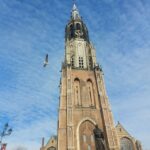
Delft, Three More Ways
Fresh off the review pile in Delft
- Delft: Canal House Museum ‘Paul Tetar van Elven’ Ticket
★ 4.5 · 6 reviews - Delft: Private Historical and Cultural Guided Walking Tour
★ 5.0 · 8 reviews - Delft: Christmas Walk with Oliebollen and Glühwein
★ 4.8 · 8 reviews - Delft: Guided Walking Tour
★ 4.7 · 9 reviews - Delft – Step/scootertour in and around the city
★ 4.8 · 9 reviews
Delft & Delft Blue, compared.
 ★ 4.2From Amsterdam: Rotterdam, Delft & The Hague Guided Day TourFrom $901,765 reviews
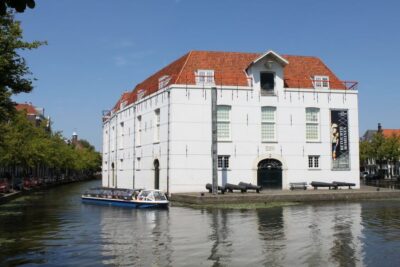 ★ 4.4Delft: Canal Cruise with Guided CommentaryFrom $15990 reviews
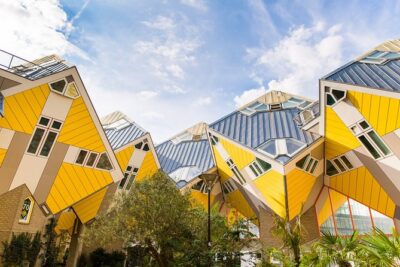 ★ 4.0Rotterdam, Delft, the Hague, Madurodam from AmsterdamFrom $90793 reviews
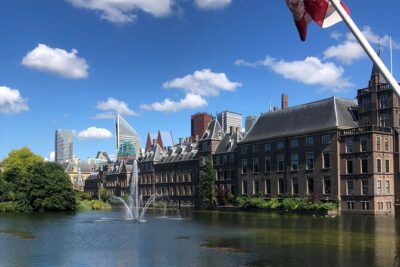 ★ 4.5Rotterdam, Delft and The Hague Small Group Tour from AmsterdamFrom $151599 reviews
 ★ 4.6Royal Delft: Delftblue Factory and MuseumFrom $21588 reviews
 ★ 4.2From Amsterdam: Guided Trip to Rotterdam, Delft & The HagueFrom $81529 reviews
 ★ 4.5The Hague, Delft and Rotterdam Small-Group Tour (Max. 8 People)From $156234 reviews
 ★ 4.4Delft: Entrance Ticket for the Old and New ChurchesFrom $11229 reviews
Browse the lists this tour appears in