
REVIEW · DELFT
Discover Historical Delft with an Audio Guide
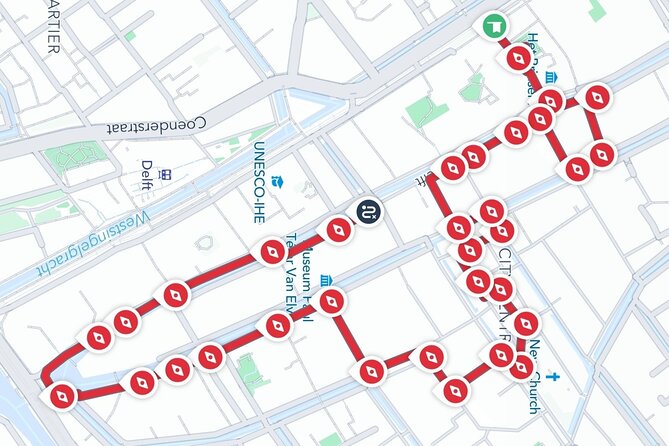
Delft has stories at every corner. This GPS-based audio tour is built for wandering, with offline audio and a route that snaps you from major landmarks to the little details you would otherwise miss. I especially like how the narration blends serious moments, like William of Orange’s assassination, with a light, funny tone that keeps the walk moving.
The second thing I like is how much ground you cover in about 2 hours, with quick stops at the Prinsenhof, multiple churches, the town hall, and key canal buildings like the Delft synagogue. One drawback to plan for: you’ll need your own smartphone and headphones to hear it, since they are not included.
In This Review
- Key things you’ll notice on this Delft audio walk
- Why a GPS audio tour makes sense in Delft
- Price and value: what $22 buys you in 2 hours
- Logistics that matter: offline audio, timing, and where to start
- Stop 1: Museum Prinsenhof Delft and the assassination story you cannot ignore
- Stop 2: Old Church, leaning time, and why one angle matters
- Stop 3: Gemeenlandshuis van Delfland, the city’s water brain
- Stop 4: Sociëteit het Meisjeshuis, an orphanage, a tree, and a science link
- Stop 5: Stadhuis Delft, the town hall and the “food and trade” clues on the walk
- Stop 6: Nieuwe Kerk and the royal family connection
- Stop 7: Maria van Jessekerk and the real house behind Vermeer’s work
- Stop 8: Vrienden van de Synagoge Delft and the city’s oldest canal
- Stop 9: Armamentarium, Delft Blue manufacturers, and Vermeer’s south-view
- Stop 10: VOC-Kamer Delft and why the Dutch East India Company mattered
- What else you hear between monuments: beer, students, and little animals
- A few smart tips to get the most from the audio track
- Who should book this audio tour
- Should you book Discover Historical Delft with an Audio Guide?
Key things you’ll notice on this Delft audio walk
- GPS-based navigation that does not require an internet connection during the tour
- Lifetime access, so you can replay it later if you want a slower second pass
- A route built around big names and big turning points, from William of Orange to Vermeer
- Delft Blue origin details, including how the city copied a Chinese product and started a famous tradition
- A mix of places that look similar from the outside, like churches and canals, but sound totally different once you hear the stories
- Frequent “short stop” pacing, so you can keep walking without losing the thread
Delft, three more ways
- Royal Delft: Delftblue Factory and Museum Admission Ticket★ 4.5 · 145 reviews
- The Hague: One Way Boat Ticket to or from Delft★ 4.5 · 52 reviews
- Walking Tour of Delft – The City of Orange and Blue★ 5.0 · 50 reviews
- Vermeer Centrum Delft Museum Admission Ticket★ 4.0 · 45 reviews
Why a GPS audio tour makes sense in Delft
Delft is the kind of city where you can spend a full day just drifting. The trick is making sure your drift turns into understanding, not just steps. This tour works because it is GPS-based and focused on what you are standing in front of, so your walk feels guided without feeling rigid.
I like the way the route is timed in small chunks. You will hit major sights and also smaller buildings that you might otherwise pass by quickly. The narration keeps you moving, but it also gives you control, so you can pause for photos, look longer at a facade, or take a breather.
The best part is that it is not only about the famous stuff. Yes, you get key names like William of Orange, Johannes Vermeer, and the Dutch East India Company (VOC). But you also hear about Delft’s everyday systems and hidden angles, like the city’s water management and the businesses that shaped what Delft became.
Price and value: what $22 buys you in 2 hours
At about $22 for an experience that takes roughly 2 hours, this is priced like a ticket, not like a long guided tour. And that is exactly the point. You are paying for a structured route and clear narration that helps you see more than you would on pure self-wandering.
Two things push the value further. First, you get lifetime access, which means you can come back and replay sections another day. Second, the tour includes both blockbuster stories and quick background hits that turn a casual glance into context.
Admission tickets are not included for the stops listed, so think of this as a “hear the story in place” experience. You will still enjoy the exterior views and street-level atmosphere, and if you want to go inside any stop that has its own entry fee, you will need to budget for that separately.
Logistics that matter: offline audio, timing, and where to start
You can activate the tour with a code, and the provider also gives instructions and directions to the starting location. The route ends on Oude Delft, which is convenient because it is central. From there, you have a short walk to the Markt square and on toward the train station.
You do not need an internet connection during the tour. That matters in the real world because you can focus on walking instead of hunting for signal. Still, you should make sure your phone is charged. GPS tracking and audio playback take power, and Delft is best when you can take your time.
Also, you can pause and resume whenever you want. That is great if you want to stop for a drink, sit for a minute, or step off-route briefly for a photo and then jump back into the narration.
Finally, this is set up as a private activity for your group. If you are walking with a friend, it works well because you can both listen together, then compare notes after each stop.
Stop 1: Museum Prinsenhof Delft and the assassination story you cannot ignore
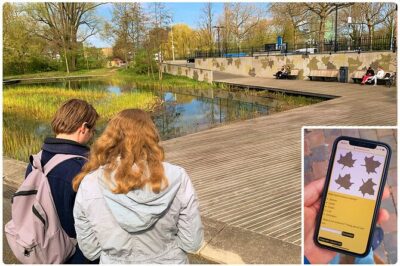
Your tour begins at Phoenixstraat 42 and moves into the Prinsenhof Delft area. The first segment heads through the Prinsenhof garden, which is a smart way to start, because you get to slow down before the heavy stories kick in.
This is where you hear about William of Orange, often called the Father of the Fatherland. The audio explains not just the assassination itself, but also what happened to the killer, including what we did after the fact. It is dramatic, but the narration keeps it readable as you stand in the setting where the story lives.
A practical note: the Prinsenhof garden is a natural “first listen” stop because you can look around while you process. If you jump straight into dense interiors later, you might miss how the garden changes the mood.
More trips where somebody else does the explaining


Stop 2: Old Church, leaning time, and why one angle matters
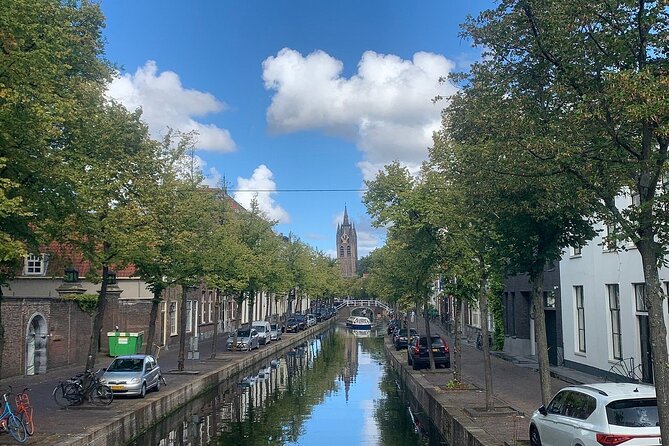
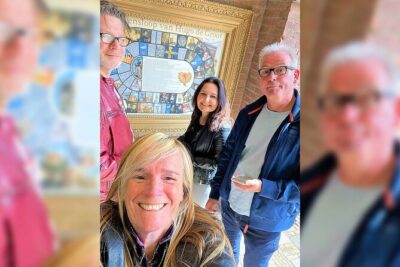
Next up is the Old Church. You will see it from multiple angles, and the tour makes a point about the way it looks, including that it is leaning.
This is one of those Delft moments where the building is visually distinctive, but the real payoff is the story behind it. The audio helps you connect the church to the city’s longer timeline, so you are not just clocking a quirky feature.
If you are the type who likes taking photos, this is a good stop to angle your camera and then let the narration finish. The lean changes how it photographs depending on your spot, so give yourself a minute to circle if space allows.
Stop 3: Gemeenlandshuis van Delfland, the city’s water brain
After the Old Church, you reach the Gemeenlandshuis van Delfland. This is described as the oldest house of Delft and, since 1645, it has been the Water Board.
That sounds dry, but it is actually a core part of why Dutch cities work. Delft sits in a landscape where water is always an issue, so the idea of a water authority is more than paperwork. It is about the systems that keep life functioning.
What I like here is that it reframes Delft. The city is famous for art and tiles, but you also get the sense of how infrastructure and governance shaped daily life.
Stop 4: Sociëteit het Meisjeshuis, an orphanage, a tree, and a science link
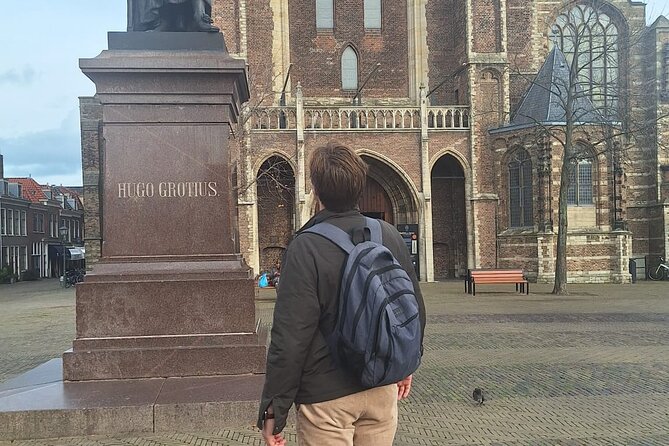
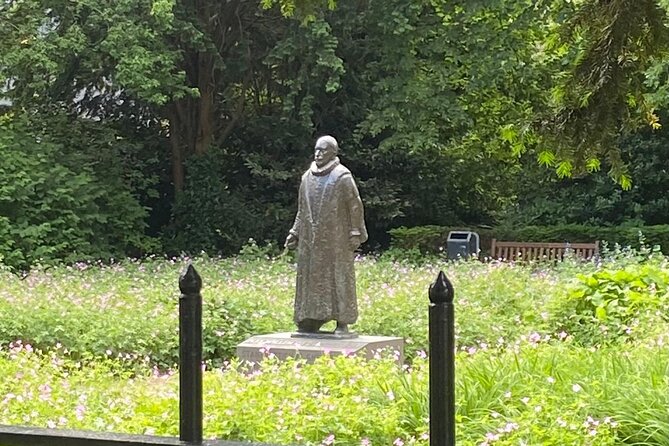
You then move to Sociëteit het Meisjeshuis, a former girls’ orphanage. The audio points you to the garden and to the oldest tree of Delft, which is a great quiet counterpoint after the Water Board story.
The narration also connects this stop to a famous man depicted on the fence, described as the grandfather of microbiology. It is a neat way to weave science into architecture, so you come away thinking about Delft not only as a painting town.
This is a stop where you can slow down without falling behind. If you like to linger, the tree and garden feel made for it. If you are moving fast, you still get the context without losing the pacing.
Stop 5: Stadhuis Delft, the town hall and the “food and trade” clues on the walk
Your next major landmark is Stadhuis Delft, the town hall. The tour guides you across Boterbrug and past a cluster of places tied to commerce, including the Meat Hall, the Weighing House, and the Butter House, plus an “oldest Chemist” detail.
Then you get the town hall itself, highlighted as Dutch renaissance at its best. I like this stop because it teaches you to read a city through its trading rhythms. Delft is not just monuments. It is money moving, goods measured, and decisions made.
Because you only spend about 15 minutes here, manage your time. Look up at the facade, then take one steady photo that captures the building shape and the square energy.
Stop 6: Nieuwe Kerk and the royal family connection
On the other side of the Markt square, you reach the Nieuwe Kerk. The audio notes it as the second-tallest church in the country, which helps you understand why it dominates the skyline from so many angles.
The tour also explains why it matters beyond architecture. It is where the royal family is buried, and it includes details about a statue tied to the story. The audio even mentions famous American visitors, though those specifics are part of what you hear on the tour.
If you are doing this with someone else, this is a good place to compare what you both notice. Churches can look similar street-level, but the narration changes how your brain locks onto details.
Stop 7: Maria van Jessekerk and the real house behind Vermeer’s work
The route then moves away from the Markt square to Maria van Jessekerk. This stop is linked to a specific idea you hear earlier: the actual house where Johannes Vermeer made his paintings.
So instead of treating Vermeer like a name on a museum plaque, the audio helps you place him in the city’s streets. That is the kind of connection that makes Delft feel personal, even when you are just passing through.
This stop is also a reminder that Delft’s charm sits in layers. A church is a church, but hearing about Vermeer here gives the whole area another meaning.
Stop 8: Vrienden van de Synagoge Delft and the city’s oldest canal
You return toward the oldest canal area of Delft at Vrienden van de Synagoge Delft. This is where the tour points out the only synagogue of the city and highlights that it was designed by a Jew, described as the first synagogue of the Netherlands designed by a Jew.
That context matters. It is easy to walk past religious buildings and treat them as background scenery. The audio turns the building into a signpost for deeper history.
From a walking perspective, this segment also helps you orient. Canals in Delft can look similar until you know which one anchors the area and which buildings frame it. The narration makes that mental map click.
Stop 9: Armamentarium, Delft Blue manufacturers, and Vermeer’s south-view
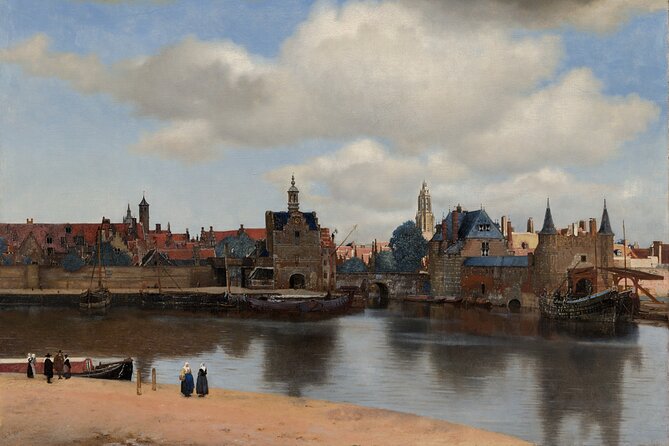
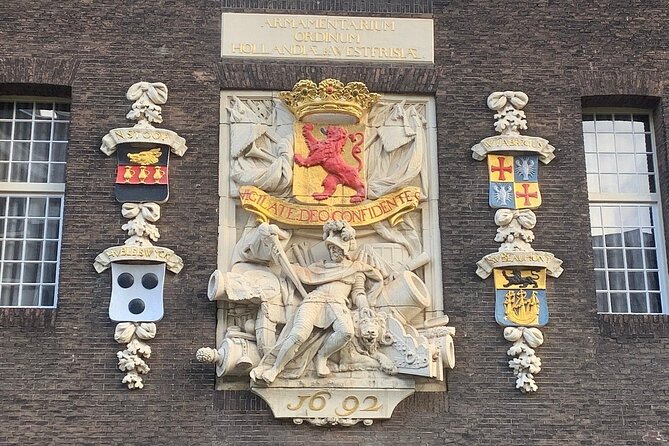
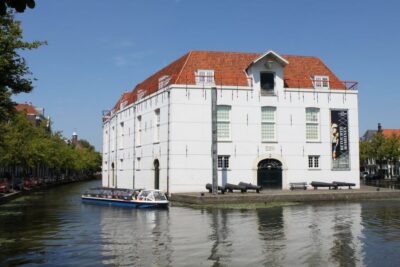
Next comes Armamentarium, described as a former weapons arsenal of Holland. The audio then links this area to Vermeer’s famous view of Delft from the south, connecting painting and place in a way that makes the walk feel like a living gallery.
Right around here you also hear about former Delft Blue pottery manufacturers. The narration includes a key origin story: Delft copied a Chinese product and that sparked a famous tradition.
That is a huge idea for understanding Delft. The famous blue-and-white tiles did not appear out of nowhere. They are part of trade and copying, and the tour helps you see the city’s role in that larger exchange.
Practical tip: if you like tile details, this is the stop where you will start seeing Delft Blue everywhere on your walk back out. You may even want to pause and look at your surroundings more carefully once the origin story lands.
Stop 10: VOC-Kamer Delft and why the Dutch East India Company mattered
The final stop is VOC-Kamer Delft, the former office of the Dutch East India Company (VOC). The audio explains how people viewed it as the biggest company ever and how it contributed to Delft’s wealth.
This is a satisfying finish because it ties the economic story into the street-level sights you saw earlier. If you heard about trade-linked commerce at the town hall area, and about pottery manufacturing near the south-view stop, then VOC turns those hints into one bigger picture.
You finish in the middle of Delft on Oude Delft, so you can immediately keep exploring without needing to backtrack to your start point. It also sets you up well if you want to head to the train station or loop back to the Markt square.
What else you hear between monuments: beer, students, and little animals
The route is packed with facts, but it also includes human-scale topics. You will hear about Delft’s student culture, and the story of its lost beer brewing industry.
You will also hear about the man who discovered a hidden world full of little animals. That kind of science storytelling is exactly why an audio tour works. It makes you notice Delft not as a static postcard, but as a place where ideas and curiosity shaped the city.
If you like travel that mixes art with real-world people, these parts are the glue. They help Delft feel like it had everyday life, not just famous buildings.
A few smart tips to get the most from the audio track
Here is how to make this tour feel easy, not like a checklist.
- Bring your own headphones and plug them in before you start walking. The narration timing depends on where you are.
- Since you can pause and resume, build in quick breaks, not long ones. Delft streets are narrow in places, and you want to keep the route flowing.
- Watch for the recommended pause point for a drink. The tour even suggests a beer break halfway, so use it as a rhythm marker, not just a treat.
Also, dress for walking. You are covering multiple stops in a roughly 2-hour loop, with several short segments under 15 minutes each. That pacing works best when you are comfortable moving.
Who should book this audio tour
This is a great pick if you:
- want an independent walk with structure
- like learning stories tied to specific streets and buildings
- do not want to rely on museum schedules
- travel with a friend or small group and want to keep your own pace
It might not be the best fit if you:
- hate using your phone for navigation or audio
- want a live guide to answer questions on the spot
But if you are comfortable with a phone-based experience, this is an efficient way to get past the surface of Delft.
Should you book Discover Historical Delft with an Audio Guide?
If you are spending only a short time in Delft, I think this is one of the smartest ways to turn time into understanding. The offline GPS audio, the lifetime access, and the way the tour links William of Orange, Vermeer, VOC, and Delft Blue to real street corners make it feel more meaningful than a simple sight loop.
Book it if you want a walk that feels like a conversation with someone who knows where the interesting details hide. Skip it only if you strongly prefer a live guide or you do not want to use your phone and headphones for the whole experience.
Let Somebody Else Explain It




Also Reviewed Around The Hague




Delft, Three More Ways


Fresh off the review pile in The Hague
- Private Tour of Vermeer’s Delft + Tickets to Vermeer Museum
★ 5.0 · 3 reviews - Private Tour of Rotterdam and The Hague including Transfer
★ 5.0 · 3 reviews - Surfing at The Shore in The Hague
★ 4.5 · 3 reviews - 3 Course Walking Dinner in Delft with Guided Tours in Between
★ 5.0 · 3 reviews - Surprise Walk of The Hague with a Local
★ 4.5 · 3 reviews
Delft & Delft Blue, compared.
 ★ 4.2From Amsterdam: Rotterdam, Delft & The Hague Guided Day TourFrom $901,765 reviews
 ★ 4.4Delft: Canal Cruise with Guided CommentaryFrom $15990 reviews
 ★ 4.0Rotterdam, Delft, the Hague, Madurodam from AmsterdamFrom $90793 reviews
 ★ 4.5Rotterdam, Delft and The Hague Small Group Tour from AmsterdamFrom $151599 reviews
 ★ 4.6Royal Delft: Delftblue Factory and MuseumFrom $21588 reviews
 ★ 4.2From Amsterdam: Guided Trip to Rotterdam, Delft & The HagueFrom $81529 reviews
 ★ 4.5The Hague, Delft and Rotterdam Small-Group Tour (Max. 8 People)From $156234 reviews
 ★ 4.4Delft: Entrance Ticket for the Old and New ChurchesFrom $11229 reviews
Browse the lists this tour appears in