
REVIEW · DELFT
The Blue’s Clues in Delft Exploration Game and Tour
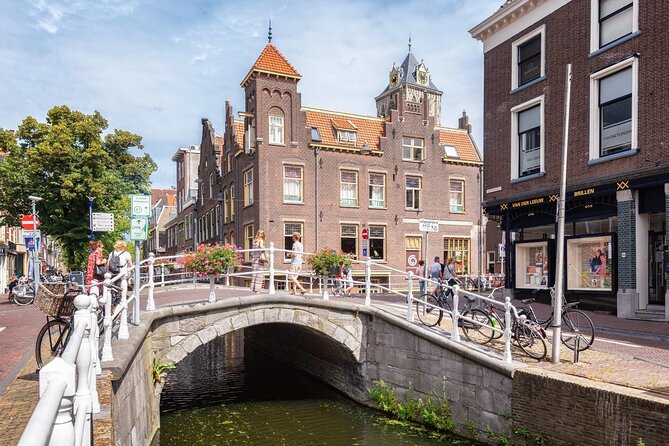
Puzzles turn Delft into a scavenger hunt. This outdoor escape game guides you step by step through real streets and key sights, using an offline smartphone app so you can keep moving without hunting for Wi-Fi. I like that it gives you a clear route, but the story is something you uncover at your own pace, not on a rigid schedule.
What I really like: you can pause anytime to rest your feet or stop for photos, and you can play solo or as a group with your own phone. One thing to consider is tech dependence. If your access code does not activate properly in the app, you could lose play time, so I suggest doing a quick test before you leave.
In This Review
- Key Points You Should Know
- Why This Delft Phone Game Feels Better Than a Usual Walk
- Price, Time, and What You Really Get for $7.53
- Getting Oriented: Start at Oostpoort, Finish at Delft Windmill de Roos
- What to do before you start
- Stop by Stop in Delft: Oostpoort to de Roos Windmill
- Oostpoort, Delft’s Only Remaining City Gate
- Koornmarkt: Corn Market Streets and Canals
- Medisch Farmaceutisch Museum: Antique Medical and Pharmacy Tools
- An Old Gothic Church Building and Rijksmonument Status
- Delft City Hall on the Market, Across from Nieuwe Kerk
- The Markt: One of Europe’s Larger Historic Market Squares
- The Tower Built by Jacob van der Borch, and Clock Bells
- Vermeer Centrum Delft and the St. Lucasgilde Connection
- The Old Church: Founded in 1246, Gothic Basilica Later
- Prinsenhof: Medieval Monastery to Home of William the Silent
- Delft’s de Roos Windmill: The Last of Fifteen
- The Delft Details the Game Makes You Notice
- Who Should Play This and Who Might Prefer Something Else
- Practical Tips for Playing Offline in Delft
- Should You Book This Delft Exploration Game?
- FAQ
- How long is the Blue’s Clues in Delft Exploration Game and Tour?
- Do I need internet to play?
- Can I start at any time?
- Where does the tour start and end?
- Is there a physical tour guide?
- Is it suitable for families and kids?
- Can my group members play too?
Key Points You Should Know
- Offline phone play means you are not tied to data or spotty reception.
- Flexible start times (24/7) lets you fit Delft exploration around your day.
- Pause and resume so you can take breaks whenever you want.
- A full route across Delft core sights from Oostpoort to the de Roos windmill.
- Family-friendly puzzle format, with free play for kids.
- Step-by-step navigation by app keeps you from wandering in circles.
More puzzle walks you can start whenever you feel like it
- Discover The Hague with a self-guided Outside Escape city tour★ 4.5 · 35 reviews
- e-Scavenger hunt Delft: Explore the city at your own pace★ 4.5 · 26 reviews
- Hague: The Heart of Old Town Exploration Game and Tour★ 3.5 · 25 reviews
- Discover The Hague’s scenic courtyards in an Outside Escape game!★ 4.0 · 16 reviews
Why This Delft Phone Game Feels Better Than a Usual Walk
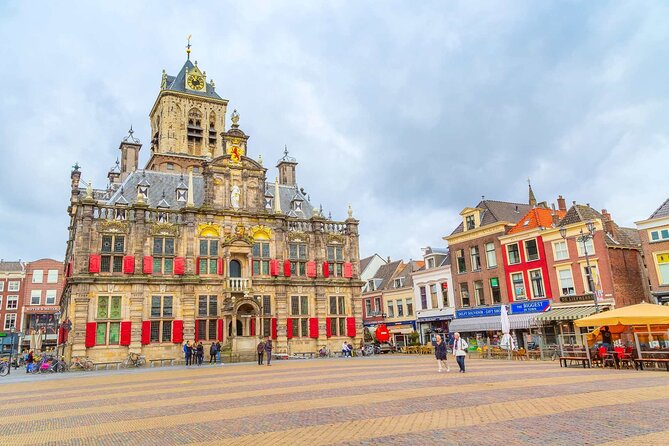
Delft is perfect for a self-guided game. The streets are walkable, the building shapes are varied, and the city center has enough recognizable landmarks to keep you oriented. This experience adds a layer of momentum: instead of just looking, you’re actively hunting answers on-site. That makes the city feel less like a checklist and more like a real afternoon with a mission.
I also like the way the challenges push you to look closely. You’re not only passing by an old gate or a market square. The app prompts you to scan details and connect them to the next step. It’s a simple trick, but it works.
Price, Time, and What You Really Get for $7.53
At $7.53 per person, you are paying for a self-guided, puzzle-based route that runs about 1 hour 30 minutes. That price makes sense because you’re getting more than directions. You get a built-in reason to slow down at specific places, plus the convenience of offline use.
Is it a “cheap” activity? Yes. Is it a “quick” activity? Also yes. But it’s not just quick walking. The game structure turns a typical sightseeing loop into something you can actually interact with. If you like spending your time solving small mysteries as you go, the value is strong.
If you’re expecting a live guide who explains every stone, this will feel different. This is a phone-led adventure, so you trade live narration for freedom and flexibility.
Getting Oriented: Start at Oostpoort, Finish at Delft Windmill de Roos
The adventure starts at Oostpoort 15, 2611 RZ Delft, Netherlands. The ending point is Delft Windmill de Roos, Phoenixstraat 111, 112, 2611 AK Delft, Netherlands.
The route is designed as one continuous walk across historic Delft, with the app guiding you step by step. That matters because Delft can trick you with canals and side streets. A phone route reduces the mental load, so you focus on the puzzles and the sights.
You can start whenever you want. The experience runs 24/7, which is great if you want to play in the late afternoon light or squeeze it in between museums.
What to do before you start
- Charge your phone, especially if you plan to use it for navigation and puzzle prompts.
- If you have the option, try opening the game on your phone before you head out.
Delft, three more ways

Stop by Stop in Delft: Oostpoort to de Roos Windmill
The app’s rhythm is consistent: it brings you to a specific place, then tells you to look around for an answer that moves you forward. Below is what you’ll experience along the way, and why each stop is worth your attention.
Oostpoort, Delft’s Only Remaining City Gate
You begin at the eastern gate (Oostpoort). This is brick Gothic northern European architecture, built around 1400. Around 1510, the towers were enhanced with an additional octagonal floor and tall spires, shaping the gate’s dramatic silhouette. The best detail here is that it is the only city gate still remaining in Delft. The others were demolished in the 19th century.
Practical tip: don’t just stare at the front. Use your phone route to position yourself, then look for architectural features the app nudges you toward. This is a great first stop because it gives you context for why Delft looks the way it does.
Koornmarkt: Corn Market Streets and Canals
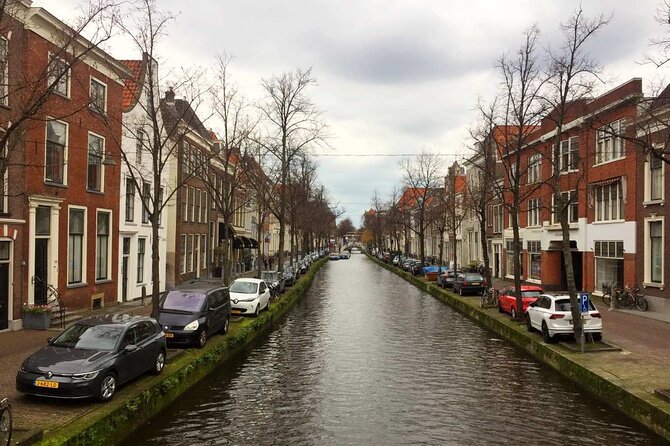
Next comes Koornmarkt, also known as the corn market. Koornmarkt is one of those Delft streets where the history feels built into everyday scenery. The canals and street layout are part of the city’s identity, and the app encourages you to search around for the clue that unlocks the next location.
Why this stop works: it’s less monumental than a gate or a church, so it’s a nice breather. You get a change of pace, and the puzzle makes you notice canal edges, street lines, and place names you might otherwise skim past.
Medisch Farmaceutisch Museum: Antique Medical and Pharmacy Tools
Then you’ll reach the Medisch Farmaceutisch Museum, which focuses on antique medical and pharmaceutical instruments. Even if you don’t go inside (your route may just position you nearby), the subject matter helps you zoom out. Delft wasn’t only churches and guild buildings. People studied, treated illness, and made medicines here too.
Puzzle value: this type of stop adds variety. You’re not just learning architecture. You’re learning how a city also preserves its practical past.
An Old Gothic Church Building and Rijksmonument Status
You’ll also be pointed toward a Gothic-style church building built around 1400, described as one of the oldest buildings in Delft, and designated a Rijksmonument since 1967. It sits on the east side of the Oude Deft. The style is noted as Gothic, which shows up in the building’s overall structure and proportions.
What to watch for: Gothic buildings can look similar at a distance, so the app’s “look around” prompts are useful. This stop is where the game nudges you to train your eyes for details rather than just snapping a single photo.
Delft City Hall on the Market, Across from Nieuwe Kerk
The game then directs you to Delft’s City Hall, a Renaissance-style building on the Market square, directly across from the Nieuwe Kerk. This building isn’t only pretty. It’s described as the seat of the city government and also a venue for civic wedding ceremonies. Most administrative functions have moved to an office inside the Delft railway station building.
Why this matters: the Market square is where public life happens. Even if you’re not there for a ceremony, you’re standing in a place that historically mattered for decision-making.
The Markt: One of Europe’s Larger Historic Market Squares
Next is De Markt, one of the largest historic market squares in Europe, measuring 120 by 50 meters. It’s almost rectangular, bordered on the short sides by the Nieuwe Kerk on the east and the town hall on the west. The side streets connected to the square are also part of the Market.
There’s also a fascinating physical detail. The square sits on a silted creek ridge raised by a tidal channel called de Gantel. That means the Markt is one of the higher parts of Delft’s city center.
Puzzle angle: the app pushes you to connect geography with what you see. That ridge and raised ground help explain why some squares and streets feel subtly different underfoot.
The Tower Built by Jacob van der Borch, and Clock Bells
Then comes another standout: the tower section with dates 1396 to 1496, built by Jacob van der Borch. He’s also linked to the Dom in Utrecht, built between 1444 and 1475. There’s also a monument for Hugo de Groot from 1781. The mechanical clock is described as having 18 bells by Francois Hemony from 1659 and 30 modern bells.
Even without a museum ticket, this stop helps you feel the scale of Delft’s craft and timekeeping. Bells and clockwork reflect wealth, civic pride, and engineering effort.
Practical tip: if you’re visiting near the time when the bells might be heard, it can add atmosphere. If not, use the app’s prompt to help you focus on visible parts of the structure.
Vermeer Centrum Delft and the St. Lucasgilde Connection
Next is the Vermeer Centrum Delft, described as an important historic building in its own right. It used to be home to the St. Lucasgilde, a guild of painters and glass makers in the 17th and 18th centuries. Vermeer joined this guild in 1653, and Saint Lucas is described as the patron saint of painters.
This is a clever stop in the game because it connects art to the city’s social structure, not just to one famous name. Delft’s famous visitors and workers were supported by guild systems, and that’s exactly the kind of detail that a puzzle route tends to bring to the surface.
The Old Church: Founded in 1246, Gothic Basilica Later
The route continues to the Old Church, said to have been founded in 1246 when Count William II gave Delft its own charter. At the time, it was named after St Bartholomew, patron saint of the founder. Over the centuries, it developed into an impressive gothic basilica.
If you’re short on time, this is one of those stops that gives you a deeper anchor for the rest of the walk. Once you know the church’s origin story, you’ll interpret the surrounding architecture with more meaning.
Prinsenhof: Medieval Monastery to Home of William the Silent
Then comes the Prinsenhof, described as an urban palace built in the Middle Ages as a monastery. Later it served as a residence for William the Silent. He was murdered there in 1584, and the holes in the wall made by bullets at the main stairs are still visible.
This stop has a dark, real-world edge. The building is not just an object, it’s a witness. The app’s puzzle prompts fit well here because they give you a reason to notice what you might otherwise pass quickly.
Delft’s de Roos Windmill: The Last of Fifteen
The final leg ends at the de Roos windmill (The Rose). It was built in 1679 and used for grinding corn. The first mention of a mill at this location goes back to 1352. Today, de Roos is described as the only remaining windmill of fifteen that once stood in the Delft region.
This is a strong finish. You end where Delft’s everyday industry shows up in a landmark way. It also gives you a natural sense of completion after all the civic and religious stops along the route.
The Delft Details the Game Makes You Notice
When you play this kind of escape-style route, you start to see how the city’s pieces connect.
- Brick Gothic architecture in Oostpoort sets the tone for why Delft’s old buildings look the way they do. You learn to spot changes like tower additions, not just the overall silhouette.
- The Markt isn’t only scenic. It’s built on a raised ridge linked to a tidal channel, so the ground itself tells a story.
- The tower section with Jacob van der Borch and the clock bells anchors Delft in craftsmanship and civic pride.
- The guild link at Vermeer Centrum Delft helps you understand how art and industry were organized, not just who became famous.
- Prinsenhof adds the human layer, especially with the note about the bullet holes still visible at the main stairs.
This is the big reason the experience feels worth your time. Your eyes get trained. That carries over even after you finish the game.
Who Should Play This and Who Might Prefer Something Else
I’d recommend this adventure if you:
- like self-guided travel with built-in structure
- enjoy solving puzzles while you walk
- want to see a lot of Delft highlights without committing to a fixed tour time
- are traveling with family and want a shared activity (kids play free)
I’d think twice if you want:
- a live guide answering questions as you go
- a fully indoor museum-heavy plan
- a low-tech experience with zero smartphone dependence
The app format is the whole point. If you’re comfortable using your phone for navigation and clues, you’ll probably enjoy the pace.
Practical Tips for Playing Offline in Delft
A few small habits make this kind of route smoother.
First, wear walking shoes. Delft’s core is walkable, but you’re covering multiple stops and you’ll likely be lingering to answer puzzles.
Second, keep an eye on your phone battery. The game is offline, but you still need enough power for the screen prompts and any mapping you use.
Third, use the pause feature strategically. If you need a breather, don’t try to force through. Pause the game, walk off for water, then resume when you’re ready.
Fourth, consider what time of day you start. It’s available 24/7, so you can match your mood. Midday is bright for reading and scanning details. Late afternoon can be nicer for photos.
Finally, plan for tech access. One negative experience described a complicated process from purchase to activation in the app, where the game did not start on arrival unless more support or steps were taken. To avoid that stress, do a short test before your walk begins. If something is wrong, the support email listed is [email protected], and the message indicates that the code provided by Viator should activate the game inside the Questo app.
Should You Book This Delft Exploration Game?
Yes, if you want a structured, offline-friendly way to explore Delft’s core landmarks on your own terms. For the price, it’s a good deal: you get a full route, puzzle motivation, and the freedom to pause and resume.
No, if you prefer a human guide or you dislike phone-based experiences. The tour is built around your smartphone, and while that flexibility is great, it’s also the main risk if app access does not work right away.
If you fall in the first group, you’ll likely end the day feeling like you actually learned the city, not just walked through it.
FAQ
How long is the Blue’s Clues in Delft Exploration Game and Tour?
It takes about 1 hour 30 minutes, approximately.
Do I need internet to play?
No. You can play offline, and you do not need an internet connection while exploring.
Can I start at any time?
Yes. You can start at any hour, and the experience is available 24/7 every day of the year.
Where does the tour start and end?
It starts at Oostpoort 15, 2611 RZ Delft, Netherlands, and ends at Delft Windmill de Roos, Phoenixstraat 111, 112, 2611 AK Delft, Netherlands.
Is there a physical tour guide?
No physical tour guide is included. You are guided step by step by the app.
Is it suitable for families and kids?
Yes. It is a game that the whole family can enjoy, and it is free for kids.
Can my group members play too?
Yes. The information says group members can play on their own phone free-of-charge, and the activity is private for your group.
Also Reviewed Around The Hague





Delft, Three More Ways





Puzzle Your Way Around The Hague




Fresh off the review pile in The Hague
- Private Tour of Vermeer’s Delft + Tickets to Vermeer Museum
★ 5.0 · 3 reviews - Private Tour of Rotterdam and The Hague including Transfer
★ 5.0 · 3 reviews - Surfing at The Shore in The Hague
★ 4.5 · 3 reviews - 3 Course Walking Dinner in Delft with Guided Tours in Between
★ 5.0 · 3 reviews - Surprise Walk of The Hague with a Local
★ 4.5 · 3 reviews
Delft & Delft Blue, compared.
 ★ 4.2From Amsterdam: Rotterdam, Delft & The Hague Guided Day TourFrom $901,765 reviews
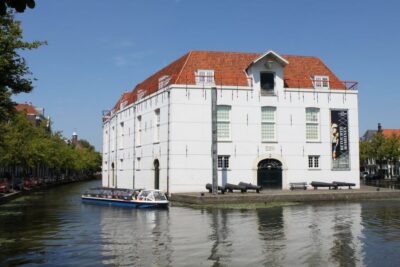 ★ 4.4Delft: Canal Cruise with Guided CommentaryFrom $15990 reviews
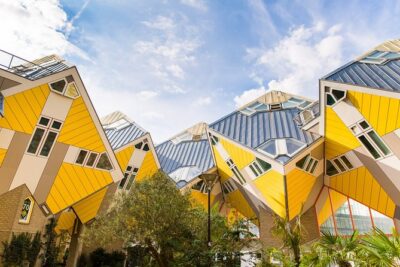 ★ 4.0Rotterdam, Delft, the Hague, Madurodam from AmsterdamFrom $90793 reviews
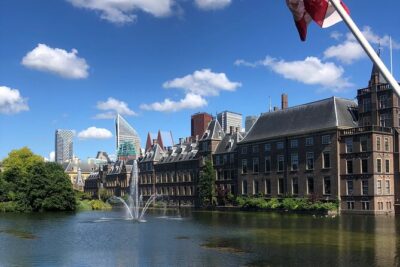 ★ 4.5Rotterdam, Delft and The Hague Small Group Tour from AmsterdamFrom $151599 reviews
 ★ 4.6Royal Delft: Delftblue Factory and MuseumFrom $21588 reviews
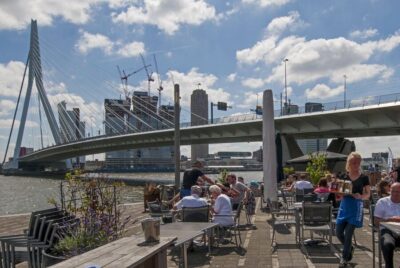 ★ 4.2From Amsterdam: Guided Trip to Rotterdam, Delft & The HagueFrom $81529 reviews
 ★ 4.5The Hague, Delft and Rotterdam Small-Group Tour (Max. 8 People)From $156234 reviews
 ★ 4.4Delft: Entrance Ticket for the Old and New ChurchesFrom $11229 reviews
Browse the lists this tour appears in