
REVIEW · ROTTERDAM
Private Tour of Delft & Rotterdam with Cube House and Transfer
Delft and Rotterdam in one half-day plan. This private tour strings together classic canals, key churches, and modern design, with a real transfer between the cities. You’ll see why Delft mattered during the Dutch Golden Age, then head straight into Rotterdam’s bold 20th century rebuilding.
Two things I really like: first, the guide work. In recent tours, guides such as Remy, Robin, Alberto, and Tristan were praised for teaching the story clearly and adapting to the pace. Second, the Cube House is not just a photo stop, you actually enter and view an apartment from inside, with the ticket included.
One heads-up: this tour is built around walking between sights. The transfer between Delft and Rotterdam is handled for you, but you should still expect some time on your feet and steps if you choose to climb the New Church tower.
In This Review
- Key highlights to expect
- Starting in Delft: history you can actually walk through
- Museum Prinsenhof Delft, then the Dutch past gets real
- Old Church and the Delfland headquarters: the city explains its own details
- Town Hall to the New Church: royal burial and big tower vibes
- Vermeer and Delft’s canals: where art meets specific spots
- Beestenmarkt lunch area and the train jump to Rotterdam
- Rotterdam Cubic Houses: Piet Blom’s design you can step into
- Oude Haven and the Witte Huis: Rotterdam’s old harbor meets survivors
- Markthal and the Sint-Laurenskerk tower: modern markets plus an old survivor
- Ending at Blaak: the Rotterdam dam connection and market timing
- Price and time: what $228.78 per person buys you
- Who this tour suits best, and who should think twice
- Should you book this Delft and Rotterdam private tour?
- FAQ
- How long is the Private Tour of Delft & Rotterdam with Cube House and Transfer?
- What is the price per person?
- Is this tour private?
- Does the tour include pickup and drop-off?
- How do you get from Delft to Rotterdam?
- Is the Cubic House ticket included?
- Are the church and city sight entrances included?
- Where does the tour end?
- Is the tour offered in English?
Key highlights to expect
- Museum Prinsenhof and the Delft church stops that frame how the city shaped Dutch history
- Vermeer-related viewpoints along the canals, including the spot where he painted View of Delft
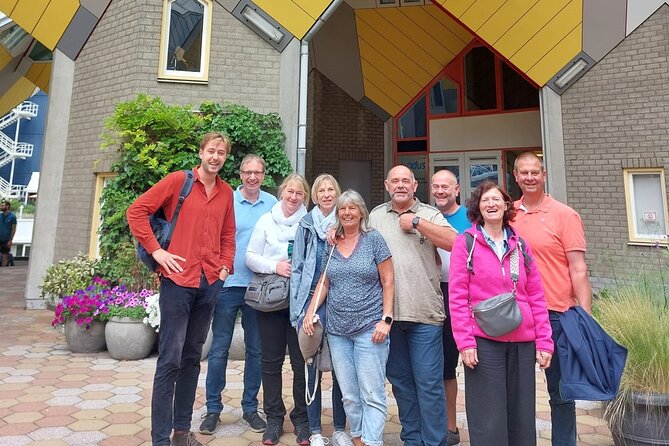
- Cube House interior access at the Kijk-Kubus Museum-house, with the admission included
- Rotterdam landmarks with meaning, like the Witte Huis and the church tower that survived bombing
- Included train transfer (18 minutes to Rotterdam Blaak) so the day stays smooth
- Private group only, so you can go at your pace without blending into a crowd
Still in Rotterdam? Keep going
- Private Tour of Delft & Rotterdam with Cube House and Transfer★ 5.0 · 12 reviews
- From Amsterdam: Rotterdam, The Hague & Delft Private Tour★ 4.6 · 7 reviews
- Amsterdam: The Hague, Delft and Rotterdam Private Day Tour★ 5.0 · 6 reviews
- Private Tour of Rotterdam and The Hague including Transfer★ 5.0 · 3 reviews
Starting in Delft: history you can actually walk through
Delft is the kind of city where the streets do the talking. This tour begins with a guided walk through the old center, and that matters, because most of the key sites sit close enough together to connect into one story without long detours. You’re not just collecting buildings, you’re moving through the same town fabric that shaped daily life for centuries.
The pacing is also designed for an efficient day: short stop windows with a guide’s context layered on top. Think quick, solid explanations outside, then a more immersive moment when you reach the Cube House in Rotterdam.
If you prefer your sightseeing to feel ordered, this style helps. If you hate rushing, it can still work since it’s private, but you’ll want to speak up early if you want extra time at the New Church or the market areas.
Museum Prinsenhof Delft, then the Dutch past gets real
Your first stop is the Museum Prinsenhof in Delft. The real value here is the way it sets the tone. This site has played a deciding role in Dutch history, and your guide uses that to frame what you’ll see next around the city. Even if you only glance at the exterior areas, it helps you understand why the city’s later landmarks matter.
After this, you’ll move on through Delft’s older quarters. The tour keeps things simple and direct: walk in short bursts, pause at the best-looking angles, and get just enough background to make each building feel connected rather than random.
If you’re the type who likes to know what you’re looking at before you take photos, this opening works well. If you’re mainly chasing Instagram shots, you can still enjoy it, but you’ll get more out of it if you lean into the guide’s explanations.
Old Church and the Delfland headquarters: the city explains its own details
Next up is the Old Church. Your guide points you toward the historical context of Delft’s beer brewing quarter, then ties that to what the Old Church represents in the city. You’ll also hear about the church’s age and the reason it appears skewed. It’s a classic Delft effect, and once someone explains the why, you start seeing it every time you look at the facade.
From there, you see the Gemeenlandshuis van Delfland, a heavily decorated facade near the Oude Kerk. What makes this stop worthwhile is that it’s not just pretty. It’s one of those “why was this here” buildings, and the guide helps you understand its importance and how it fits into the region’s water and administration story.
These two stops are quick, but they do a job: they shift you from “pretty old town” into “structured society,” which is a big part of what makes Delft feel different from other Dutch cities.
Town Hall to the New Church: royal burial and big tower vibes
At the Grote Markt area, you pass the Stadhuis Delft, the old town hall partly dating back to the 13th century. The practical takeaway is that the town hall isn’t just old, it’s a landmark you’ll keep bumping into in your mind once you hear why it matters. It becomes a reference point as you walk the square and head toward the next church.
Then comes the New Church. This is the second-highest church in the Netherlands, and the royal family is buried here. Your guide explains why Delft became part of that story. If you like your architecture with a side of politics and tradition, this stop delivers.
There’s also a tower option. If you want to go up, your guide can arrange tickets. One caution: your guide notes it’s quite a climb. If you’re bringing mobility challenges, you may want to skip the tower and focus on the outside view and the interior stops you can do comfortably.
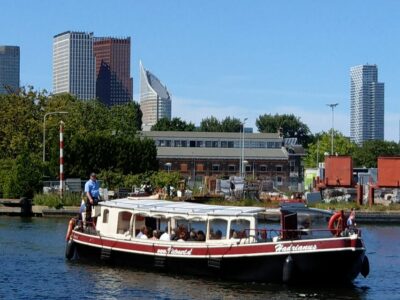
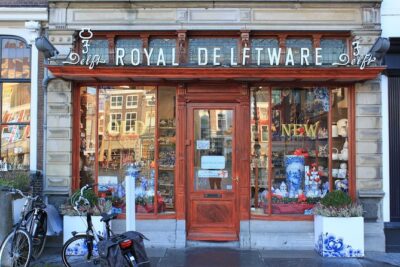
Delft, three more ways

Vermeer and Delft’s canals: where art meets specific spots
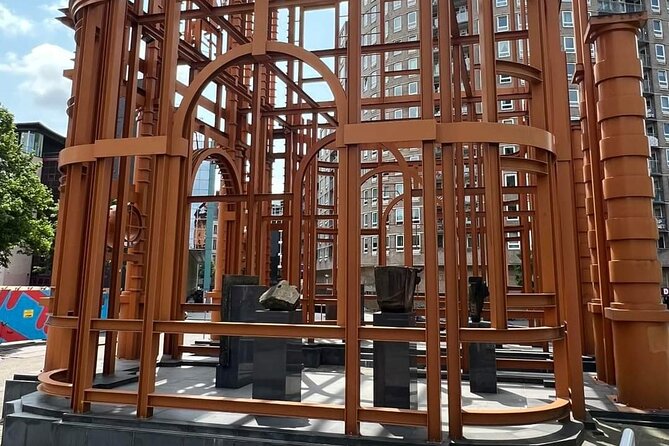
After the town-center churches, the tour shifts to Delft’s canal rhythm. One of the most memorable sections is the Armamentarium, a former weapons armory tied to the V.O.C. Your guide connects Delft’s role during the Dutch Republic’s golden days to the city’s physical layout along the oldest canal.
This is also where you get the most “very specific” art reference on the day. The tour includes a look at the exact spot where Vermeer was standing when he painted View of Delft. Even if you don’t consider yourself an art person, this kind of pinpoint detail is a cheat code. It takes you from looking at a painting to standing near the same visual setup.
From there, you pass Maria van Jessekerk as you head back north. This includes a neat contrast: it’s the first Catholic church built in Delft’s center, and there’s something “funny” about the two towers (your guide explains the peculiarity). It also stands on the spot where Vermeer used to live and make his paintings.
You get a lot of Vermeer connection in a relatively compact walking stretch, and that’s exactly why this tour works for fans of Dutch art. You’re not just hearing about him in abstract terms, you’re moving through the city where his life and work would have been shaped.
Beestenmarkt lunch area and the train jump to Rotterdam
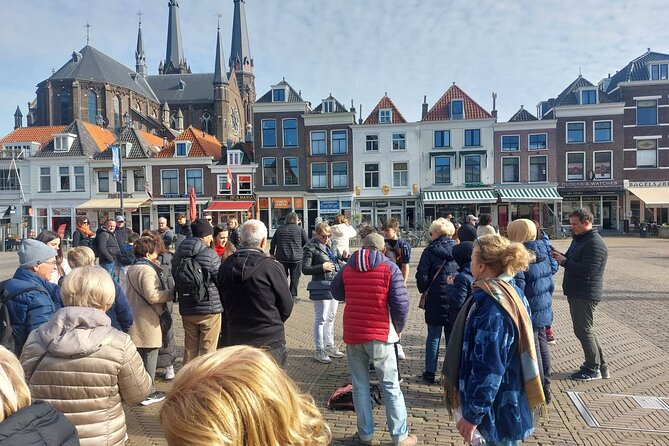
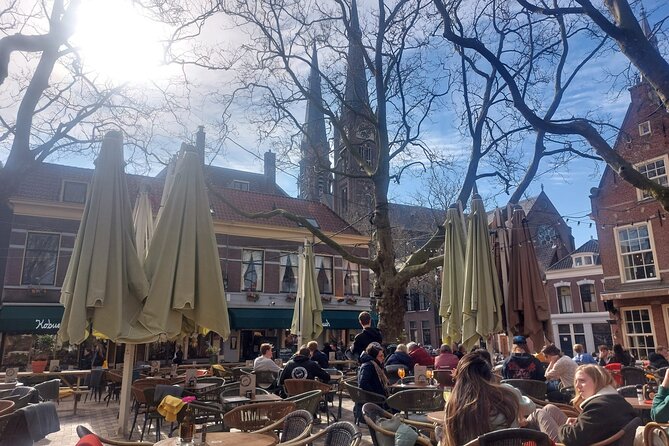
You finish Delft at Beestenmarkt, described as one of the coziest squares in town. It’s a practical pause point, because this is the kind of location where you can grab lunch or a beer if you want to extend your time in Delft before the next city.
Then the tour transitions to transportation. You walk toward Station Delft to take the train to Rotterdam Blaak. The train ride takes about 18 minutes and costs €4.10, and that cost is included in the tour.
This matters more than it sounds. The better your between-city transfer, the more relaxing the day feels. Rotterdam and Delft can both tempt you with wandering, so having the transfer built in keeps you from losing momentum.
Rotterdam Cubic Houses: Piet Blom’s design you can step into
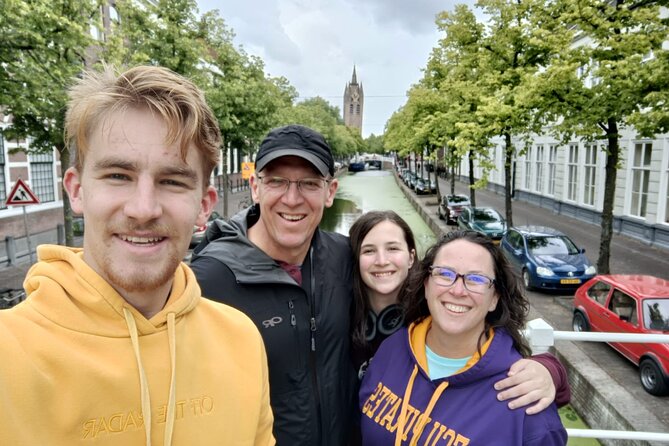
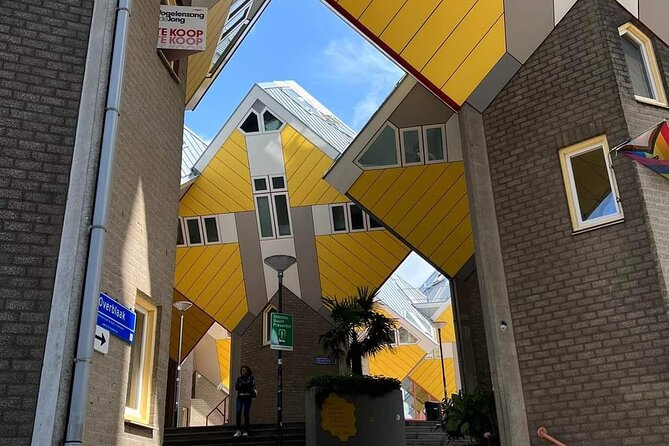
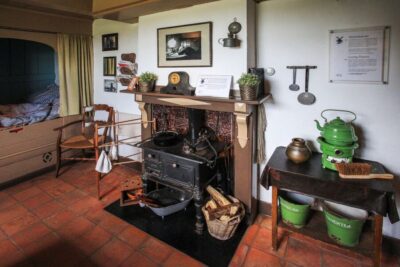
Once you arrive in Rotterdam, the tour hits one of the most design-forward stops on the route: the Kijk-Kubus Museum-house, also known as the Cubic Houses. You immediately see the apartments created by Piet Blom in the 1970s, a “village inside a city” concept that makes density feel playful rather than heavy.
The key point is the included interior access. You’ll view one apartment from inside, so you understand the cube logic instead of just guessing from the outside. That’s a big difference. Exterior shots can be misleading. Inside, you get a feel for how the geometry affects layout and movement.
If you like design, architecture, or just want one part of the day that feels clearly different from historic Delft, this is your moment.
Oude Haven and the Witte Huis: Rotterdam’s old harbor meets survivors
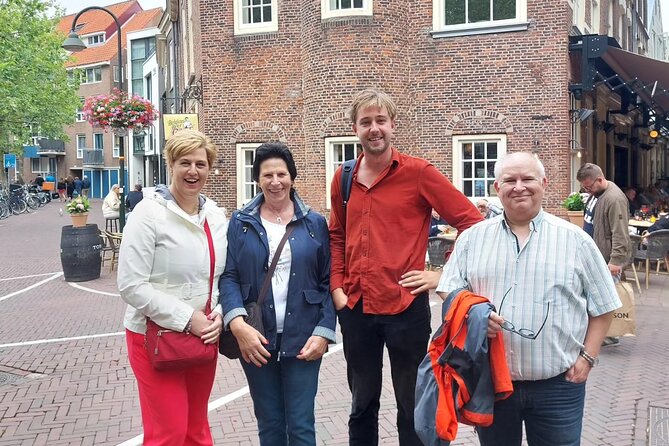
After the Cubic Houses, you walk into Oude Haven, the Old Harbour. It’s now a lively recreational zone with terraces, and the tour notes more Piet Blom architecture in the surrounding area, plus old ships anchored for restoration. This is where Rotterdam slows down just enough to feel atmospheric again.
Next to the Old Harbour is the Witte Huis. You get a quick look at Het Witte Huis, noted as the oldest skyscraper of Europe dating from 1898. The reason this building carries extra weight is that it survived the bombing of Rotterdam. When you hear that, the structure feels less like a landmark and more like a survivor.
So this stop isn’t only about height. It’s about why the city’s rebuilding story matters, and why some prewar structures still shape the skyline.
Markthal and the Sint-Laurenskerk tower: modern markets plus an old survivor
As you head back toward Blaak, you enter the Markthal, the market hall. It’s described as having apartments on both sides, and you can also sample different foods from around the world. If you’re the type who likes to “walk through” a place before deciding to eat, this is a good spot to do exactly that.
A practical tip: don’t rush your eyes upward. The tour mentions one of the biggest pieces of art on the planet, visible as you look up. You’ll see it best if you stop moving for a few seconds.
Right next to the Markthal is the Grote of Sint-Laurenskerk, a 14th century church whose tower miraculously survived the bombing of Rotterdam. Today, it’s mostly used as an event location. That mix of old and repurposed is very Rotterdam, and your guide’s context helps you notice the contrast instead of treating the area like one generic city center block.
Ending at Blaak: the Rotterdam dam connection and market timing
The tour wraps around Blaak again, linked to the original dam over the Rotte. There’s also a timing note that can help you plan your next move: on Tuesdays and Saturdays, there’s a big outside market there.
Your tour ends here, and the meeting-point info makes it clear that you’re finished in a different location than where you started. For planning, that’s actually a plus. It drops you in a transit-friendly area so you can keep exploring Rotterdam or go home.
Price and time: what $228.78 per person buys you
At $228.78 per person for a 4 to 5 hour private format, the value mostly comes from what’s included and what you avoid. You’re paying for two city guided segments rather than just one. You’re also getting the Cube House entry ticket and the train fare between Delft and Rotterdam.
Add to that the short transfer support (train or car) and the fact that all fees and taxes are included. The net effect is fewer small surprises. You’re not hunting for last-minute tickets while you’re already tired from walking.
Private tours are also about control. Even though this is a walking-based day, being private means you can adjust how fast you move between stops, spend extra time at the New Church or Markthal, and ask questions without waiting for a group to catch up.
Where you should be careful is the “walking” assumption. If you need a fully seated, minimal-walking experience, this may not be the best fit unless you’re confident you can manage the pace. The guide’s helpfulness is a big advantage here, but it can only go so far if the route requires steps and longer foot time.
Who this tour suits best, and who should think twice
This is a strong match for three types of travelers.
First, history and art lovers who want the story connected to physical places. You’ll get the Delft Golden Age framing, the church and civic context, plus the Vermeer-specific stops like the spot where he stood for View of Delft.
Second, architecture and design fans. Rotterdam’s Cubic Houses are a clear highlight, and then you keep moving through skyline meaning at the Witte Huis and the tower that survived.
Third, couples or small groups who want a guide who can tailor the tempo. Recent guide praise includes strong teaching style and quick communication. Guides like Remy and Robin were described as excellent educators, while Alberto was noted for meeting people at their hotel and being helpful. Tristan was praised for promptness and tailoring to interests and needs.
Who should think twice? If you have limited mobility or foot pain, the tour’s structure is still walking between many stops. Also, if you plan to climb the New Church tower, that climb is called out as quite a climb.
If you’re unsure, ask in advance how flexible the route can be for your needs, and decide whether the tower is worth it for you.
Should you book this Delft and Rotterdam private tour?
I think this is a solid booking if you want both cities in one efficient plan and you care about context, not just photos. The included Cube House interior visit plus the Vermeer-linked stops make it feel purposeful. The guide quality in recent experiences, including Remy, Robin, Alberto, and Tristan, also pushes it into “worth your time” territory.
I’d skip or at least adjust expectations if you cannot handle a walking route through church steps and canal-side areas, or if you were hoping for a drive-everywhere style day. The transfer is easy, but the sightseeing is still built on getting out and walking.
FAQ
How long is the Private Tour of Delft & Rotterdam with Cube House and Transfer?
The tour runs about 4 to 5 hours.
What is the price per person?
The price is $228.78 per person.
Is this tour private?
Yes. Only your group participates.
Does the tour include pickup and drop-off?
Pickup and drop-off are available if you book an option that includes it. You will be picked up from your selected location up to 1 hour before the tour starts and dropped off again afterward.
How do you get from Delft to Rotterdam?
You take a train from Delft Railway Station to Rotterdam Blaak, which takes about 18 minutes. The €4.10 train cost is included in the tour price. A short transfer by car may also be offered as an option.
Is the Cubic House ticket included?
Yes. Entry to the Cubic House at the Kijk-Kubus Museum-house is included, and you view one apartment from the inside.
Are the church and city sight entrances included?
The listed stops show admission tickets as free for those locations. If you want to go up the New Church tower, tickets can be bought if desired, but that tower access is not described as automatically included.
Where does the tour end?
The tour ends in a different location. The walk concludes around Blaak again, near the Markthal area.
Is the tour offered in English?
Yes, it is offered in English.
Also Reviewed Around The Hague




Delft, Three More Ways




Still in Rotterdam? Keep Going



Fresh off the review pile in The Hague
- Private Tour of Vermeer’s Delft + Tickets to Vermeer Museum
★ 5.0 · 3 reviews - Private Tour of Rotterdam and The Hague including Transfer
★ 5.0 · 3 reviews - Surfing at The Shore in The Hague
★ 4.5 · 3 reviews - 3 Course Walking Dinner in Delft with Guided Tours in Between
★ 5.0 · 3 reviews - Surprise Walk of The Hague with a Local
★ 4.5 · 3 reviews
Rotterdam Tours, compared.
 ★ 4.3Rotterdam: Harbor Sightseeing CruiseFrom $227,599 reviews
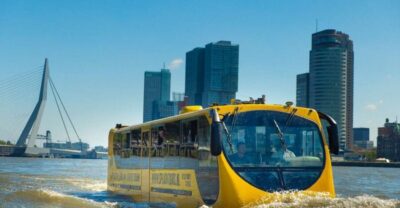 ★ 4.5Rotterdam: 1-Hour Sightseeing Splash TourFrom $353,299 reviews
 ★ 4.6Rotterdam: Rotterdam Zoo Blijdorp Entry TicketFrom $322,754 reviews
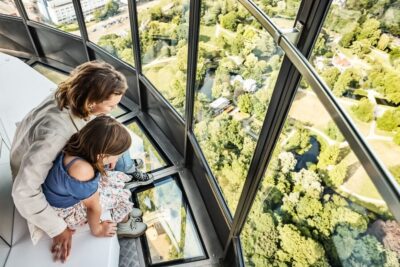 ★ 4.4Rotterdam: Euromast Lookout Tower TicketFrom $212,549 reviews
 ★ 4.4Rotterdam: Pancake CruiseFrom $311,986 reviews
 ★ 4.2From Amsterdam: Rotterdam, Delft & The Hague Guided Day TourFrom $901,765 reviews
 ★ 4.6Rotterdam: Kinderdijk UNESCO World Heritage Entry TicketFrom $251,477 reviews
 ★ 4.0Rotterdam: Harbor Cruise with Live GuideFrom $141,270 reviews
Browse the lists this tour appears in